












Reconstructive nasal surgery
The nose is not only a central element of our face, shaping our individuality, but also a delicate organ that can be severely affected by accidents, illness or congenital malformations. A reconstructive nasal operation — also called reconstructive rhinoplasty — aims to restore the form and function of the nose as far as possible.
- Restoring form and function
- Grafts from your own body
- Operation 1 to 4 hours
- Time for difficult stories
Such procedures are often connected with severe blows of fate: road accidents, sports injuries, tumours or congenital defects can leave deep marks. The visible blemish usually weighs less heavily than the emotional one — scars or deformities are a daily reminder of a distressing event.
At the Kuzbari Centre for Aesthetic Medicine in Vienna we see it as our task to ease these burdens. Through precise surgical techniques we support not only physical healing but also create a natural, harmonious appearance that makes everyday life easier again.
The Kuzbari experts for this service:


- 2,000+Nasal operations
- 3Nasal surgery specialists
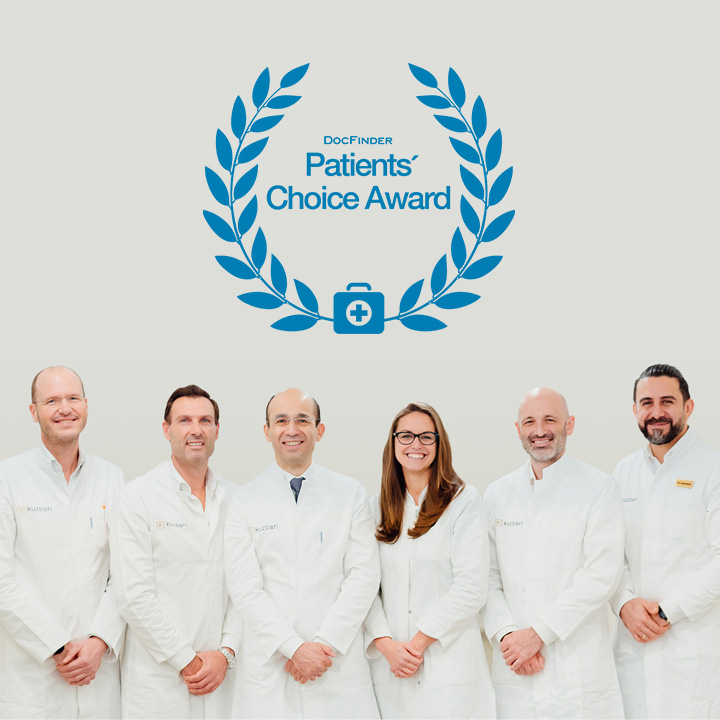
- 11Times in a row Patients’ Choice Award
- 38DocFinder awards in total
What is reconstructive nasal surgery?
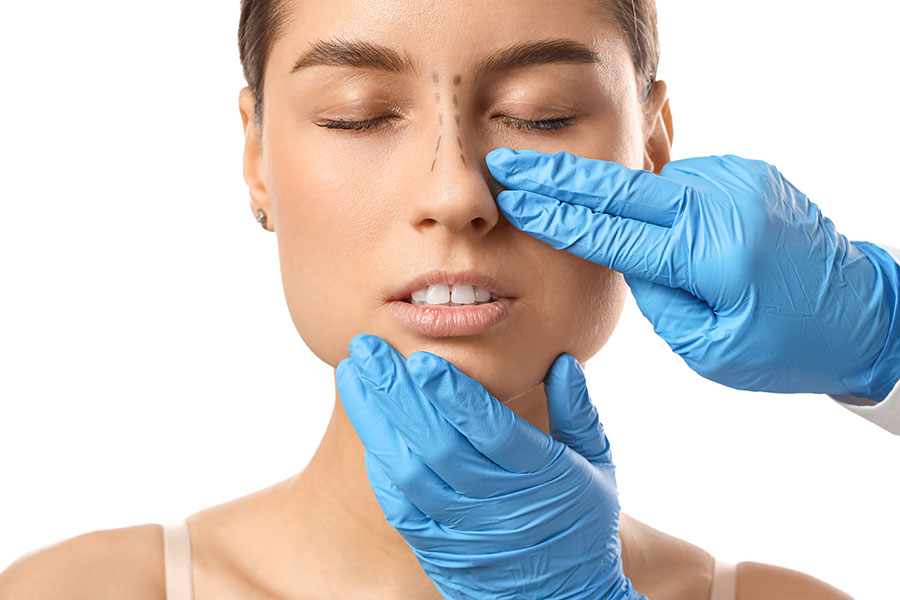
Reconstructive nasal surgery goes beyond shape alone: it rebuilds lost or damaged structures of the nose in order to restore both its function — breathing above all — and its appearance. Unlike a purely aesthetic procedure it is often medically necessary and can be combined with other treatments, such as the removal of a tumour or the repair of injuries after an accident.
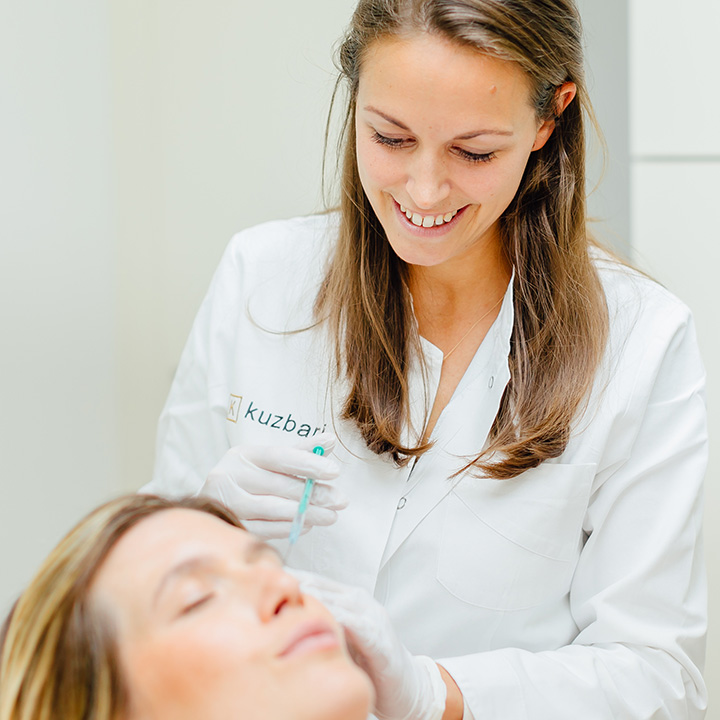
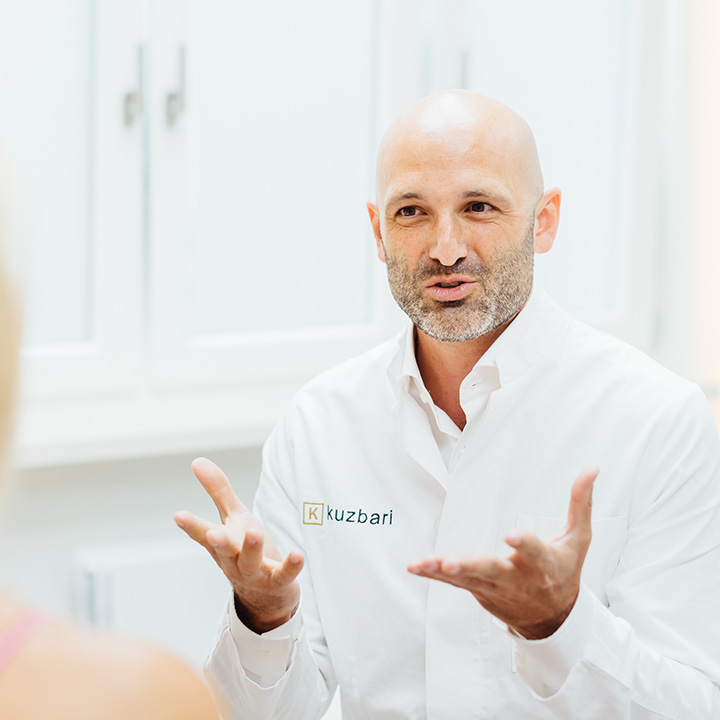
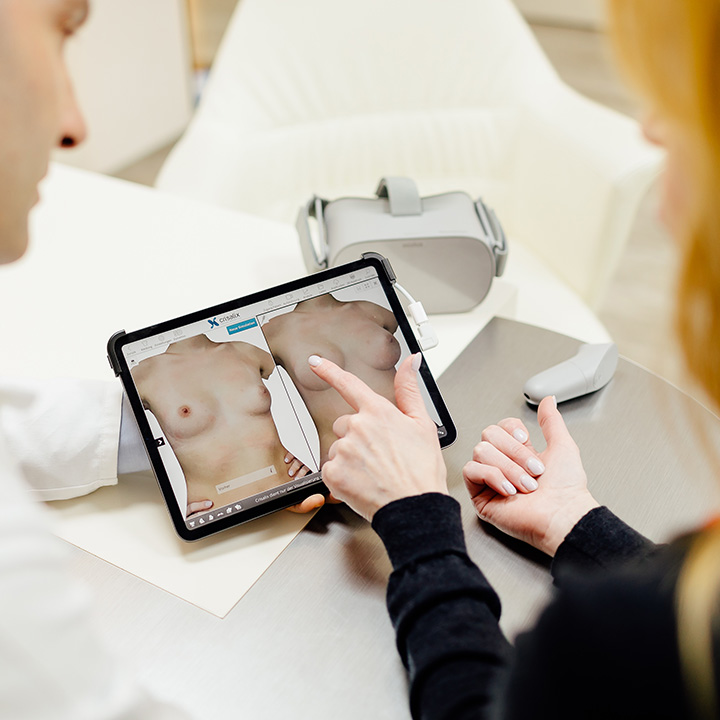
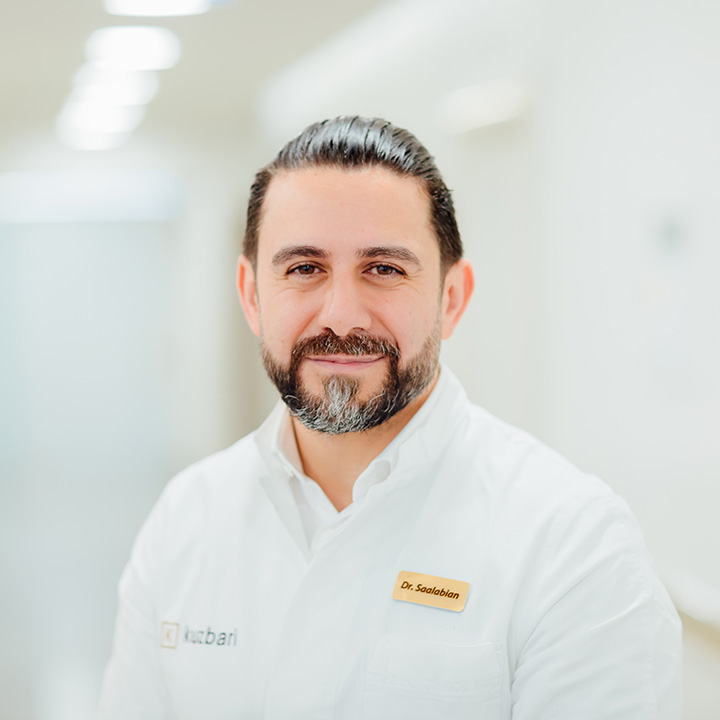
At the Kuzbari Centre these complex operations are carried out by Univ. Doz. Dr. Rafic Kuzbari, Dr. Christoph Grill and DDr. Jessica Wittmann. Our Vectra 3D simulation makes it possible to show before the operation what the rebuilt nose can look like — a tool that gives reassurance precisely in a distressing situation.
Common causes and findings
Reconstructive nasal operations usually become necessary through an event or an illness. These are the starting points we encounter most frequently at the Kuzbari Centre.
In every case it is not only about appearance but also about functional aspects such as narrowed nasal passages. Reconstructive measures therefore often go hand in hand with aesthetic and functional corrections — a stable nose is the basis for everything else.
Reconstructive nasal surgery at a glance
- Aim of the operationRestoring form and function as far as possible
- Duration1 to 4 hours
- AnaesthesiaGeneral anaesthesia
- StayOne night as an inpatient
- MaterialYour own cartilage from the septum, the ear or a rib
- Nasal packingNot necessary
- Fit for workAfter 3 to 7 days
- Fit to socialiseAfter 1 to 3 weeks
- SportAfter 4 to 6 weeks
- Final resultAfter 6 to 12 months
Guide values. A larger reconstruction may require more than one procedure; what applies to you is established after the examination.
What we rebuild with
A nose has three layers: the skin on the outside, the framework of bone and cartilage in between and the mucous membrane on the inside. If one of these layers is missing it has to be replaced — and ideally with tissue that resembles the original. This is why we work predominantly with material from your own body.
| Source | Used for | What this means for you |
|---|---|---|
| Septum | Supports for the nasal tip and the nasal valve, filling small defects. | No additional incision outside the nose — the cartilage lies within the operating field. |
| Ear cartilage | Curved parts, the nostrils, fine corrections. | A small incision behind the ear; the shape of the ear is preserved. |
| Rib cartilage | Larger reconstructions where load-bearing parts of the framework are missing. | An additional procedure at the chest with its own healing time; in return, plenty of stable material. |
| Skin from the surrounding area | Covering defects after tumour removal or injury. | Colour and thickness match the skin of the nose; the scar follows the natural lines of the face. |
The framework has to carry
In a reconstruction it is the mechanics that count above all. A nose that only looks coherent from the outside sinks over the years if the framework beneath it does not carry. We therefore stabilise the nasal tip using modern cartilage-supported techniques. This considerably reduces the risk of drooping of the nasal tip over the years.
If the bridge has to be worked on and is still largely intact, the modern nose-bridge-preserving technique, known as dorsal preservation, and hybrid techniques are an option. The natural nasal bridge is preserved instead of being removed and rebuilt. The result looks particularly natural and is stable in the long term.
More than one step
Larger reconstructions can rarely be completed in a single operation. Frequently the framework is restored and the skin covered first; the fine modelling follows once the blood supply is secure and the first swelling has subsided. We tell you beforehand how many steps to expect — even when that is not the answer one hopes for.
Two findings we see particularly often
Two starting points come up again and again in reconstructive nasal surgery, and both illustrate well why the framework is what matters in a rebuild.
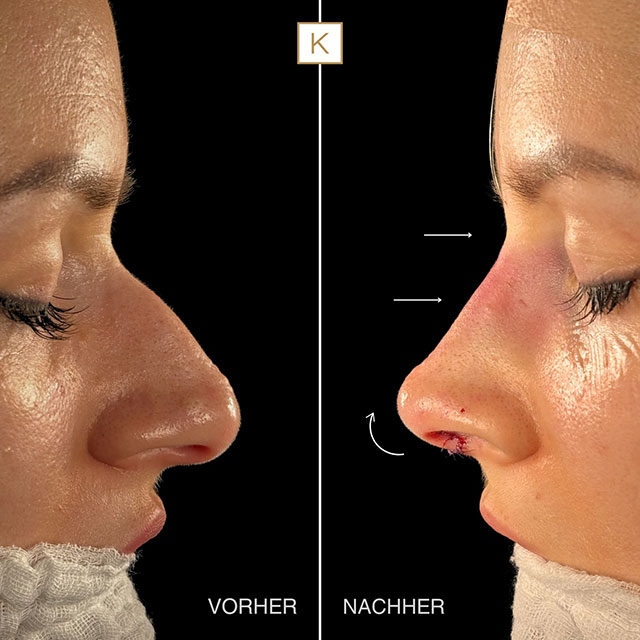
The saddle nose. If the load-bearing part of the septum is missing — after an accident, an inflammation or a previous operation — the nasal bridge sinks in the middle. The nose then looks short, the tip points upwards and the nostrils become visible from the front. For those affected this is not merely a question of shape: with the pillar, the tension that keeps the nasal valve open is missing too, so breathing suffers. The rebuild is carried out with your own cartilage, placed as a load-bearing strut between the bridge and the tip. Depending on the extent, cartilage from the ear is sufficient; with larger defects rib cartilage is an option.
The hole in the septum. A septal perforation arises from injuries, inflammation, certain medicines or as a consequence of a previous operation. Typical signs are a whistling sound when breathing, crusting, a dry mucous membrane and recurring nosebleeds. Small perforations can be closed with mucosal flaps and an intermediate layer of cartilage membrane. With large perforations a complete closure is not always possible; then the aim is to ease the symptoms and stabilise the edges. We say that beforehand too.
In both cases the same principle applies: first the framework, then the shape. A nose whose mechanics are wrong cannot be made lastingly beautiful from the outside.
Why the mind heals too
The emotional side is central to these procedures. Many patients report social withdrawal, because a visible change to the nose draws looks every day. A successful reconstruction cannot literally turn back time, but it restores an inconspicuous appearance — and with it the possibility of moving freely again.
At the Kuzbari Centre we place particular value on calm, empathetic care. Patients with a distressing history matter to us especially. Where it makes sense we combine surgical treatment with psychological support, and we aim for results that look inconspicuous and natural.
Malformations or conspicuous scars on the nose weigh at least as heavily. They affect not only appearance but above all the mind. These patients in particular matter to us at the Kuzbari Centre for Aesthetic Medicine, and we do everything we can to remove unwanted irregularities and restore the normal shape of the nose as far as possible.
Elisabeth's story
For more than twenty years Elisabeth was bothered by a nasal hump left behind after an accident. In this video she describes her journey at the Kuzbari Centre.
The procedure, step by step
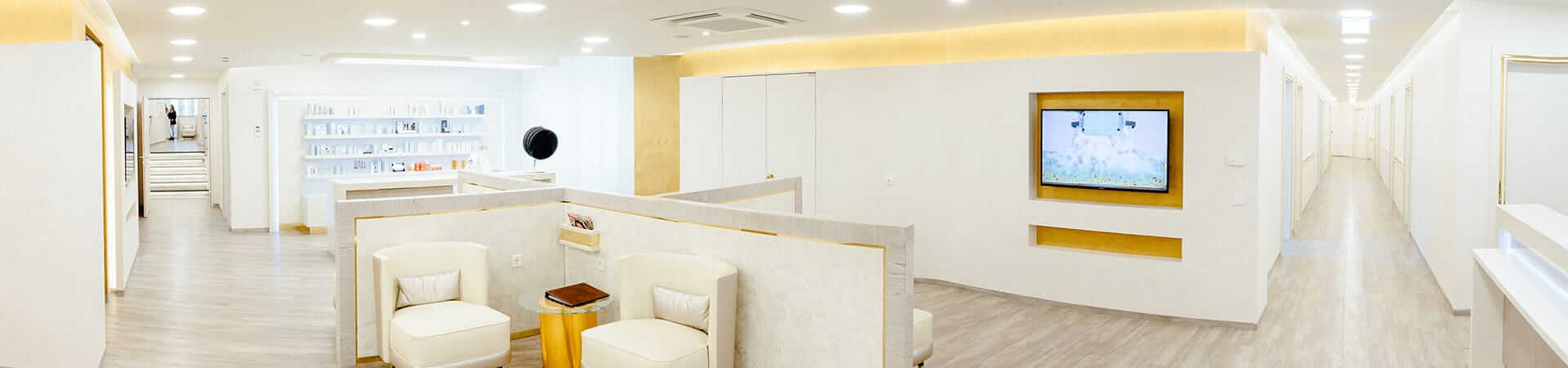
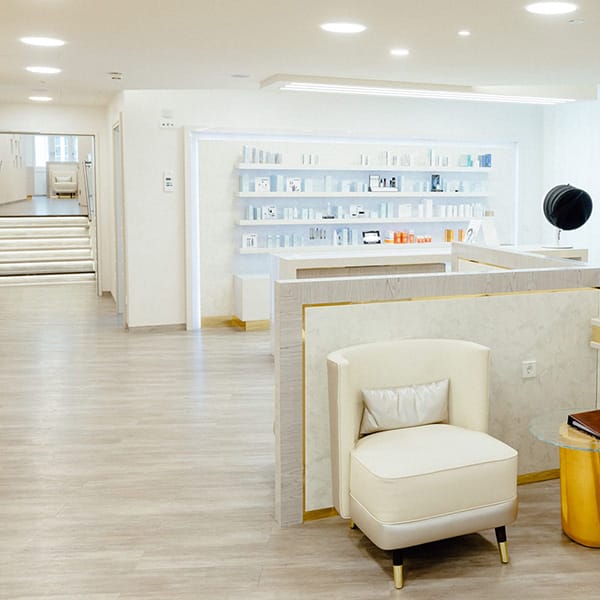
Consultation, planning, operation, inpatient care and aftercare all take place in the same building.
- Initial consultation and assessment
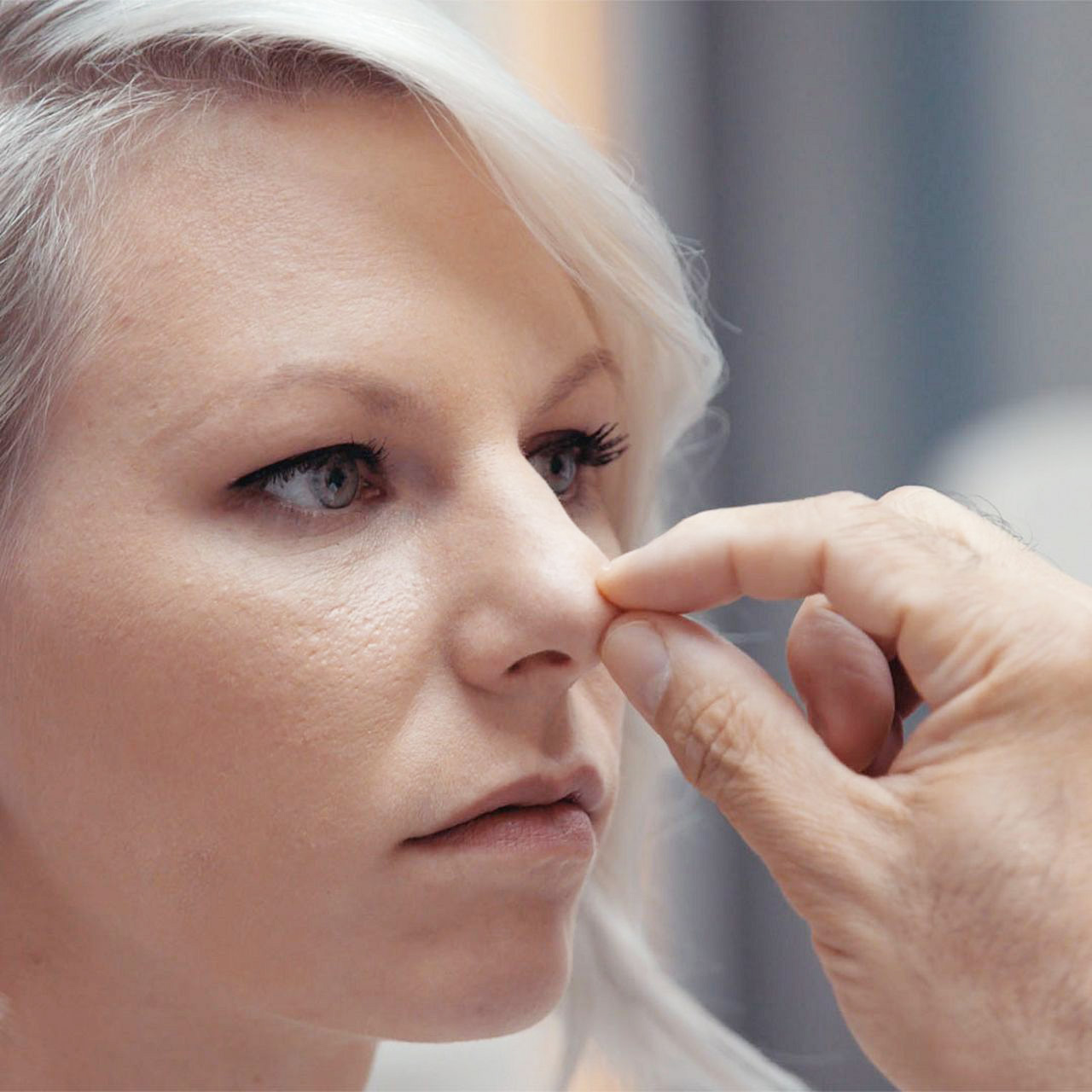
We listen — to your history as well. We examine the nose from the outside and from the inside, assess skin, framework and mucous membrane and review existing findings and operation reports. Afterwards you know what is missing and what has to be replaced.
- 3D simulation
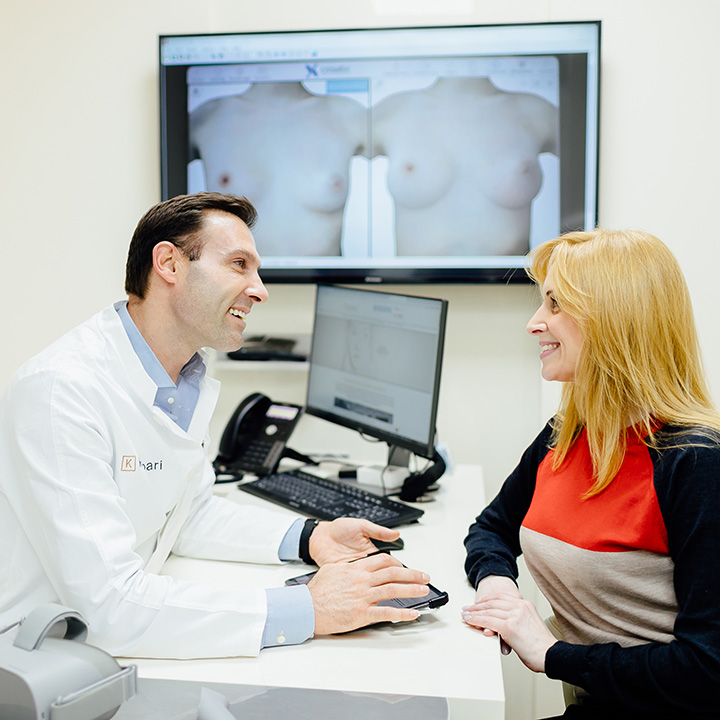
Our 3D simulation shows your future nose not only in profile but also from the front and from below. You see your possible result from exactly the angles from which others see you every day — and before the operation we talk about the same picture.
- Planning, coordination, preparation
The consent discussion, your medical history and laboratory values, anaesthetic preparation in the building. Where another specialty is involved — oncology, for instance — we agree the timing with them.
- The operation
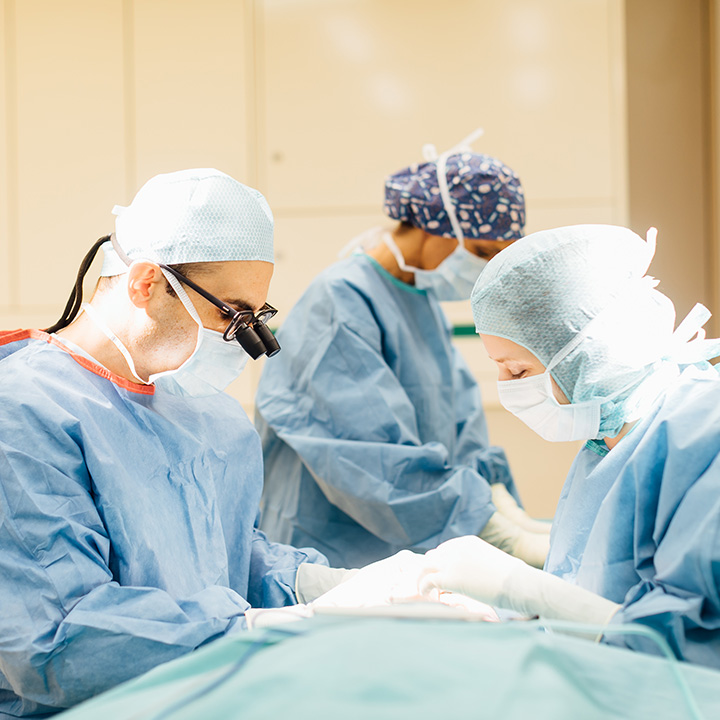
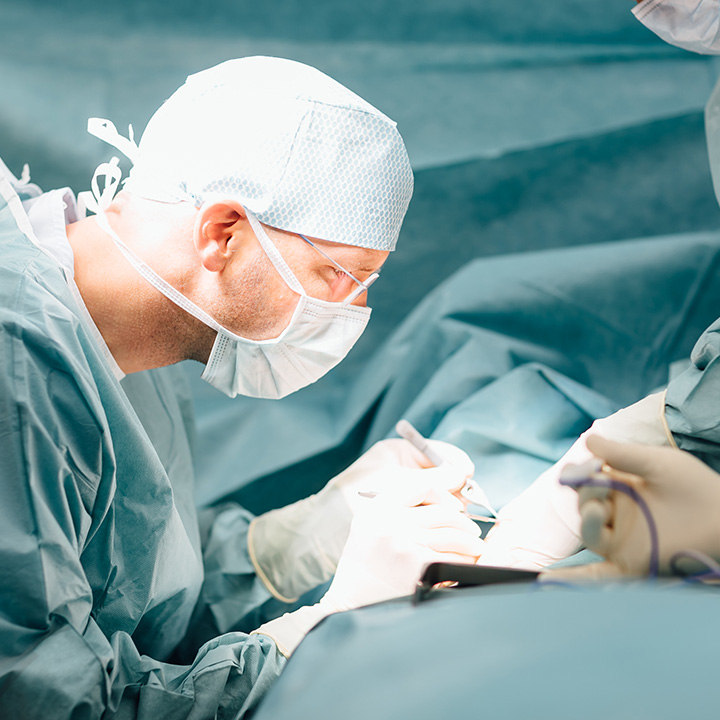
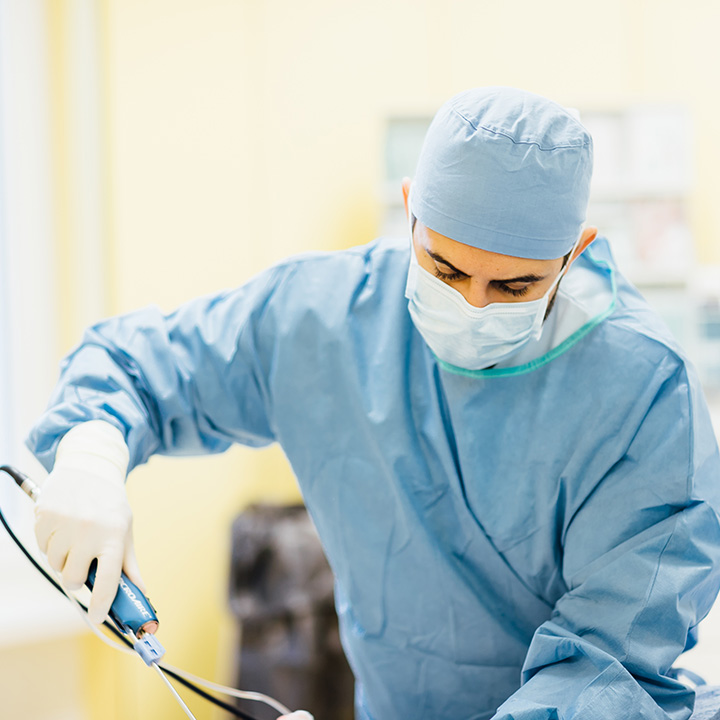
The operation takes place in the centre's own operating theatres, under general anaesthesia. A rhinoplasty here takes one to four hours. That range is deliberate: we operate in our own operating theatres and therefore without time pressure — for as long as it takes for every detail to be right. How long a procedure takes is decided by the findings, not by the appointment schedule.
- Inpatient in the building
After the recovery room you spend one night in a patient room of your own. The nursing staff is there around the clock. Nasal packing is not necessary.
- Healing and check-ups
Most people are fit for work after three to seven days and fit to socialise after one to three weeks. If rib cartilage was taken, healing at the chest is added. Sport is possible again after four to six weeks.
- Fine shape and further steps
The final result shows itself after six to twelve months. If a second step is planned, we then agree the timing together. All check-up appointments are included.
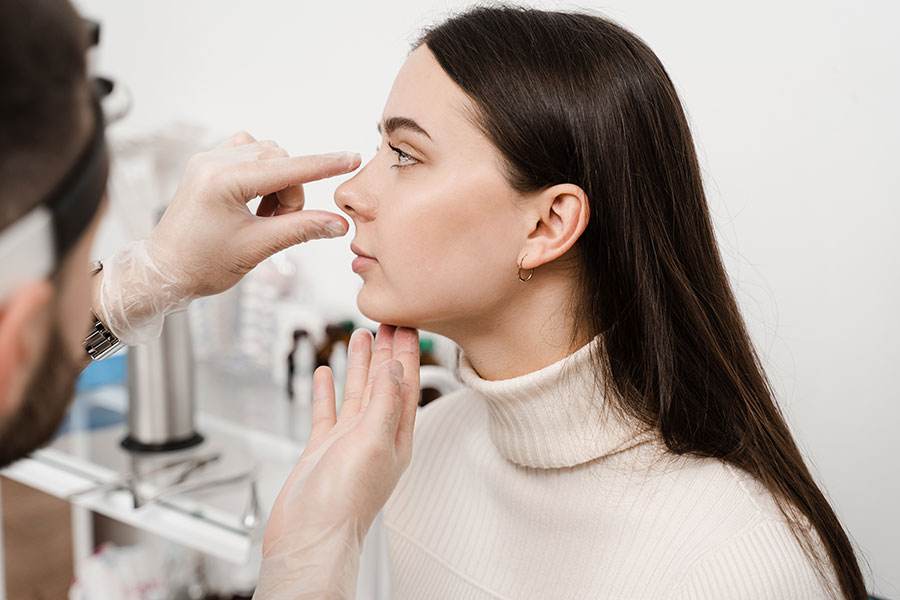
What we tell you beforehand
With a reconstruction the achievable result depends more strongly on the starting point than with any other nasal operation. Missing tissue, scarred skin and an altered blood supply set limits that cannot be operated away.
We therefore tell you before the operation what is possible and what is not, how many steps to expect and where a visible trace will remain. With these procedures an honest expectation is the most important part of the preparation.
What you can do yourself in the first weeks
After a reconstruction a great deal depends on how calmly the first weeks go. Freshly moved tissue needs a stable blood supply, and grafts only take where they are left in peace. We go through the following points with you again, unhurried, at discharge.
- Keep your head raised for the first nights — this takes pressure out of the tissue and lets the swelling drain away faster.
- Do not blow your nose; sneeze through an open mouth while the mucous membrane is healing.
- Keep the nose moist with the prescribed rinses and care sprays; do not remove crusts yourself.
- Avoid nicotine — it worsens the blood supply exactly where freshly moved tissue needs it most.
- Avoid the sun and cover fresh scars consistently with sun protection so that they do not darken.
- Only wear glasses again once we have given the go-ahead; until then a support resting on the forehead helps.
- Call immediately in case of fever, increasing redness or sudden pain — you have your surgeon's number.
Who operates on noses at the Kuzbari Centre
Four in ten nasal operations at the Kuzbari Centre are revision rhinoplasties on a nose that has already been operated on. Such procedures call for particular experience: the tissue is scarred, cartilage is sometimes missing, and the starting point is different for every patient. We deliberately take on such cases — and the same experience benefits reconstructive surgery.
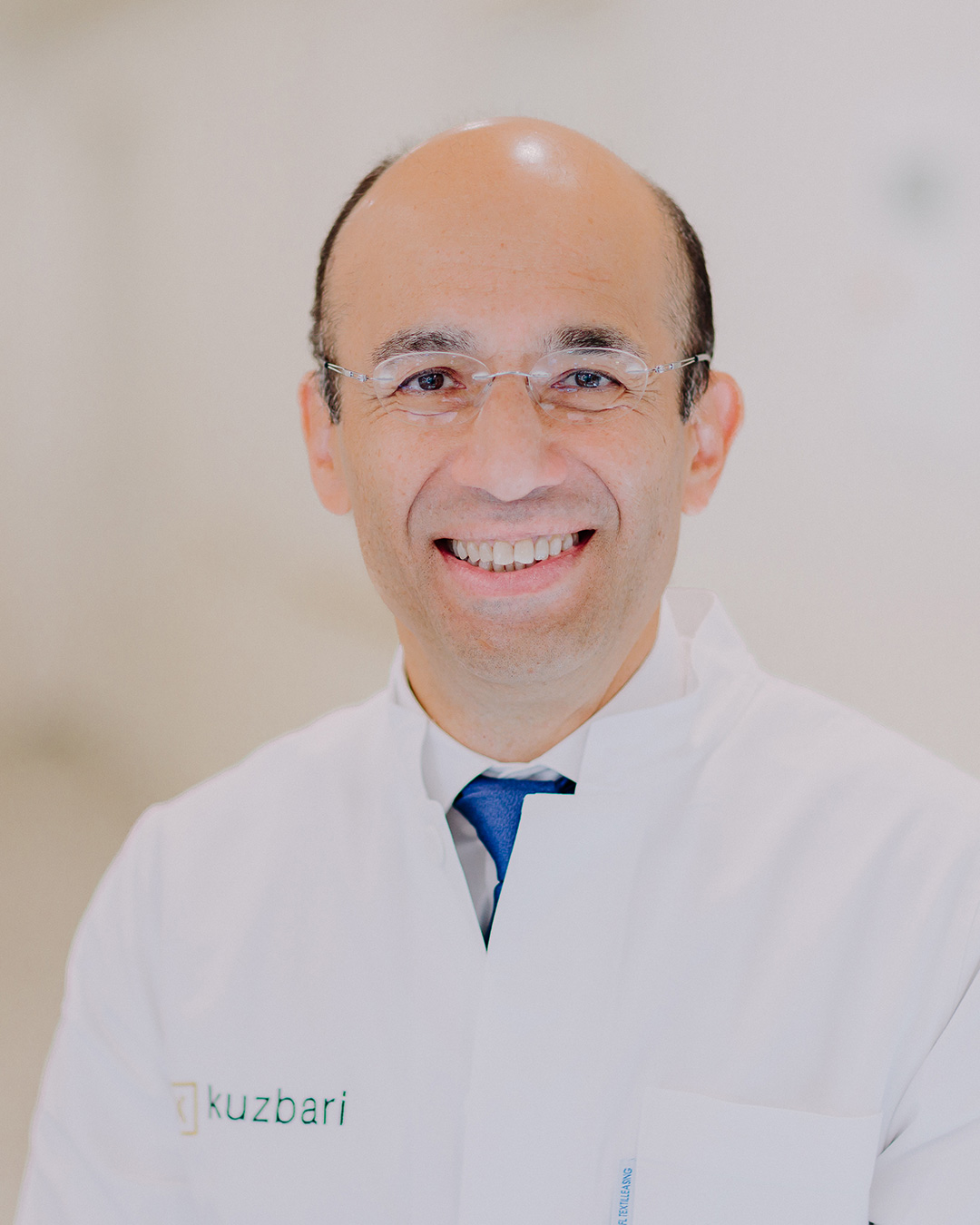
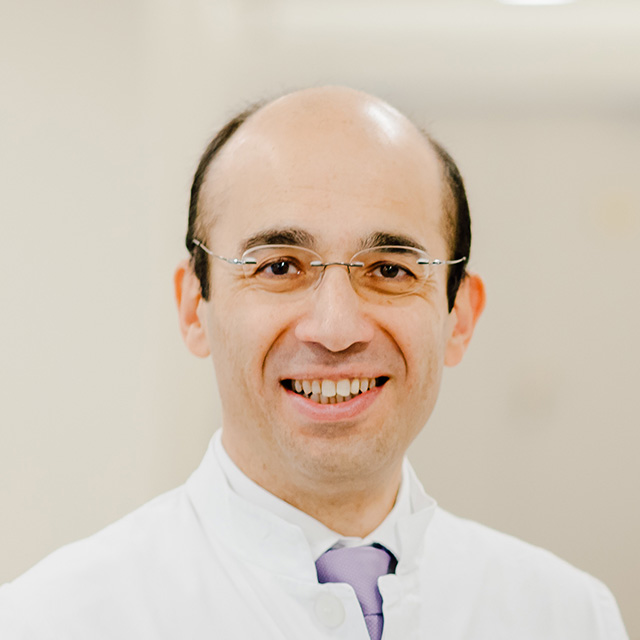
Founder of the Kuzbari Centre. He also takes on difficult revision operations and has worked with the piezotome for years.
To the profile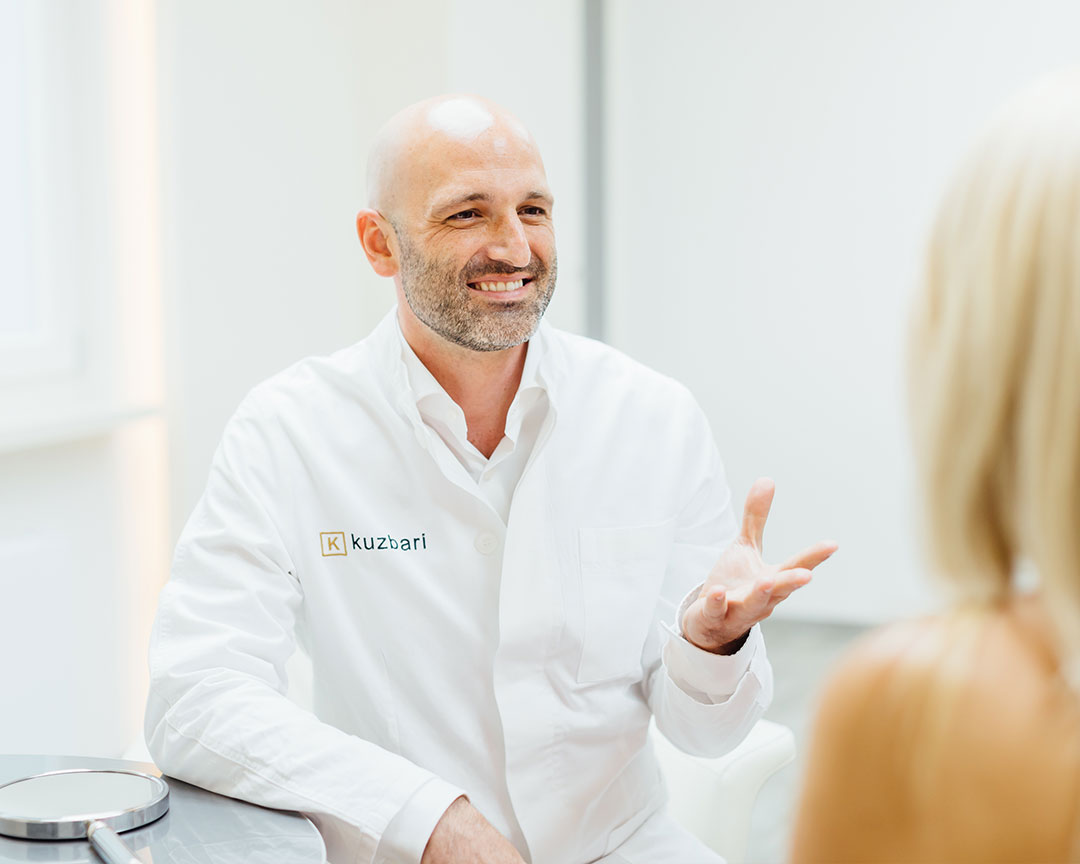
Focus on facial and nasal surgery, multiple award winner of the Austrian Society for Aesthetic Surgery.
To the profile
Works exclusively on the face and, where the findings are suitable, with the nose-bridge-preserving technique.
To the profileCosts
The price depends on the effort involved, and with a reconstruction that is harder to predict than with a first operation: scarred tissue, missing cartilage and the harvesting of grafts make the work more demanding. After the examination you receive a written cost estimate that contains everything.
- Initial consultation and 3D simulationincluded
- Operation, anaesthesia and assisting teamincluded
- Overnight stay and cateringincluded
- All check-up appointmentsincluded
The costs can be spread over up to five years through Kuzbari Finance, at an annual percentage rate of 9.99 %.
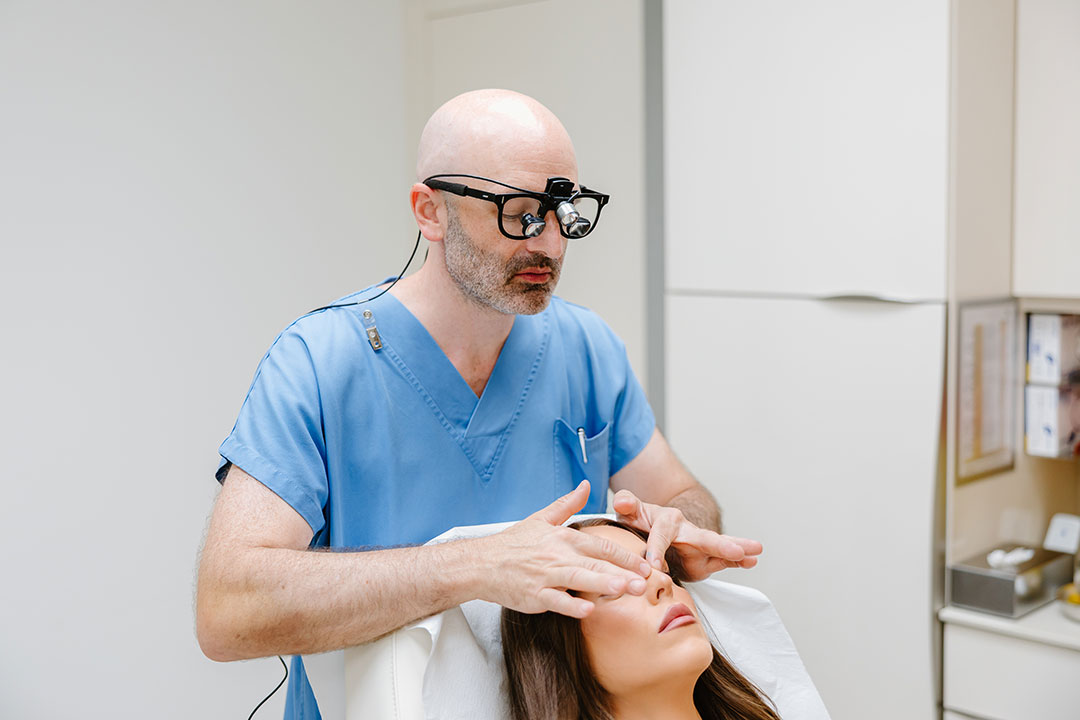
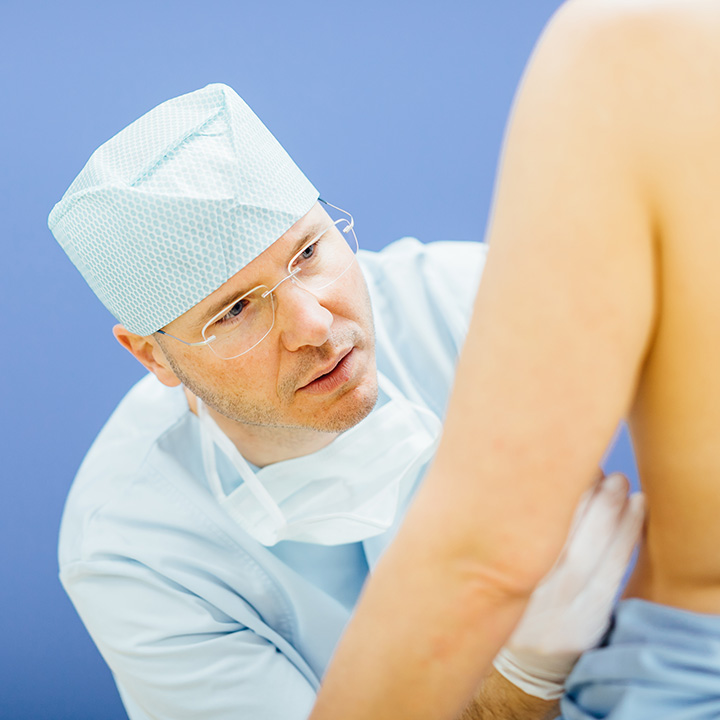
Examination before the operation 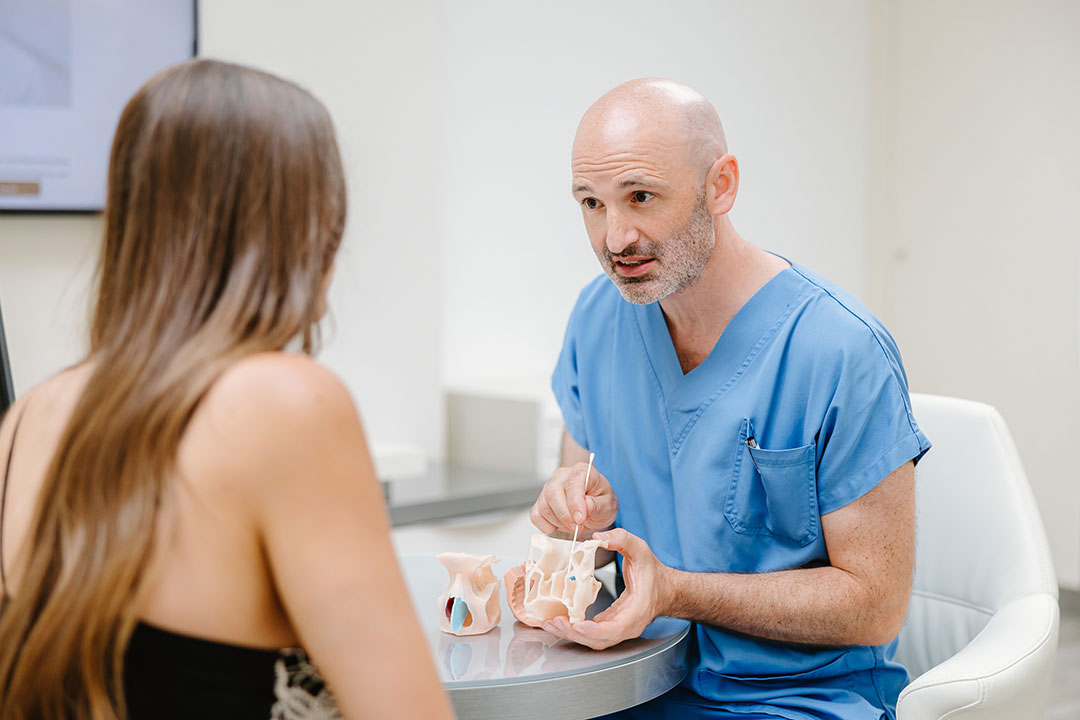
The framework on the model 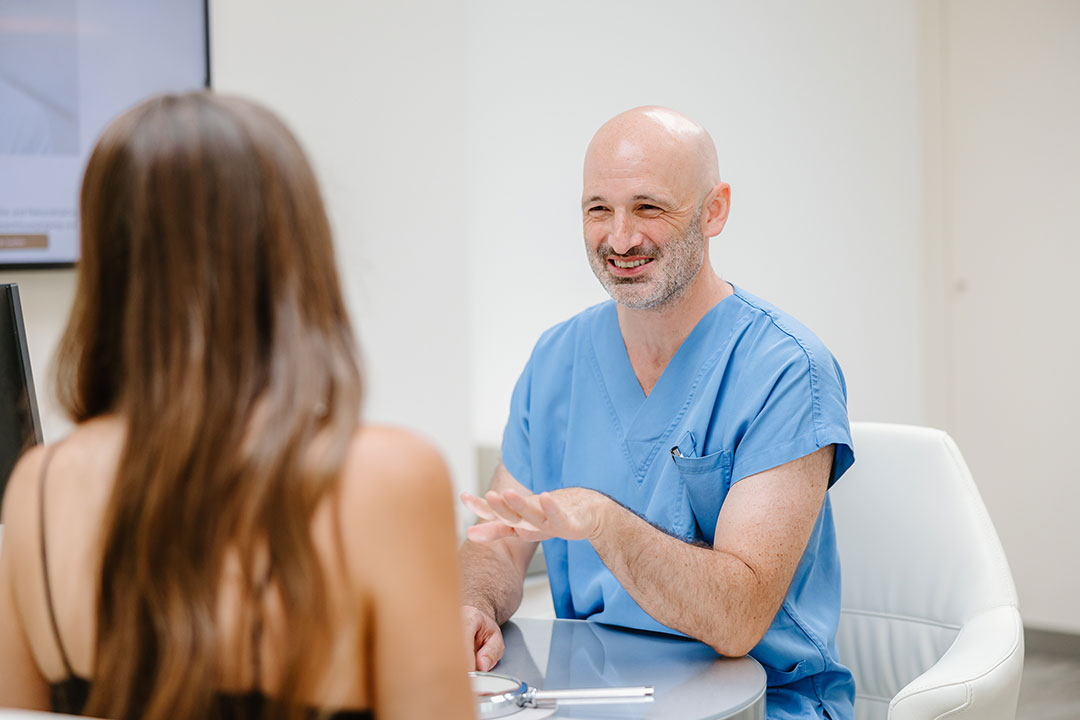
The follow-up talk
Frequently asked questions about reconstructive nasal surgery
What distinguishes reconstructive from aesthetic nasal surgery?
In aesthetic rhinoplasty an existing structure is changed. In a reconstruction tissue is missing or damaged — skin, framework or mucous membrane have to be replaced. The achievable result therefore depends more strongly on the starting point, and several steps are often necessary.
Where does the material for the rebuild come from?
Predominantly from your own body: cartilage from the septum, from the ear or — where more is needed — from a rib, together with skin from the immediate surrounding area. Your own tissue is not rejected and grows together with the surrounding tissue.
Is one operation enough?
With smaller defects frequently yes. Larger reconstructions usually need several steps: first the framework and the covering, later the fine modelling once the blood supply is secure and the swelling has subsided. How many steps to expect we tell you before the first operation.
Can breathing be restored?
That is always one of the aims. A stable inner structure is the precondition for air to flow through the nose. Narrowed nasal passages, a deviated septum or collapsing nasal valves are treated in the same procedure wherever possible.
Are there any scars?
With a reconstruction, as a rule yes. We place the incisions in the natural lines of the face so that they show as little as possible, and we tell you beforehand where a visible trace will remain. Scar treatments can improve the picture further later on.
How long does healing take?
Most people are fit for work after three to seven days and fit to socialise after one to three weeks. If rib cartilage was taken, healing at the chest is added. The final result shows itself after six to twelve months.
Do you work together with other specialties?
Yes. With tumours we coordinate with the treating oncology team, with diseases of the sinuses with ear, nose and throat medicine. The timing of the reconstruction follows the underlying condition.
What should I bring to the initial consultation?
Operation reports, findings, imaging and photographs from the time before the event. Old photographs are particularly valuable in a reconstruction, because they show what we can work back towards.
Do I need nasal packing?
No. At the Kuzbari Centre nasal packing is not necessary. After the operation you wear, if required, a nasal splint or a nasal plaster for around ten days.
How long does the operation take?
A rhinoplasty here takes one to four hours. That range is deliberate: we operate in our own operating theatres and therefore without time pressure — for as long as it takes for every detail to be right. How long a procedure takes is decided by the findings, not by the appointment schedule.
What does a reconstructive nasal operation cost?
The price depends on the effort involved and can only be stated after the examination. A rhinoplasty starts at 9,350 euros, everything included; for a previously operated nose the price is from 9,950 euros, from 10,900 euros or from 11,900 euros, depending on complexity. You receive a written cost estimate.
When is the right time after an accident?
A fresh fracture of the nasal bone can often still be set within the first few days. Once that window has passed, we usually wait until the swelling has completely subsided and the tissue has healed — mostly a few months. Only then does the actual state of things become visible, and only then can the rebuild be planned sensibly. Come for a consultation early all the same: we will tell you what to watch for in the meantime.
Will I receive psychological support?
Where it makes sense we combine surgical treatment with psychological support. Mention it in the initial consultation and we will put you in touch.
Your consultation
Over an hour of time, an examination from the outside and the inside, a 3D simulation and an honest assessment of what can be restored — without obligation.
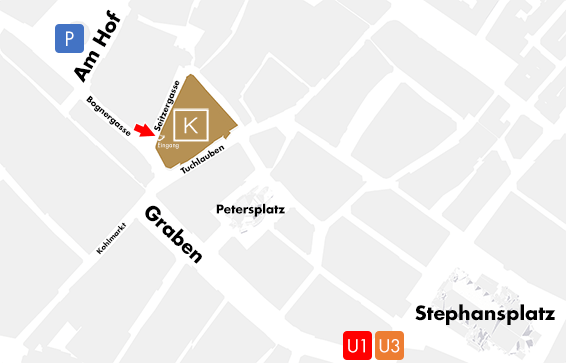
Monday to Friday, 08:00 to 18:00 · Seitzergasse 2-4, 1010 ViennaBook an appointment for your
rhinoplasty now!
Facial surgery is among the areas of focus at the Kuzbari Centre. That is why three specialists with us deal exclusively with the "supreme discipline" of plastic surgery, and whichever of them you decide on: all stand for genuine bespoke work, the highest possible quality and the greatest possible safety. You will find the appointment booking for Univ. Doz. Dr. Rafic Kuzbari on this page.
In the following overview you can book appointments with our rhinoplasty specialists Dr. Christoph Grill and DDr. Jessica Wittmann.
Here you will find an overview of our rhinoplasty experts:
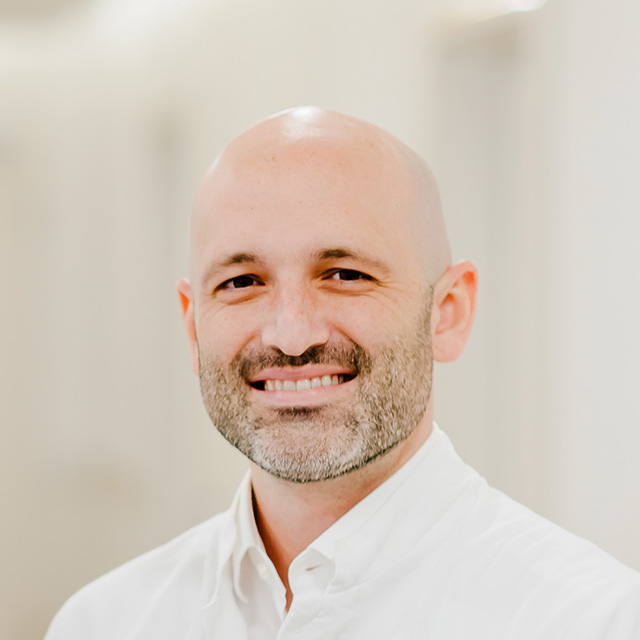
Details & appointment booking
3D simulation
Inpatient procedure
with overnight stay
Kuzbari
operating wing
Kuzbari
Safety Check
Kuzbari
quality guarantee
Photo documentation
2-3 weeks
downtime
Aftercare
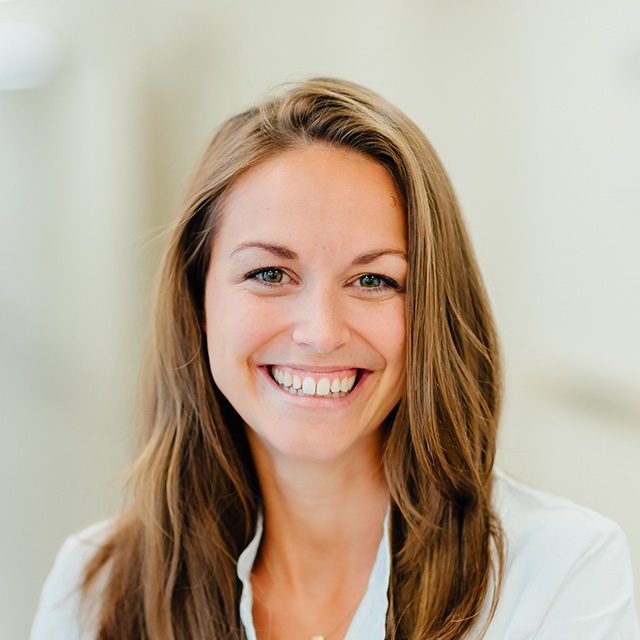
Details & appointment booking
3D simulation
Inpatient procedure
with overnight stay
Kuzbari
operating wing
Kuzbari
Safety Check
Kuzbari
quality guarantee
Photo documentation
2-3 weeks
downtime
Aftercare
Details & appointment booking
3D simulation
Inpatient procedure
with overnight stay
Kuzbari
operating wing
Kuzbari
Safety Check
Kuzbari
quality guarantee
Photo documentation
2-3 weeks
downtime
Aftercare


 01 358 28 01
 Book now