










The greatest possible safety for your nasal surgery
In medicine the greatest possible safety always arises when three factors come together: excellent quality of the medical team, state-of-the-art technology and time for the patient. The Kuzbari Centre for Aesthetic Medicine sets standards in all three.
- Three nasal surgery specialists
- Our own operating theatres
- Surgery without time pressure
- Everything under one roof
- 2,000+Nasal operations
- 3Nasal surgery specialists
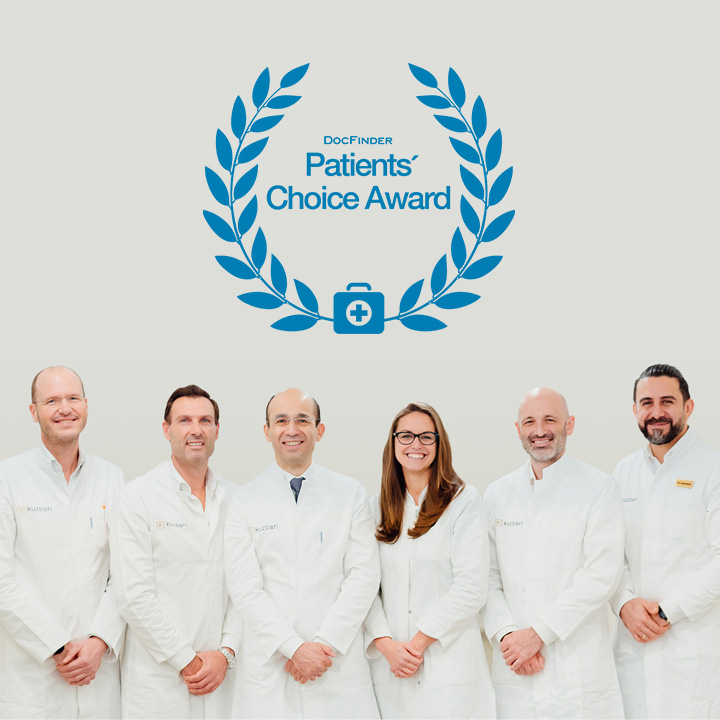
- 11Times in a row Patients’ Choice Award
- 38DocFinder awards in total
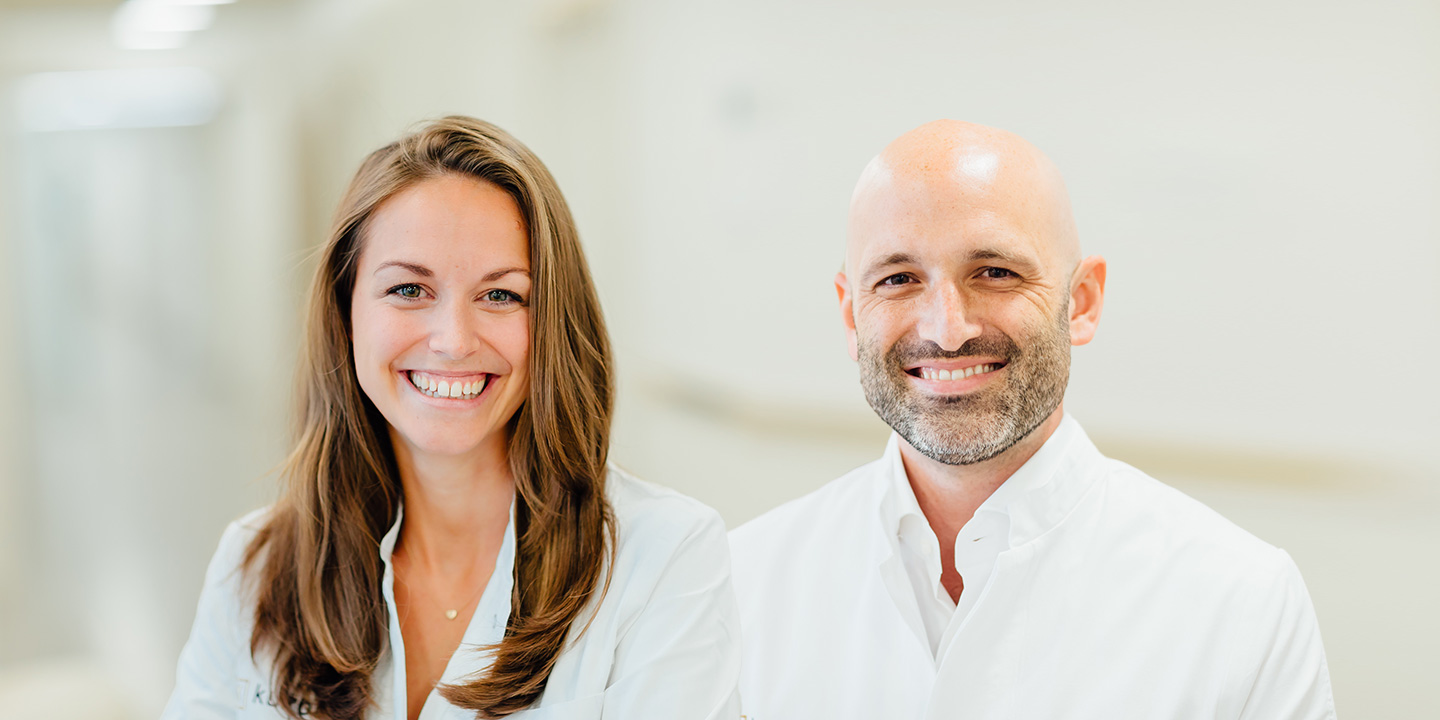
Three specialists for the nose
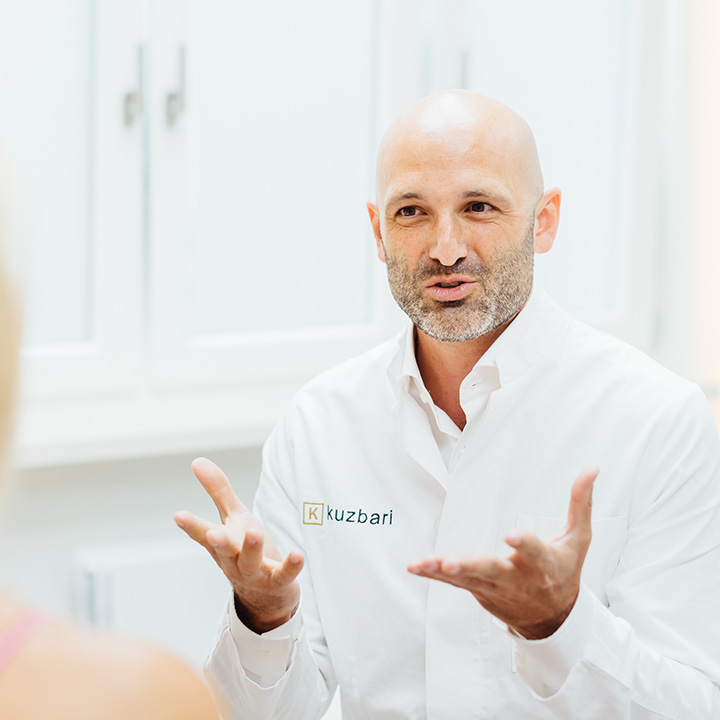
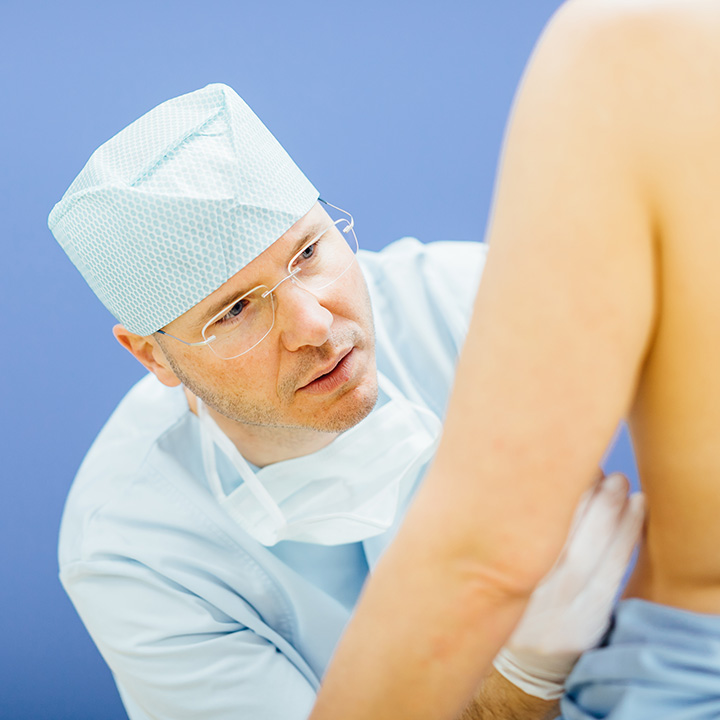
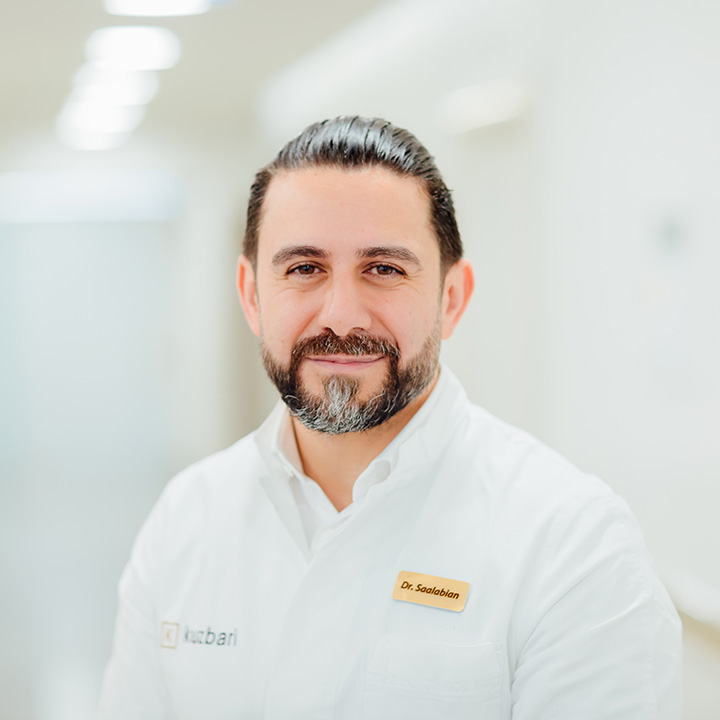
Univ. Doz. Dr. Rafic Kuzbari, Dr. Christoph Grill and DDr. Jessica Wittmann operate on noses at the Kuzbari Centre. Whoever advises you also operates on you and sees you again at the check-ups.
Medical quality
Dr. Christoph Grill and DDr. Jessica Wittmann specialise in nasal surgery. Through their outstanding expertise they shaped for years the excellent reputation of the nationally renowned department of plastic surgery at the Wilhelminenspital in Vienna, where they also came to know and value each other. Numerous scientific papers, an above-average amount of ongoing further training and memberships of the most respected plastic surgery societies in the world round off their professional standing.
Univ. Doz. Dr. Rafic Kuzbari, the founder of the centre, brings decades of experience in plastic surgery and also takes on demanding revision procedures on noses that have already been operated on. Read more about Dr. Christoph Grill, about DDr. Jessica Wittmann and about Univ. Doz. Dr. Rafic Kuzbari.
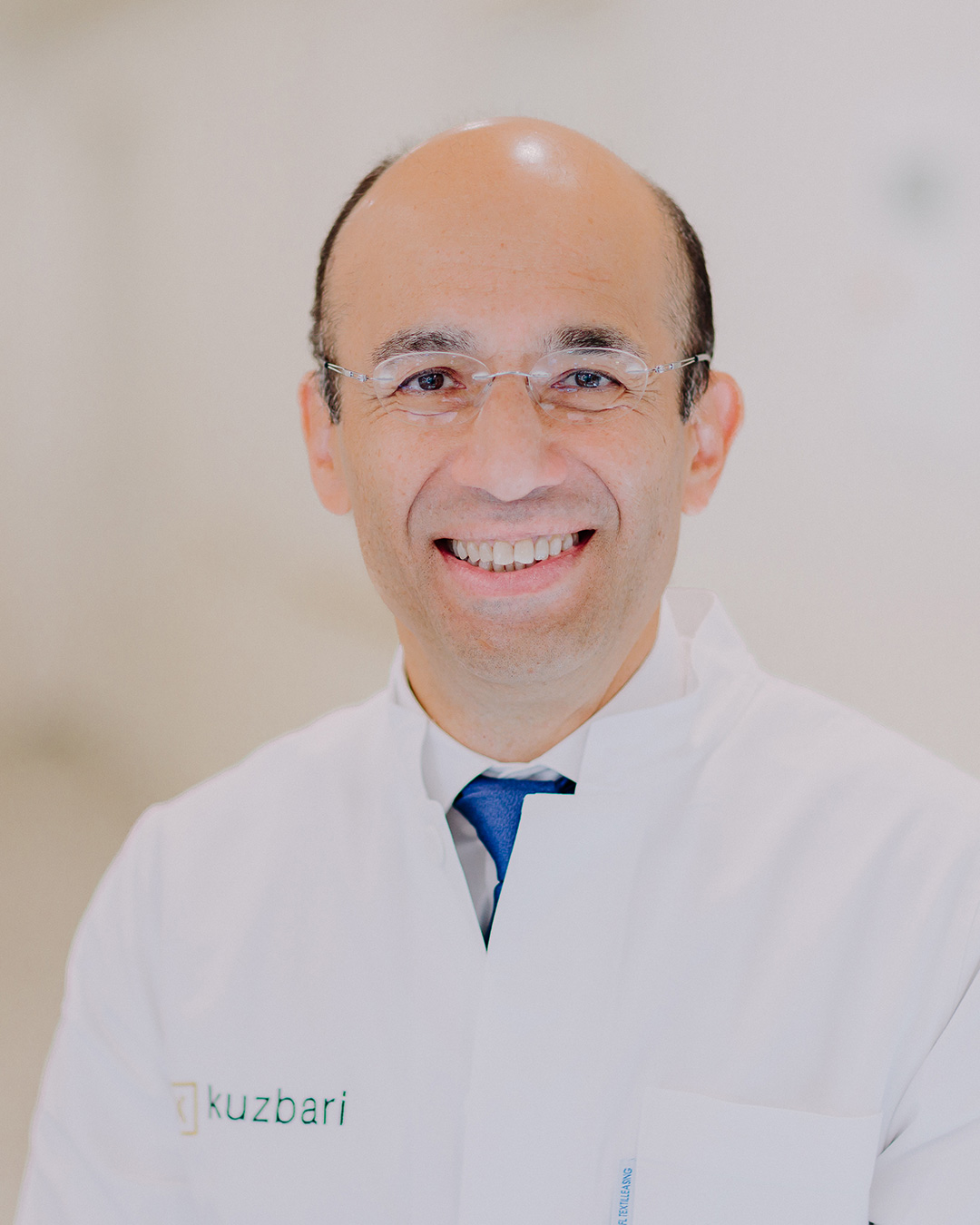
Founder of the Kuzbari Centre. He also takes on demanding revision procedures and has worked with the Piezotom for years.
View profile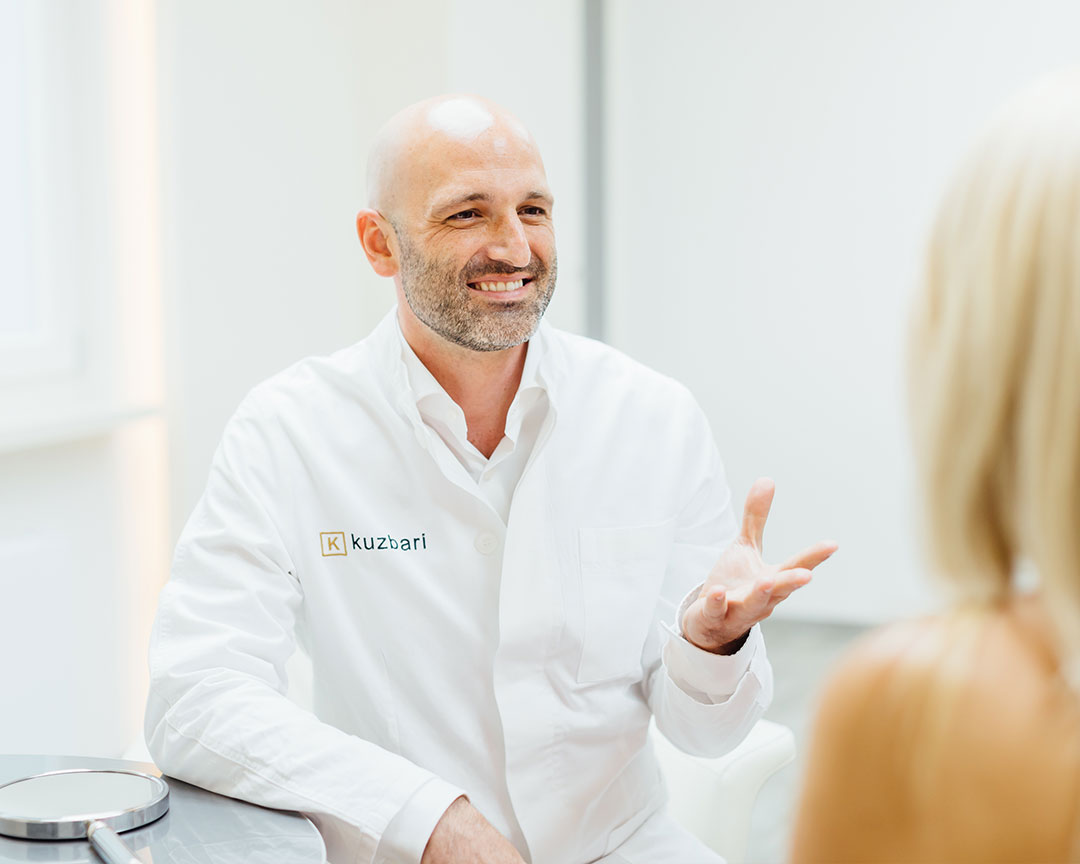
Focus on facial and nasal surgery, repeatedly honoured by the Austrian Society for Aesthetic Surgery.
View profile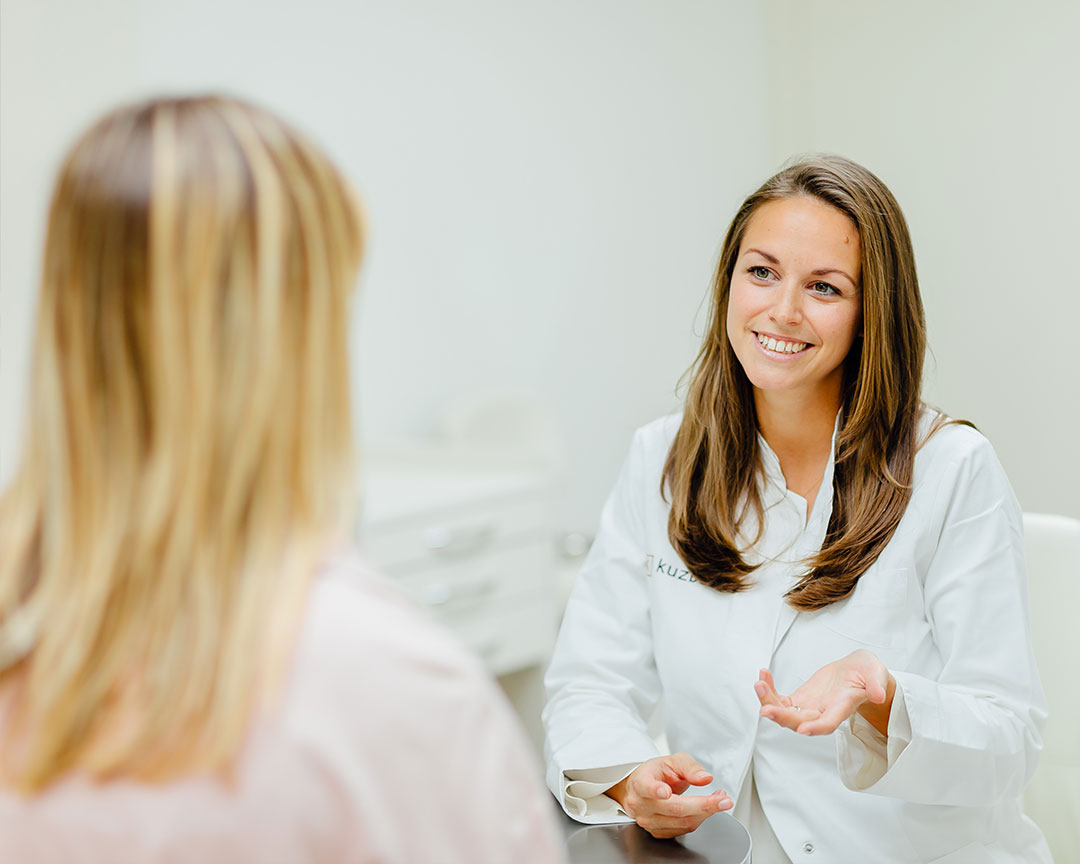
Works exclusively on the face and, where the findings suit it, with the nose-bridge-preserving technique.
View profileTechnique that lowers the risk
Safety is not only a question of rooms and routines, but also of the method chosen. We work a great deal with the modern nose-bridge-preserving technique known as dorsal preservation, as well as with hybrid techniques — not exclusively with traditional structural septorhinoplasty. The natural bridge of the nose is preserved rather than taken down and rebuilt.
This has three advantages: the outcome looks particularly natural, it is stable in the long term, and the risk of later irregularities along the bridge goes down — which counts above all with thin skin, where every tiny edge becomes visible. Certain deviations also recur less often. Which route is the gentler one is decided by the findings; the nose-bridge-preserving technique is not the right choice for every nose.
We stabilise the tip of the nose using modern cartilage-supported techniques. This considerably reduces the risk of drooping of the nasal tip over the years. And where bone has to be worked on, the Piezotom is used: an ultrasound instrument that cuts and smooths bone while leaving soft tissue, mucosa and vessels untouched. As a rule that means fewer bruises and less swelling in the days that follow.
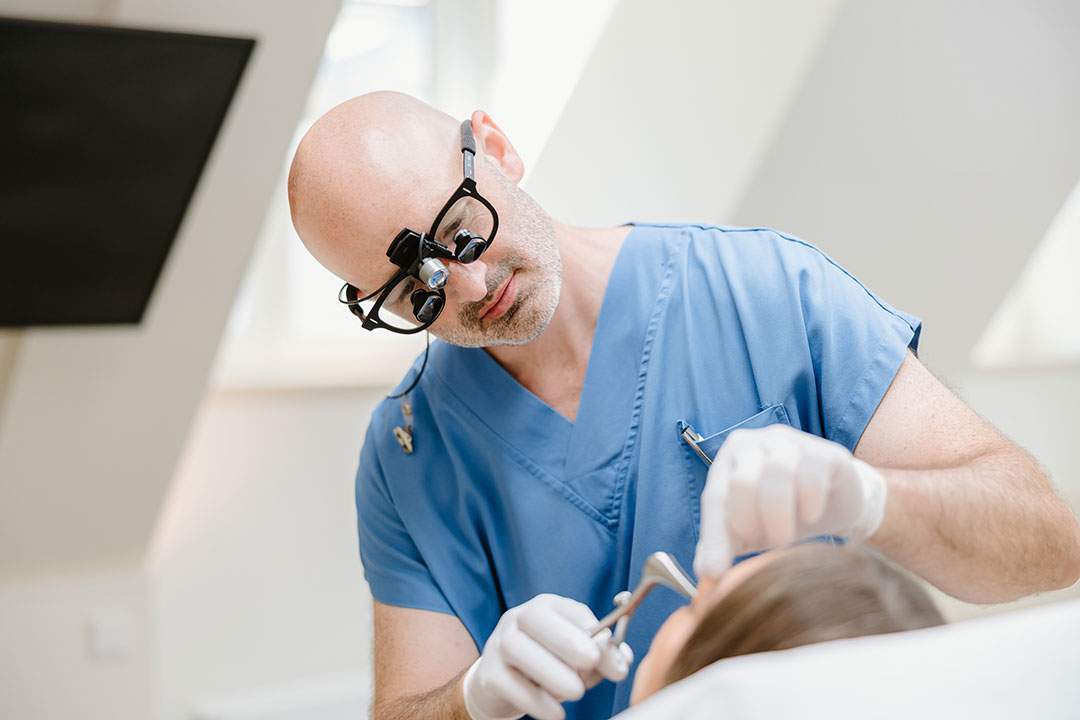
The findings decide
Which technique is used is not settled in advance. It follows from the examination outside and inside, from your skin thickness and from the stability of your cartilage framework.
State-of-the-art operating rooms
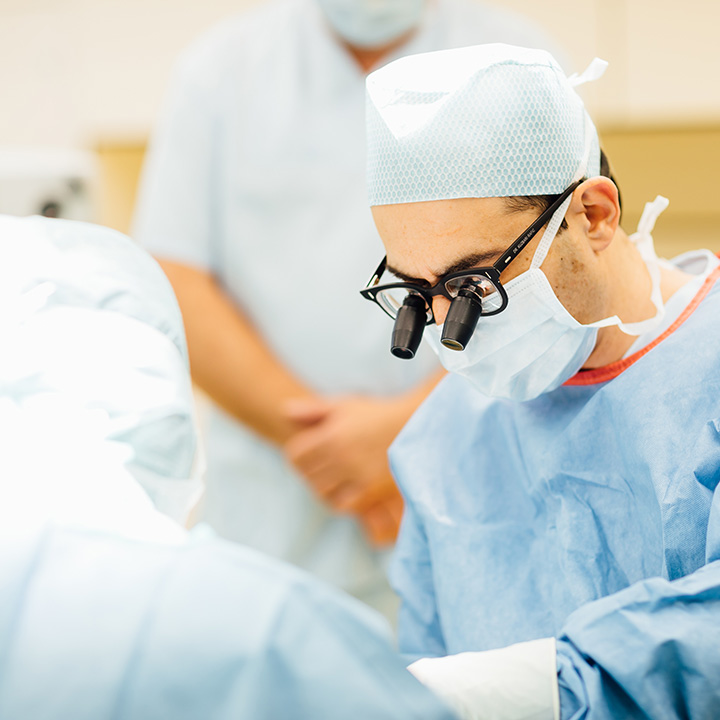
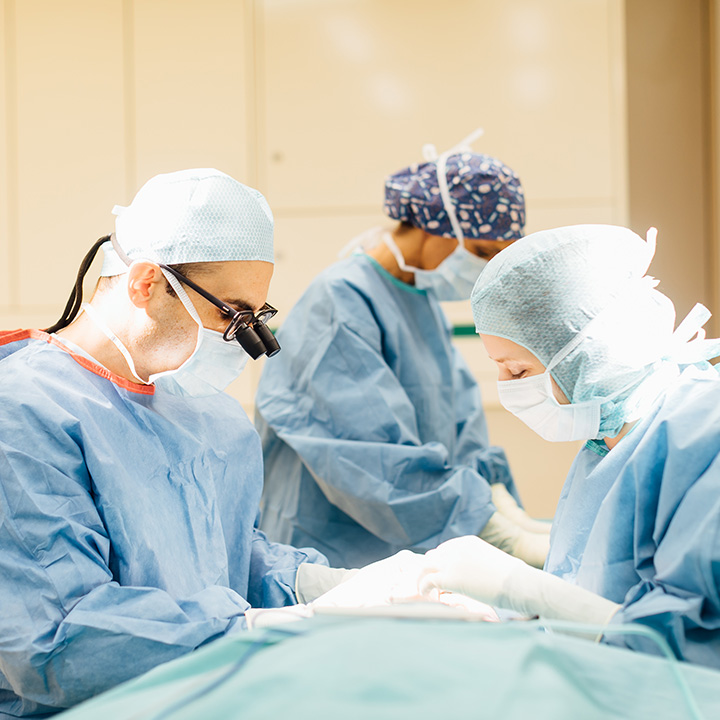
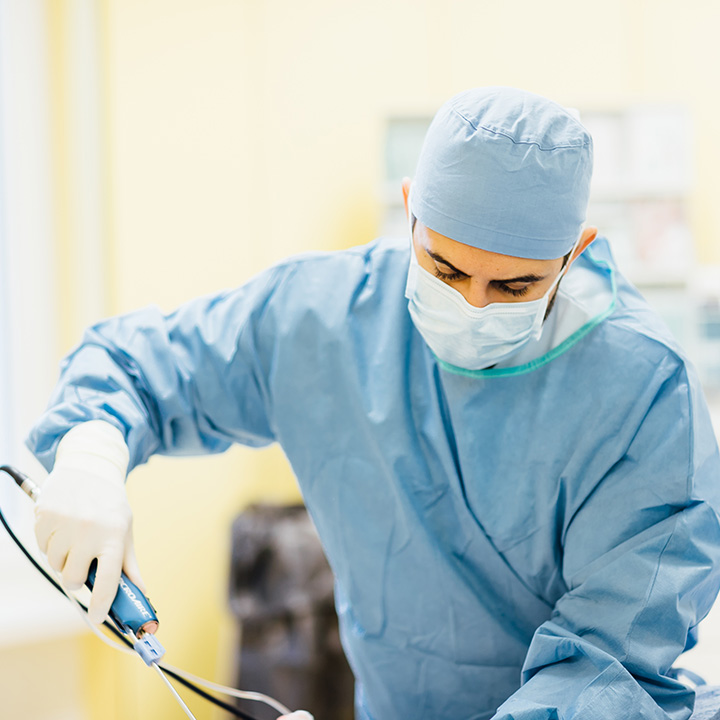
For our surgical procedures we use our own operating rooms. The rooms on site reach the highest hygiene class and meet every international standard. Thanks to those strict requirements we can offer our patients a surgical area whose uniquely circular shape forms an exceptional protective zone for the patient and the entire theatre team.
Added to that is what you cannot see from outside: anaesthesia, recovery room, nursing and patient rooms are all in the same building. There is no transport between facilities, no handover to an unfamiliar team and no waiting because a theatre is taken up by something else.
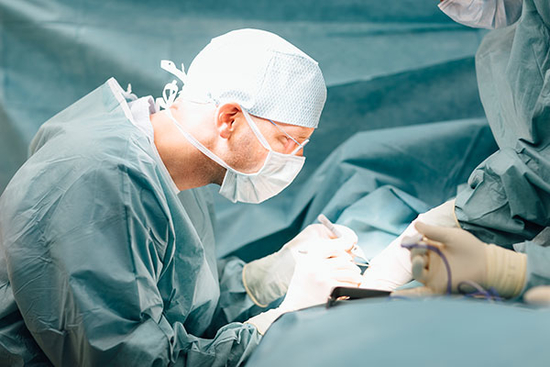
A protective zone with a circular shape
The circular design of the surgical area is not a decorative idea. It creates a continuous protective zone around the operating table in which movement and airflow can be controlled.
What our safety rests on
Time for results
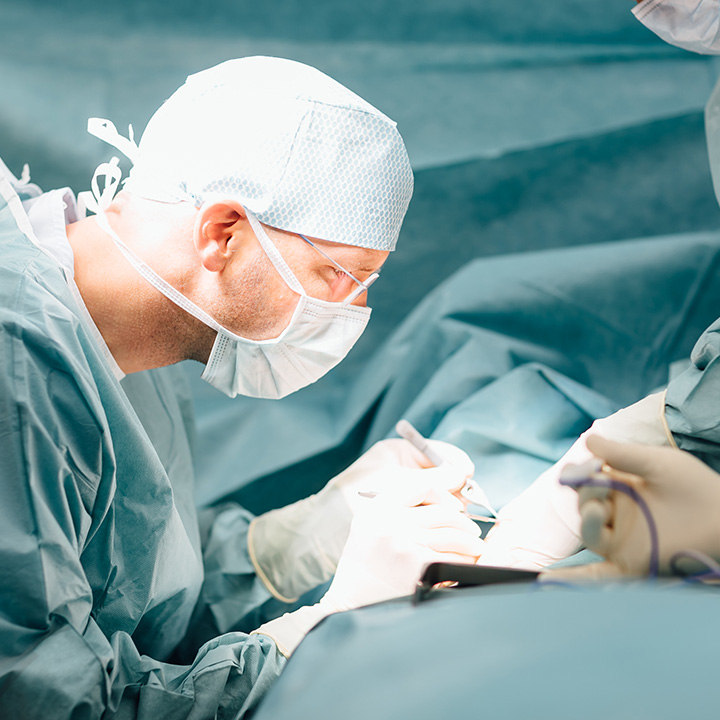
A rhinoplasty here takes one to four hours. That range is deliberate: we operate in our own theatres and therefore without time pressure — for as long as it takes until every detail is right. How long a procedure takes is decided by the findings, not by the appointment book.
All that counts for us is what is best for our patients. Compromises that arise from a tight time slot are not an issue at the Kuzbari Centre, because that tight slot does not exist. A day’s operating list is laid out from the start so that every operation gets the room its findings demand.
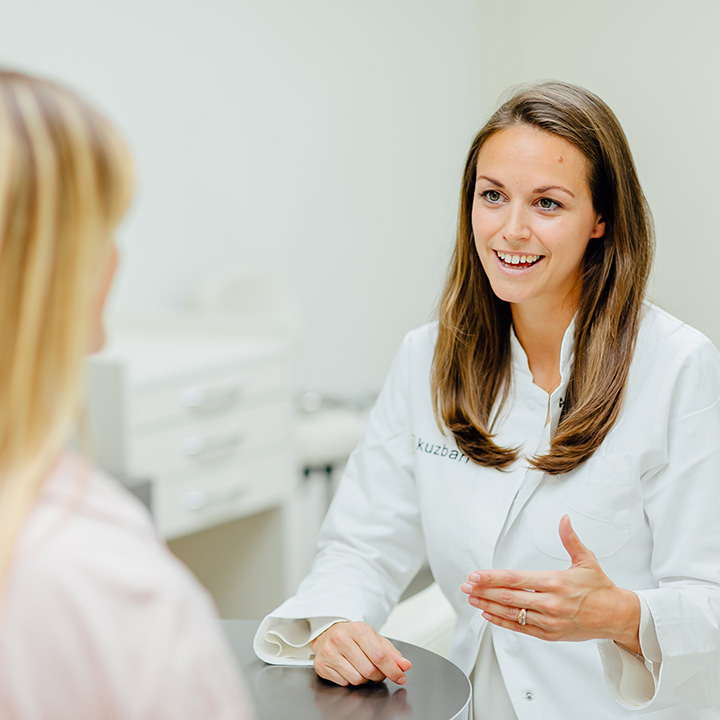
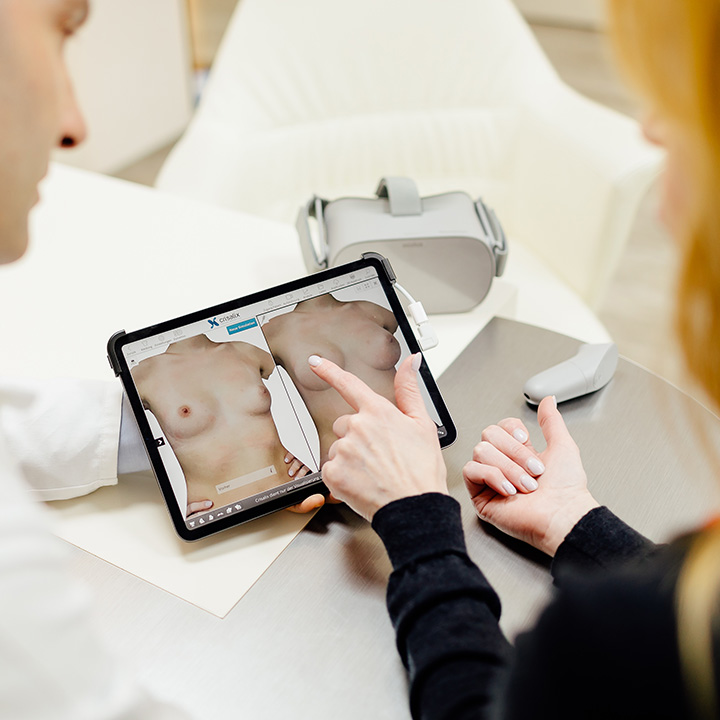
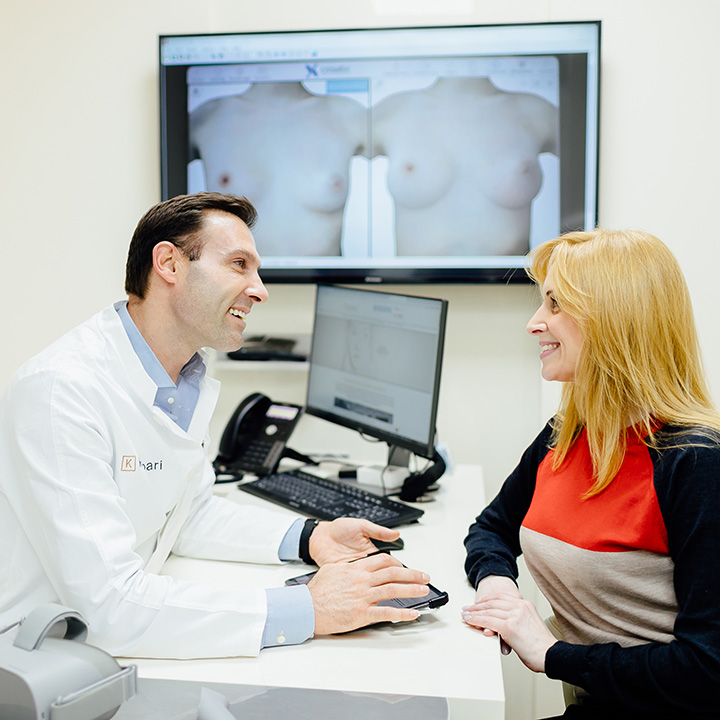
The same attitude applies beforehand: the initial consultation lasts more than an hour, examination and 3D simulation included. Anyone who is to make a good decision needs time — on both sides of the desk.
Safety starts before the day of surgery
Most of what makes a procedure safe happens before the first incision is made.
- Examination from the outside and from the inside in the initial consultation — shape and breathing are always assessed together.
- Informed-consent discussion covering the procedure, technique, risks and alternatives, set down in writing.
- Medical history and laboratory values before the procedure.
- Anaesthetic preparation through the pre-anaesthesia clinic in the building, with the team that accompanies you on the day.
- Clear instructions on which medicines are stopped beforehand.
- Ward round and marking on the day of surgery by the surgeon in person.
“The miracle is that the body heals”
A perfectionist who believes in no perfection: Univ. Doz. Dr. Rafic Kuzbari on beauty that comes from within — and on the humility before every procedure. “The miracle is not that we cut into the body, but that the body has the ability to heal afterwards.”
The full episode: Aesthetic Insights 10 — The man behind the scalpel
Safety after the operation
After the recovery room you spend one night in a patient room in the building; nursing staff are there around the clock. The next morning the follow-up talk takes place in your room, and you can leave the Kuzbari Centre before 10 o’clock.
On discharge you have your surgeon’s mobile number in your pocket, so that you can reach your medical contact outside consulting hours. All check-ups are included; nobody has to weigh up whether an extra appointment is worth it.
- Recovery room
Monitoring until you are stable and awake. Your surgeon comes to see you.
- An inpatient in the house
Your own patient room, nursing around the clock, no transfer to another facility.
- Follow-up talk and discharge
Examination, a review of how things went, instructions for home, your surgeon’s mobile number.
- First check-up
The splint or dressing comes off and wound healing is assessed.
- Further check-ups
Until the final outcome is visible after six to twelve months. All check-ups are included.
The initial consultation lasts more than an hour and comes without obligation.
Frequently asked questions about safety
Where does the surgery take place?
In our own operating rooms at the Kuzbari Centre. They reach the highest hygiene class and meet every international standard; their uniquely circular shape forms a protective zone of its own for patient and theatre team.
Who will operate on me?
One of the three nose specialists of the house: Univ. Doz. Dr. Rafic Kuzbari, Dr. Christoph Grill or DDr. Jessica Wittmann. Whoever advises you also operates on you.
Why does the operation take one to four hours?
Because we operate in our own theatres and therefore work without time pressure — for as long as it takes until every detail is right. How long a procedure takes is decided by the findings, not by the appointment book.
How does the anaesthetic work?
As a general anaesthetic, managed by experienced anaesthesia specialists. Preparation runs through the pre-anaesthesia clinic in the building; on the day of surgery the anaesthetist introduces themselves to you in person.
Do I have to stay overnight?
Yes, one night in a patient room in the building. Nursing staff are there around the clock. You can leave the Kuzbari Centre before 10 o’clock the following morning.
What are the risks of a rhinoplasty?
Bruising, swelling, secondary bleeding, infection and the possibility of a corrective procedure. These points are discussed openly in the informed-consent talk, and not first on the day of surgery.
Does the chosen technique lower the risk?
Where the findings suit it, yes: the nose-bridge-preserving technique keeps the natural bridge intact, which lowers the risk of later irregularities. Which nose it suits is decided by the findings.
Am I left on my own after discharge?
No. You receive your surgeon’s mobile number so that you can reach your medical contact outside consulting hours, and you can turn to the Kuzbari Centre at any time. All check-ups are included.
Will I need nasal packing?
No. At the Kuzbari Centre nasal packing is not necessary. After the operation you wear a nasal splint or a nasal dressing, for around ten days.
Do you take on previously operated noses?
Yes. Four in ten nasal operations at the Kuzbari Centre are revision rhinoplasties on a nose that has already been operated on. Such procedures call for particular experience, and we deliberately take these cases on.
Your consultation
More than an hour of time, an examination from outside and inside, a 3D simulation and an honest assessment of what is possible — without obligation.
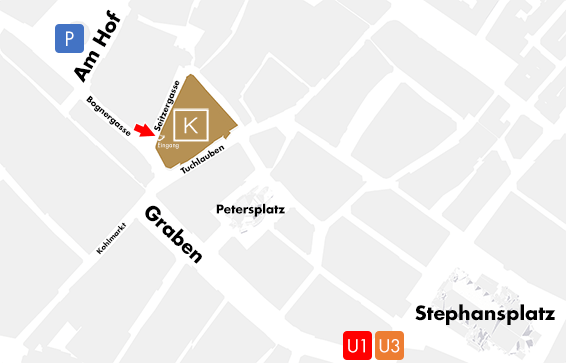
Monday to Friday, 08:00 to 18:00 · Seitzergasse 2-4, 1010 Vienna


 01 358 28 01
 Book now