
The most common reasons for nose surgery
What bothers you about your nose is the starting point of every consultation. What is possible depends on your anatomy: on the proportions of your face, the supporting framework of the nose and the thickness of your nasal skin. Several concerns are often linked; a hump, the nasal tip or a deviation are then corrected together so that the result is harmonious.
- Form and breathing always examined together
- 3D simulation before you decide
- Operation of 1 to 4 hours
- One case from the Kuzbari Centre per concern
More than an hour of time, an examination from outside and inside and a 3D simulation, with no obligation.
The photos are of patients of the Kuzbari Centre who consented to publication. They show what was possible in a particular starting situation, not what is possible for you. Every nose heals differently. See all before and after cases
Rhinoplasty Vienna
A hump on the bridge of the nose
The bridge of the nose largely shapes the profile of your face. A hump consists of a bony and a cartilaginous part. Both are worked on in small, controlled steps or, with the dorsal preservation technique, not removed at all but lowered.
If only the hump is removed, the new straight line can suddenly make the nose look longer or the tip appear lower than before. That is why the aim of the operation is worked out together in the 3D simulation, with the whole nose in view.
- Hump
before 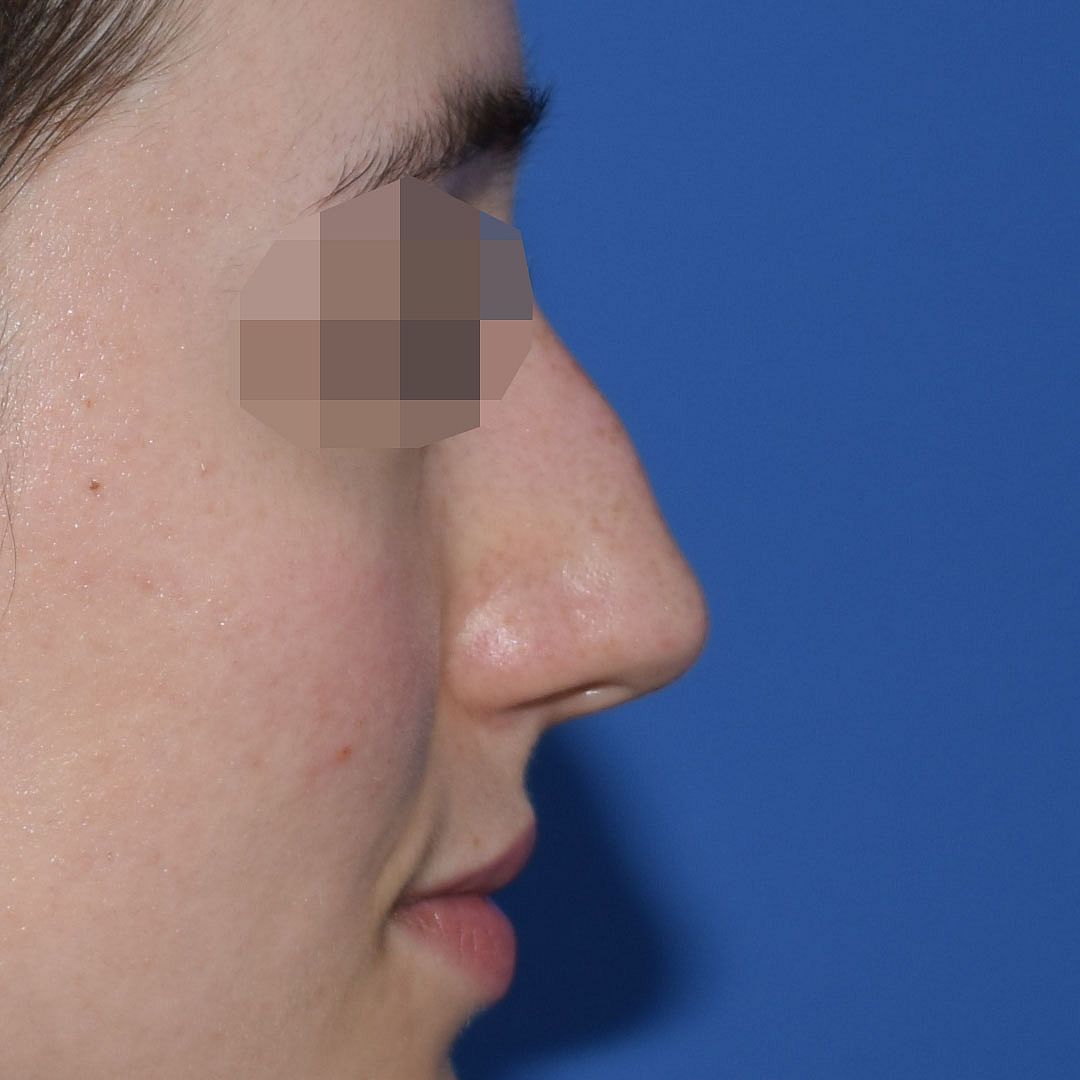
after 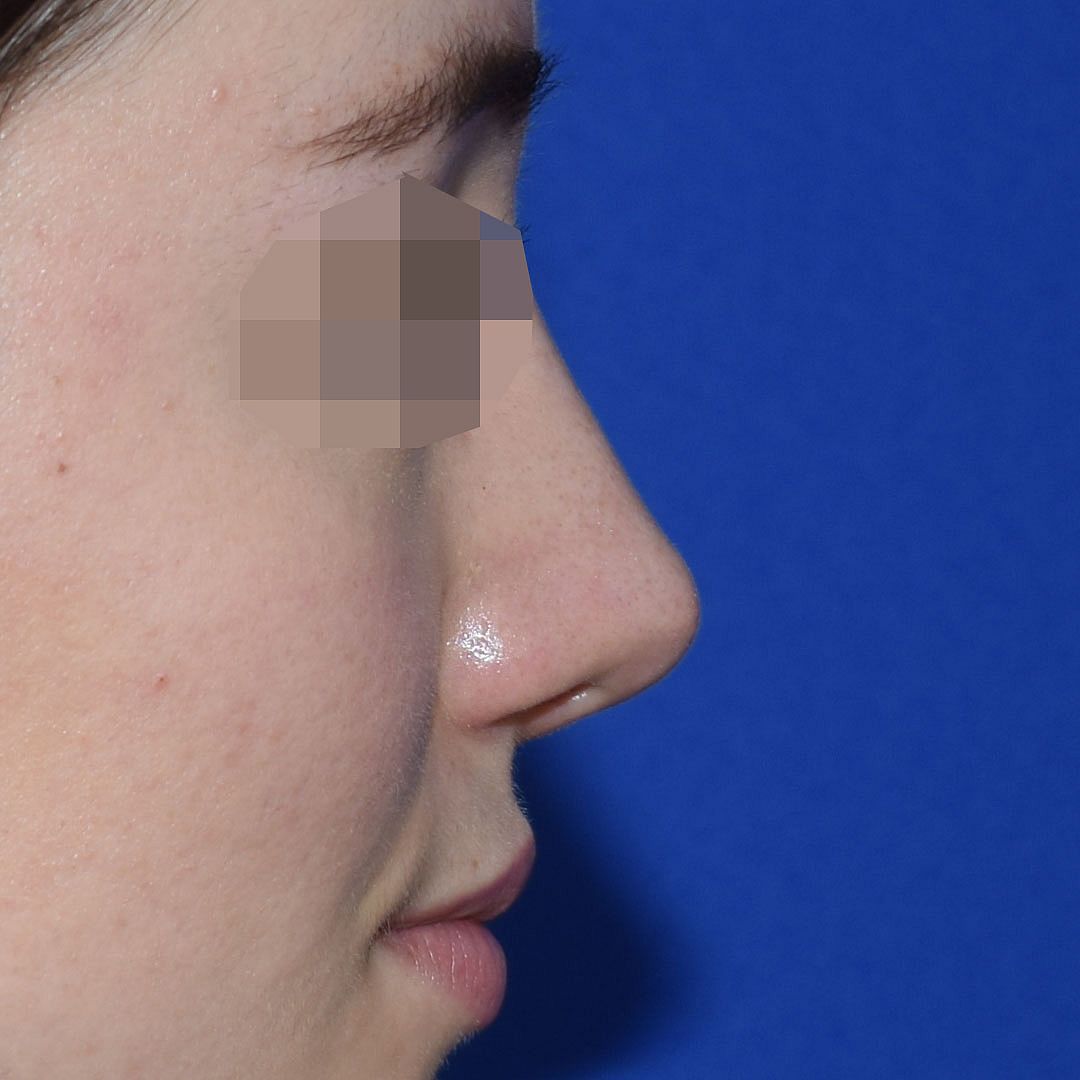
What bothered the patient above all was the nasal hump; she wanted a very minimally concave bridge and a nose that looks natural and not operated on. Open correction of the nasal shape and of the deviated septum. View case
Rhinoplasty Vienna
A wide or drooping nasal tip
The nasal tip is not made of bone but of two paired cartilages. How they are shaped, how far apart they sit and how firmly they are held determines the width, definition and height of the tip. If the tip cartilages sit far apart or are strongly curved, the tip looks round and undefined; suture techniques can bring the cartilages closer together and into shape.
If the tip droops mainly when you smile, a small muscle at the columella can be divided. So that the tip keeps its new shape, we stabilise it with modern cartilage-supported techniques. This significantly reduces the risk of the tip sinking again over the years.
- Nasal tip
before 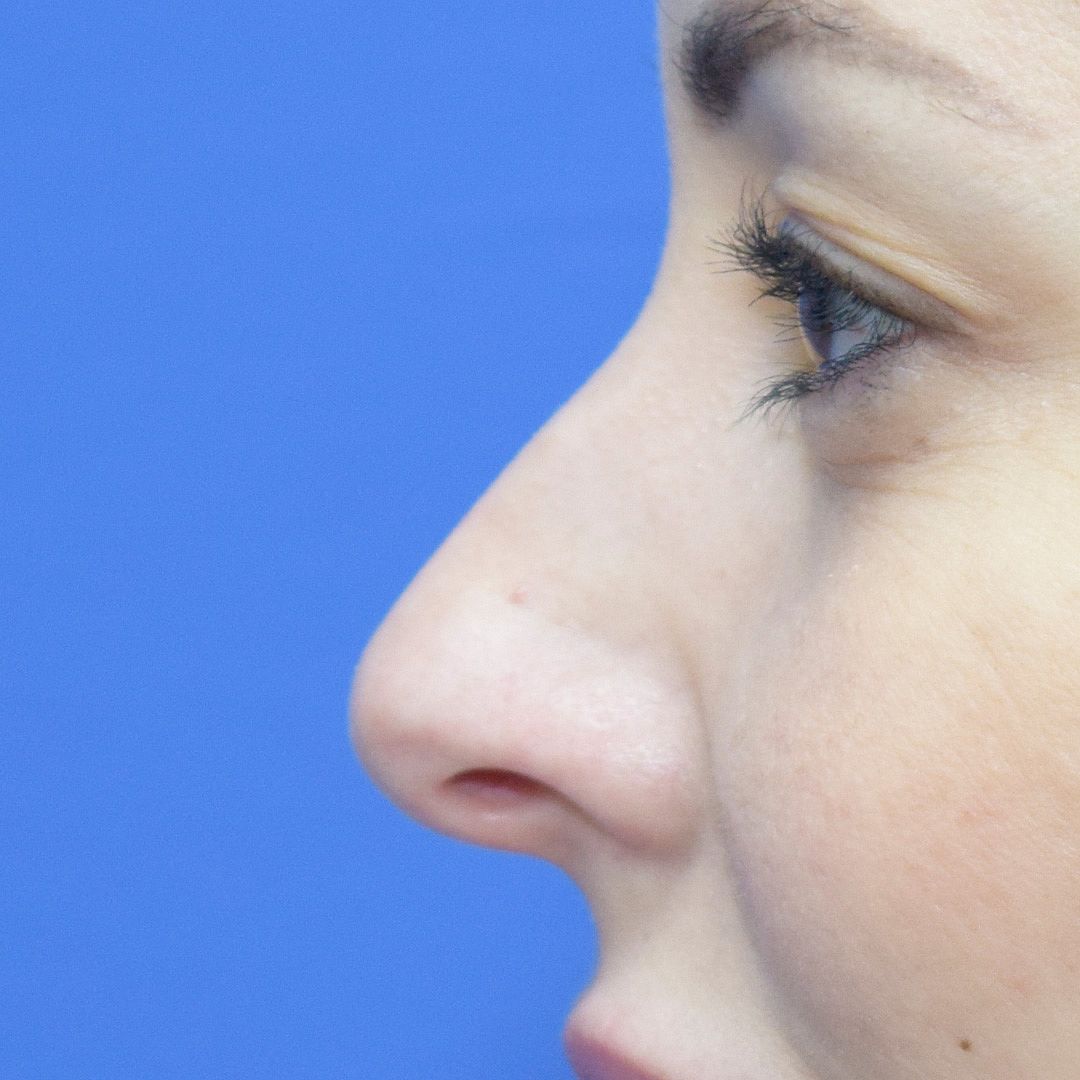
after 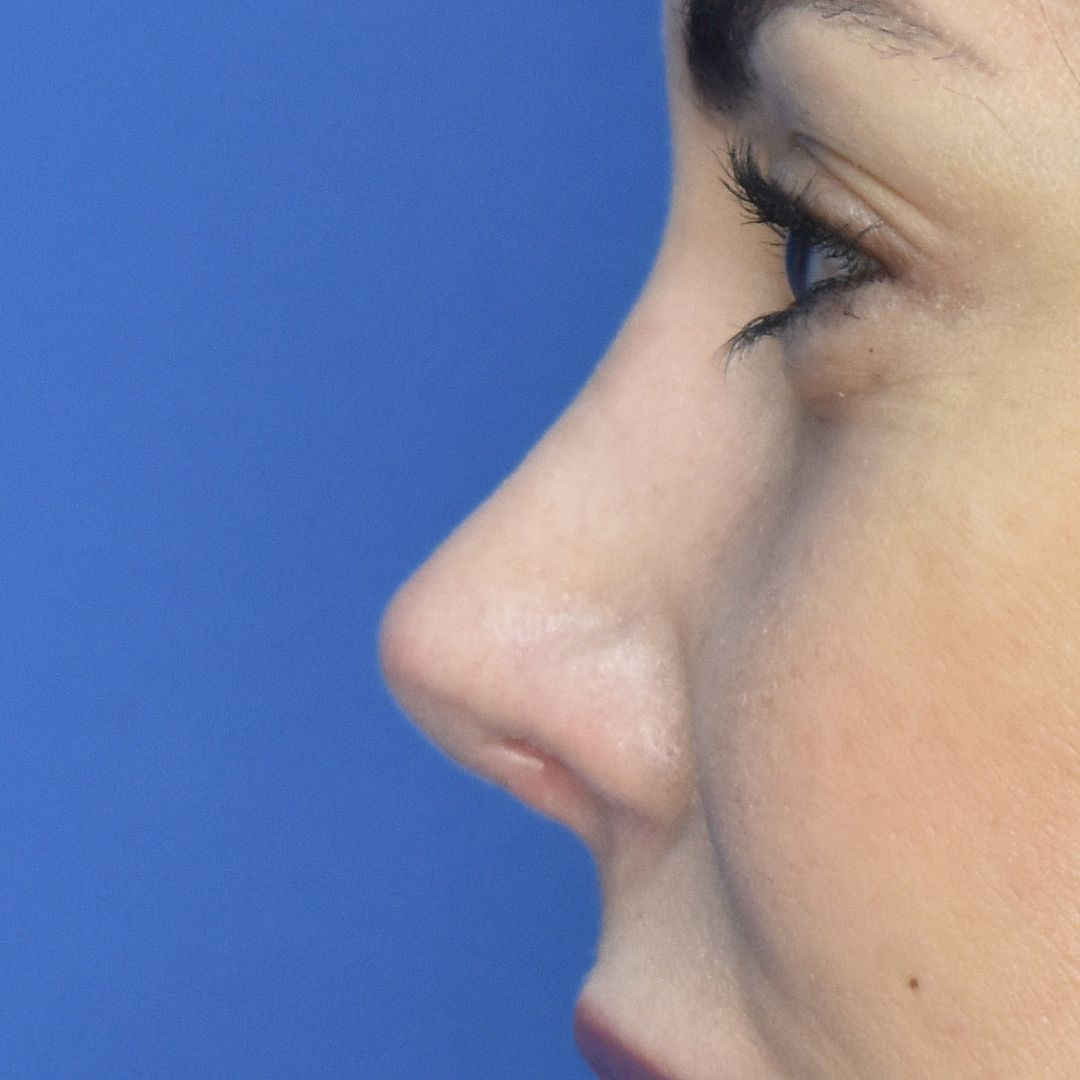
The patient found her nose prominent overall; she was bothered by the drooping tip and its round, poorly defined shape. She also hoped for better nasal breathing. Aesthetic and functional nose surgery. View case
Rhinoplasty Vienna
A crooked nose
A crooked nose can be congenital, result from an accident or remain after previous surgery. A crooked bridge is almost always linked to the nasal septum: if the septum is deviated, the outer nose is usually crooked too. If only the outside is straightened, the septum pulls the nose back over time. That is why the supporting framework is treated as well.
The deviated septum often obstructs breathing at the same time; straightening and functional correction then belong in one procedure. With the dorsal preservation technique, certain deviations recur less often.
- Crooked nose
before 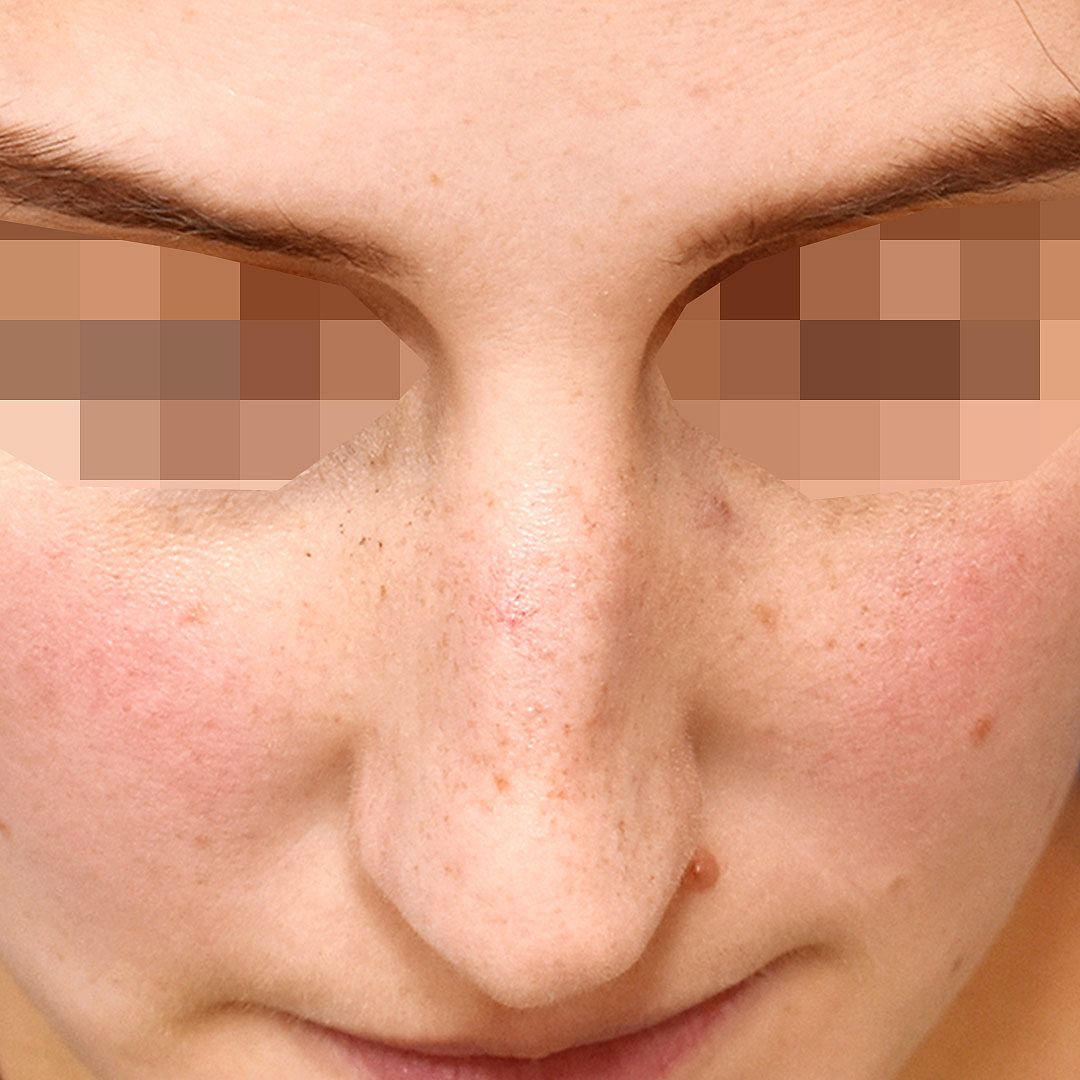
after 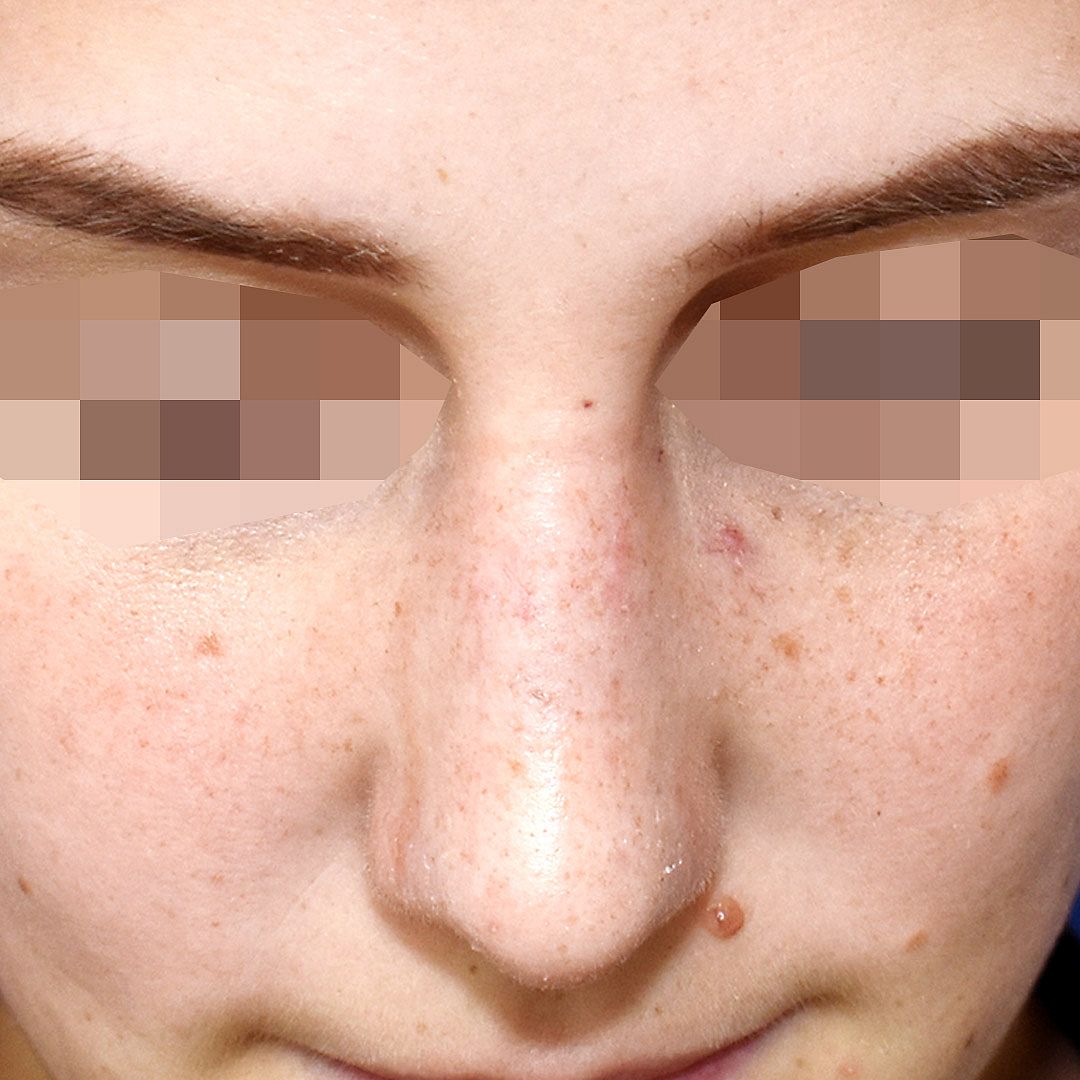
The patient had been bothered by the shape and function of her nose for years, with the shape mattering more to her. A deviated septum had already been diagnosed and her breathing had got worse. The nose was to be straight from the front and from the side, and the tip lifted a little. Open septorhinoplasty; the after photos were taken seven weeks after the operation. View case
Rhinoplasty Vienna
A wide nose or wide nostrils
The nostrils themselves can be wide, in which case the base of the nose is too broad. Or the nostril openings are large and wide open while the alae stay thin. Each calls for a different incision; the incisions lie where the skin already forms a crease and a fine line will hardly be noticeable later.
A wide nose is rarely caused by the nostrils alone. The tip cartilages, the width of the bony bridge or a low-set tip often play a part. That is why we assess the nose as a whole and tell you openly if correcting the nostrils alone will not bring the result you have in mind.
- Wide nostrils
before 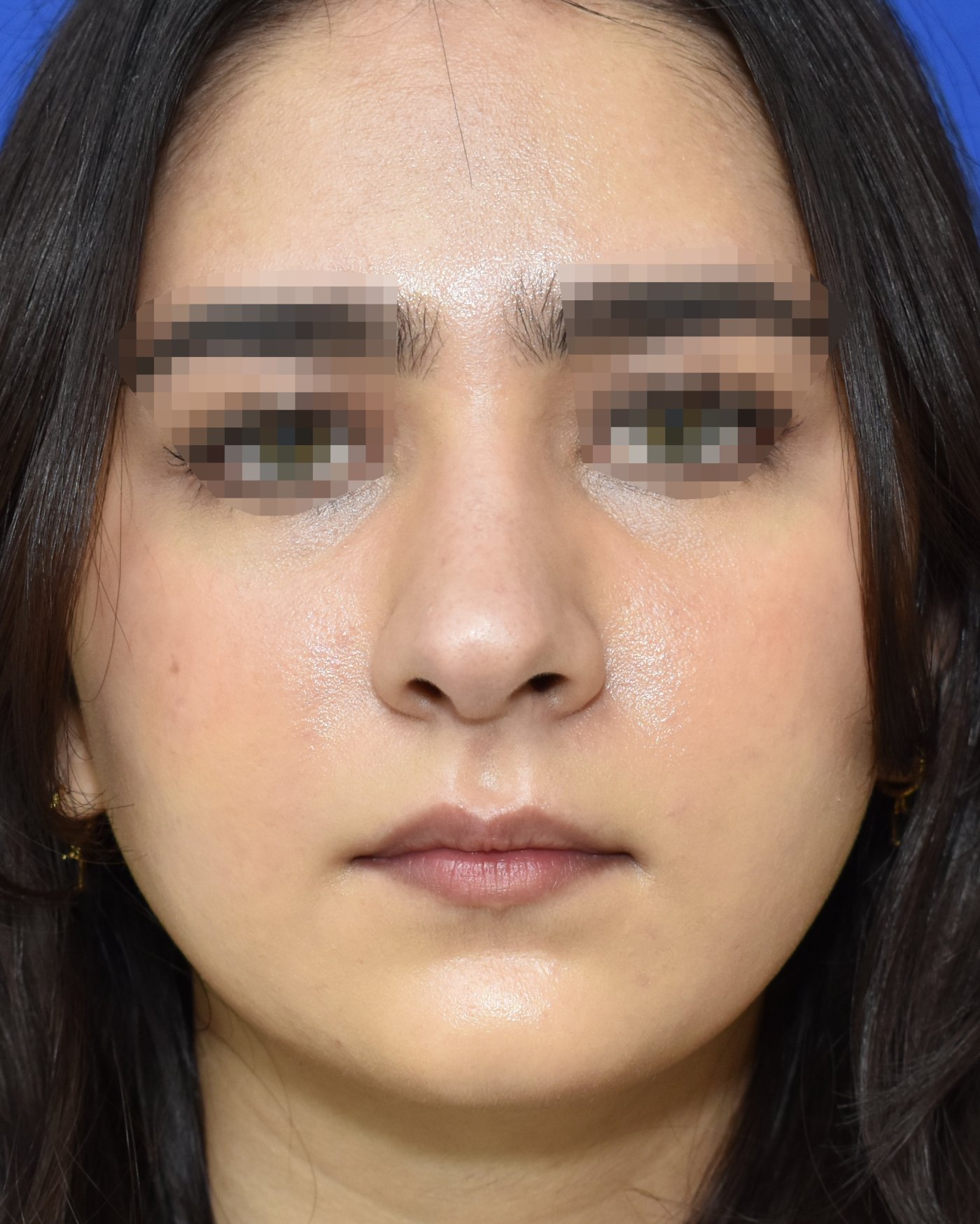
after 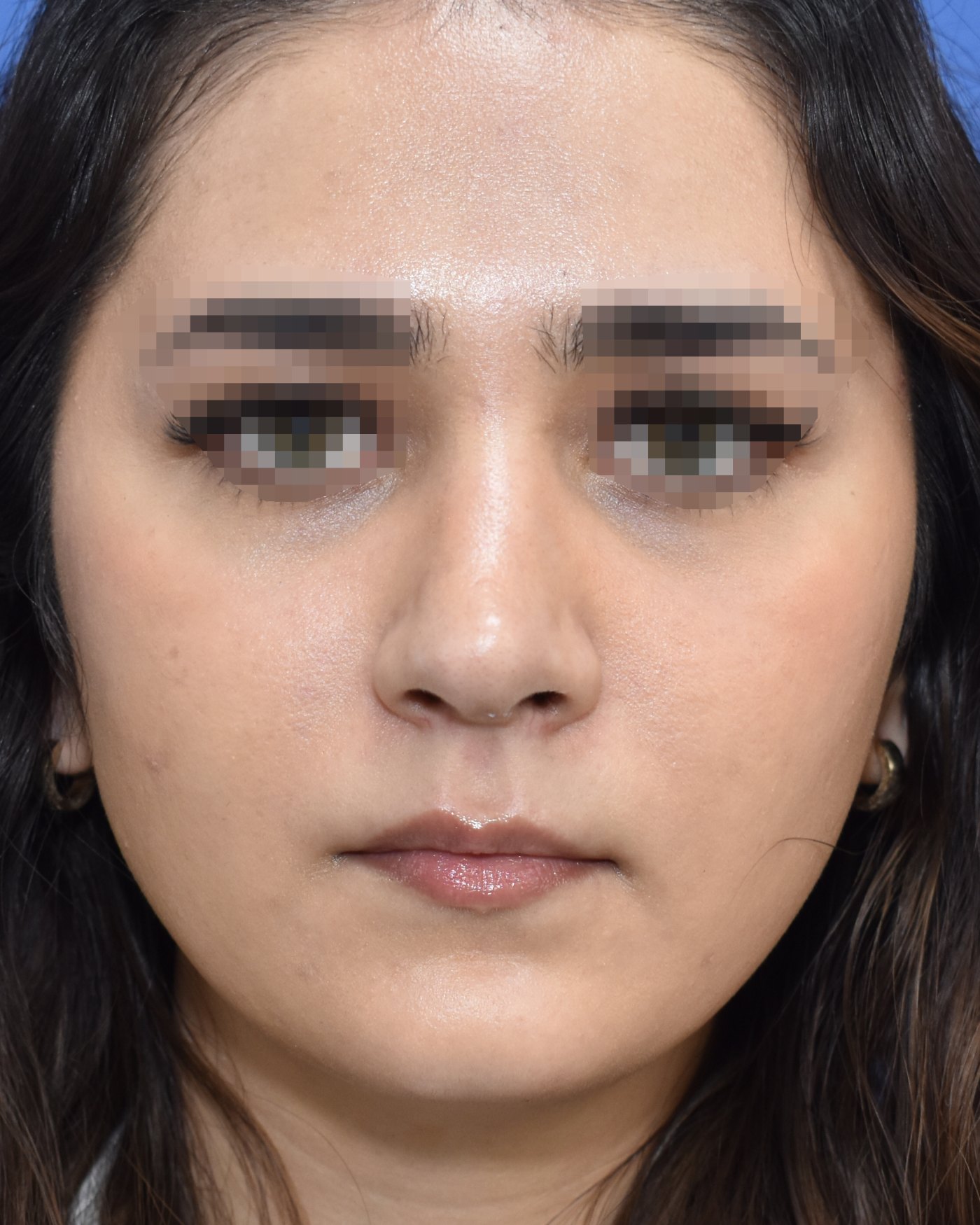
The patient was bothered purely by the shape of her nose: the hump, overly wide nostrils and the deviation. She liked the tip itself. Open septorhinoplasty, performed by Dr. Christoph Grill. View case
Rhinoplasty Vienna
A nose that looks too large for the face
“Too large” is almost never a question of absolute centimetres but of proportion. A nose can be objectively small and still look dominant because the chin or cheeks offer little counterbalance. That is why we do not measure the nose alone but the relationship between forehead, nose, lips and chin.
Usually the nasal root, the tip and the septum are worked on in combination. A nose cannot be reduced at will: skin thickness, breathing and facial proportion set the limit. We discuss it in the first consultation, before you decide.
- Nose too large
before 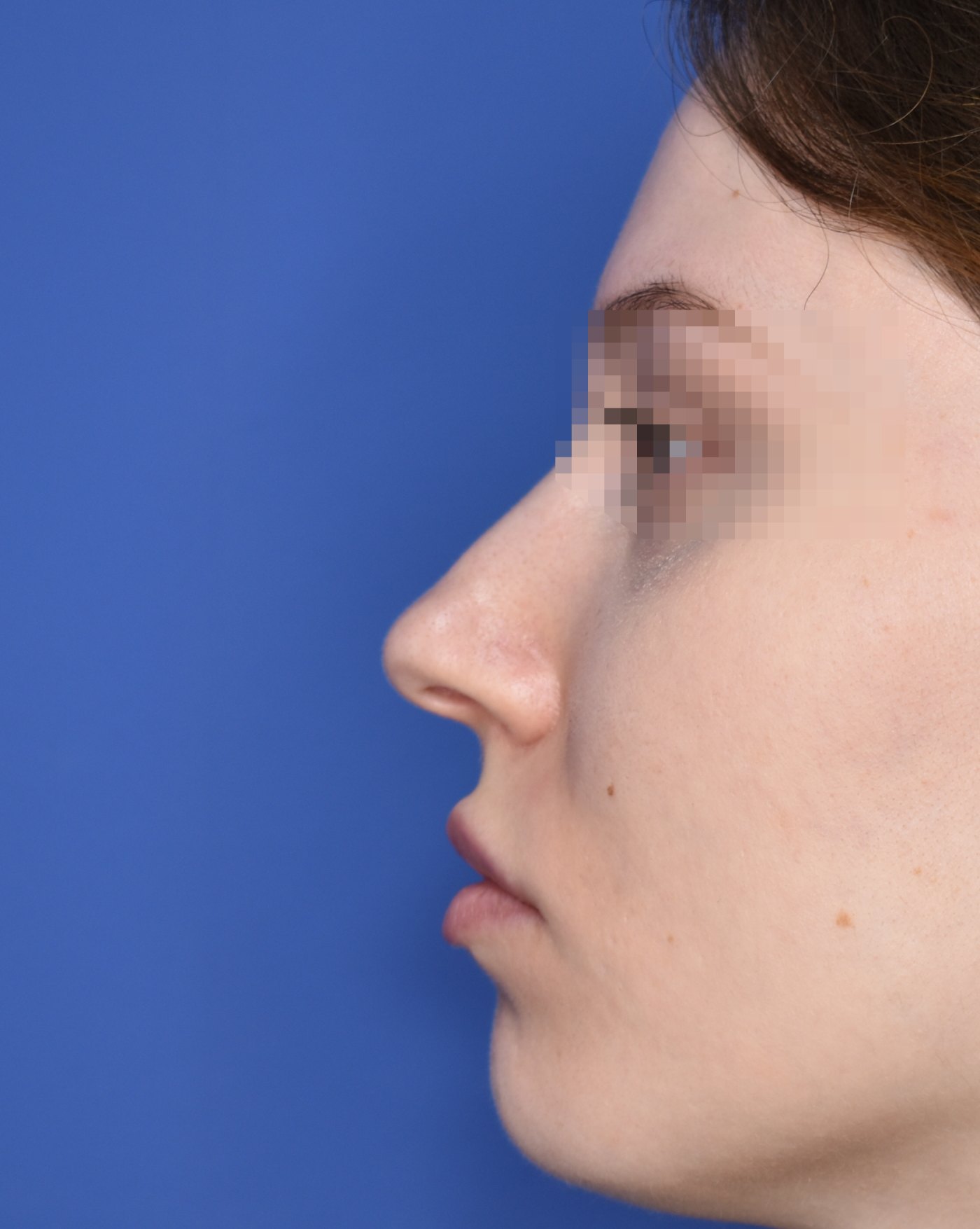
after 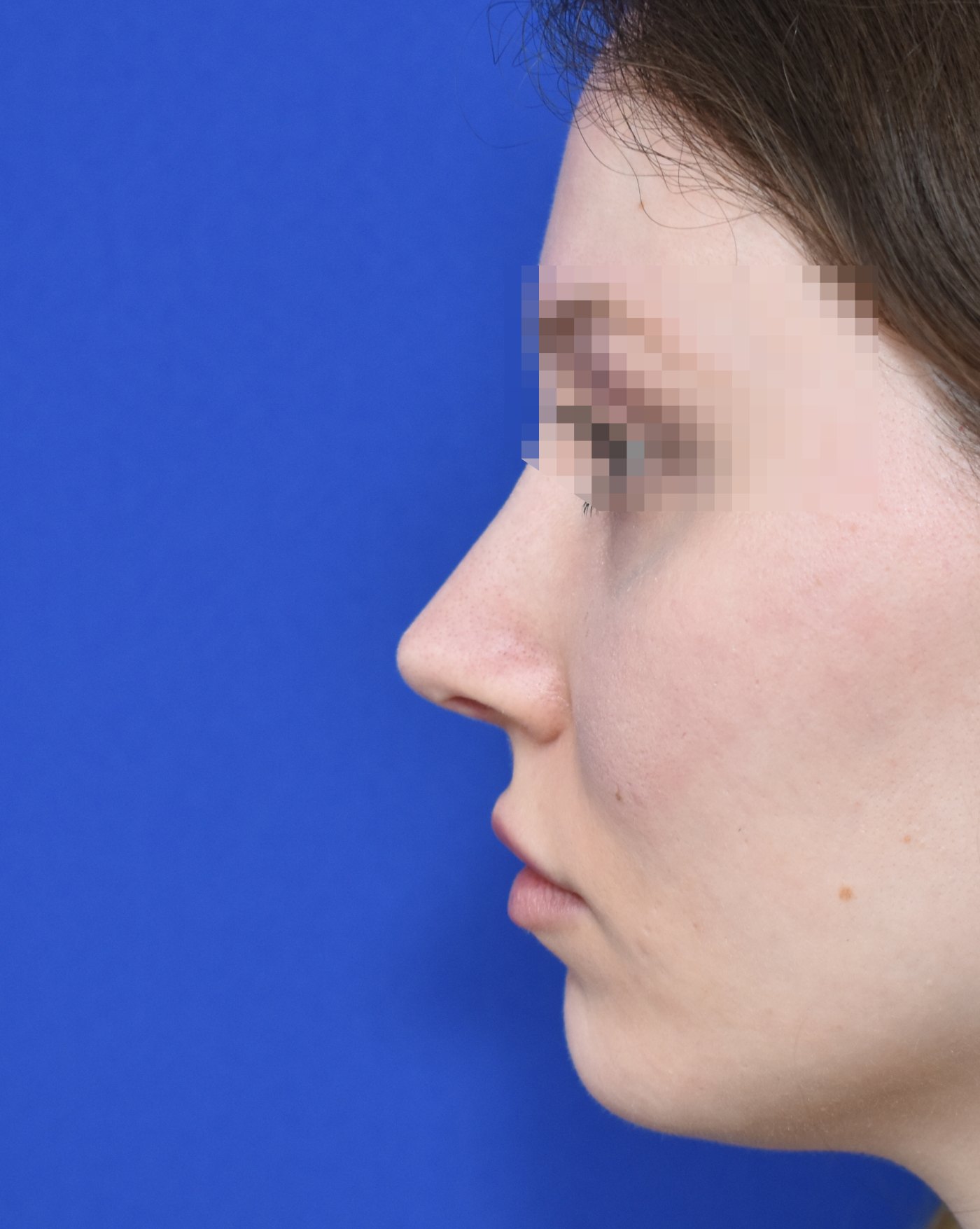
For ten years the patient had felt her nose was simply too large, with no breathing problems. She found the tip too broad and too bulbous, and the bridge was to become lower and straighter; she explicitly did not want an over-defined nose. Open septorhinoplasty, performed by Dr. Christoph Grill. View case
Rhinoplasty Vienna
Obstructed nasal breathing
A deviated septum often blocks one side, leading to one-sided congestion, frequent sinus infections or disturbed sleep. Enlarged turbinates narrow the nasal passage, especially during exertion or at night. Weak nasal walls collapse when you breathe in, often during sport or when lying down.
The examination from inside shows which narrowing applies to you. Form and breathing can be corrected in one procedure: one anaesthetic, one healing phase. Depending on the findings, we treat polyps or sinus conditions at the same time or bring in an ENT specialist.
- Nasal breathing
before 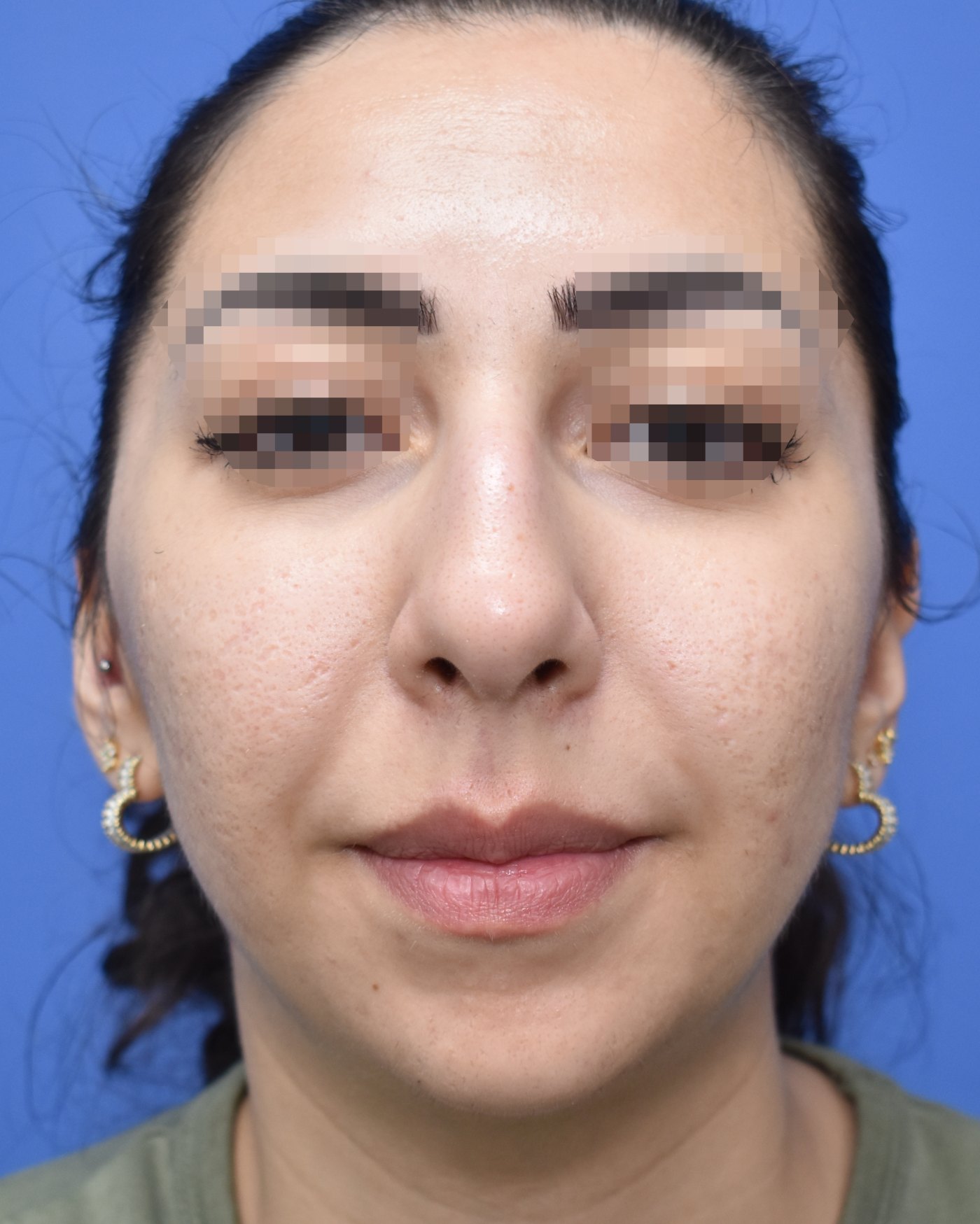
after 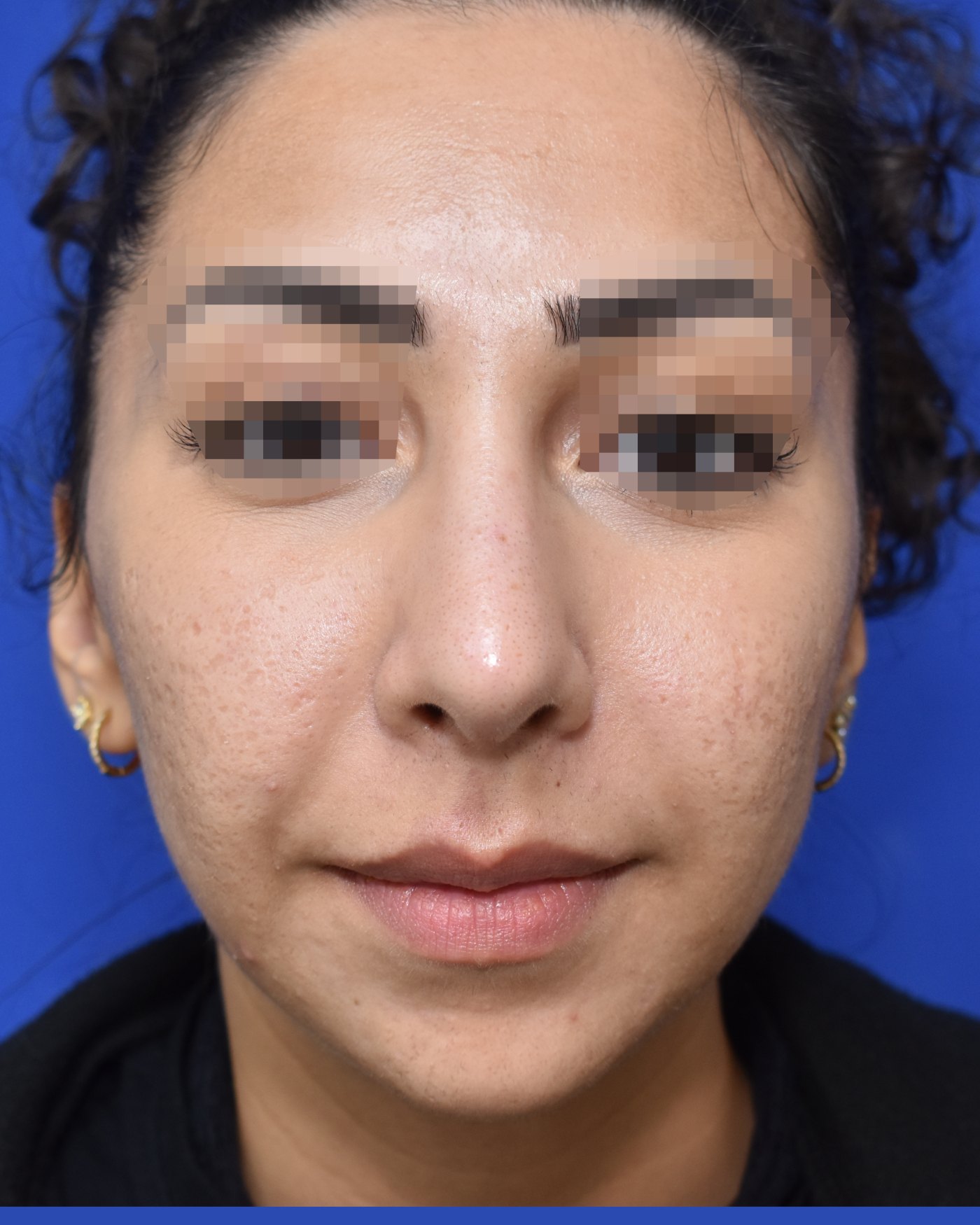
The patient wanted a refinement of the shape of her nose and better nasal breathing. Open septorhinoplasty with lateralisation of the lower turbinates, performed by Dr. Christoph Grill. View case
More about functional rhinoplasty · Functional-aesthetic rhinoplasty
Rhinoplasty Vienna
A correction after previous surgery
Four in ten nose operations at the Kuzbari Centre are revision operations on a previously operated nose. Many patients describe that after previous surgery their nose no longer suits their face, for example a tip that has become too pointed, a sunken area on the bridge or a visible edge. Others come because their breathing has not improved after the procedure or has even got worse.
The tissue is scarred and cartilage is sometimes missing; a cartilage graft from the ear or rib is often needed. At the Kuzbari Centre, revision and repeat surgery is performed by Univ. Doz. Dr. Rafic Kuzbari and Dr. Christoph Grill. As a rule, at least 12 months should pass between the previous operation and the correction.
- Previously operated nose
before 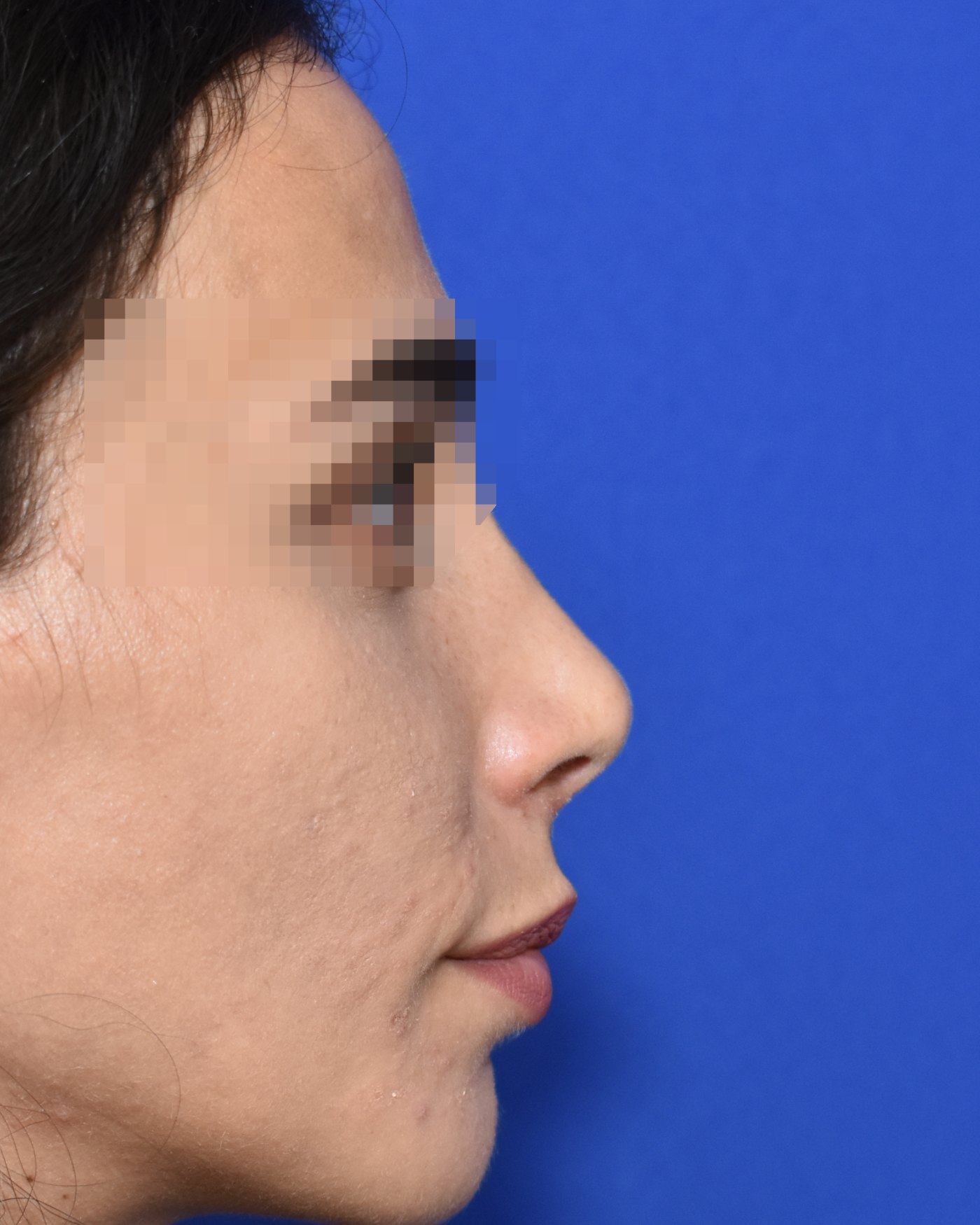
after 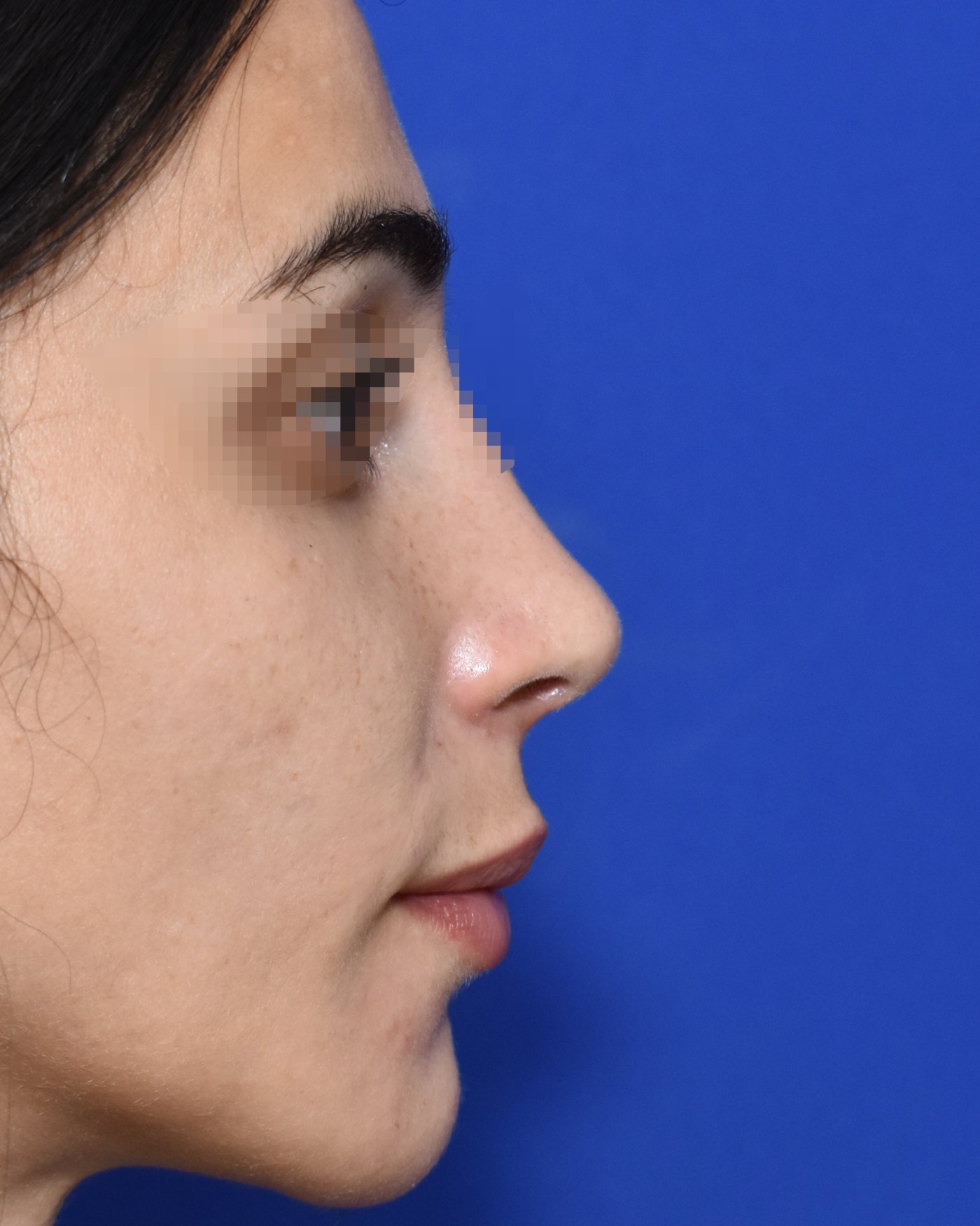
The patient was troubled by both the shape and the function of her nose. She had already had surgery, and her nasal breathing remained restricted afterwards, in part even more so than before. Quaternary secondary open septorhinoplasty, performed by Dr. Christoph Grill. View case
Rhinoplasty Vienna
After an accident, a tumour or with a malformation
Accidents, tumours or congenital malformations can severely impair the form and function of the nose. Reconstructive nasal surgery rebuilds lost or damaged structures, mostly with the body’s own material from the septum, ear or rib. A larger reconstruction may require more than one procedure.
The most common nose shape problems
In this video DDr. Jessica Wittmann explains the most common shape problems of the nose, from the hump and the crooked nose to the wide nose, and how they affect form and function.
Rhinoplasty Vienna
How we clarify your concern in the first consultation
We take more than an hour for the first rhinoplasty consultation. What happens in that hour always follows the same structure:
- We listen: what bothers you about your nose, since when, in which situations?
- Examination from outside and inside, including nasal breathing
- Assessment of skin thickness, bridge, tip and septum
- Vectra 3D simulation of your current and your possible future nose
- Before and after photos of comparable starting situations
- Costs, dates and instalments, in writing and easy to follow
- Time to think it over: no one is pressured into an operation
Read more
Rhinoplasty Vienna
Your rhinoplasty consultation
More than an hour of time, an examination from outside and inside, a 3D simulation and a written cost estimate, with no obligation.
Monday to Friday, 8 am to 6 pm · Seitzergasse 2-4, 1010 Vienna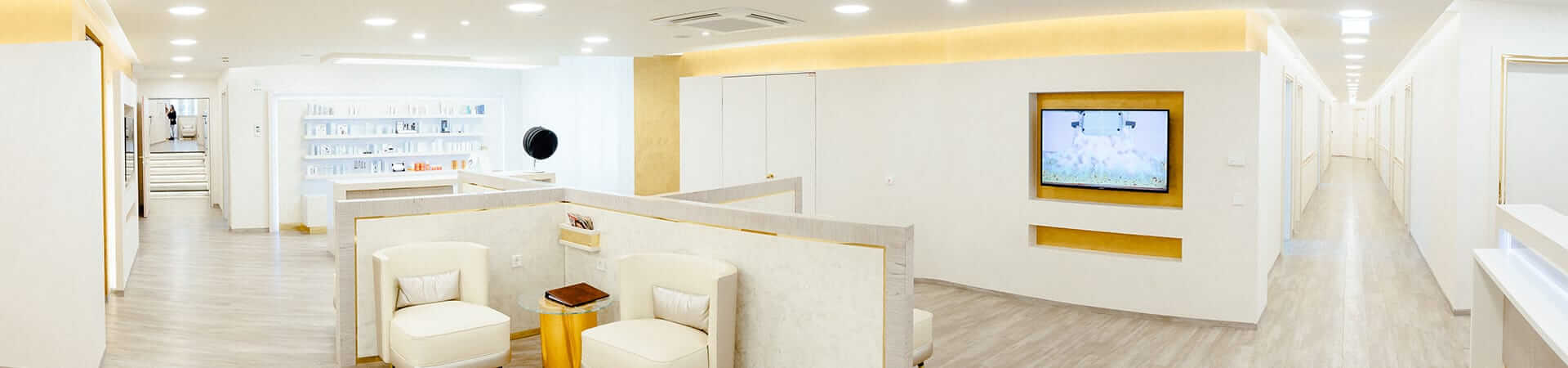

 01 358 28 01
 Book now