














Eyelid ptosis: when the upper lid itself droops
Not every heavy upper lid is a hooded lid. Sometimes it is not the skin above the lid that droops but the lid itself — because the levator muscle is weak. Medicine calls that ptosis, and it is treated differently from excess skin alone.
- The levator muscle
- Diagnosis at the examination
- Day case, local anaesthesia
- From €2,600
A weakness of the levator muscle
Ptosis means a congenital or acquired weakness of the levator muscle. The upper lid droops and can only be raised part of the way. Depending on the degree, the lid margin covers some of the pupil, in rare cases almost all of it. That narrows the upper field of vision, and the gaze reads as tired even though the person behind it is not.
Ptosis often only becomes apparent during the consultation. Patients come because of slack lids — and at the examination it turns out that the muscle is no longer working properly as well. Both can be treated in one operation.
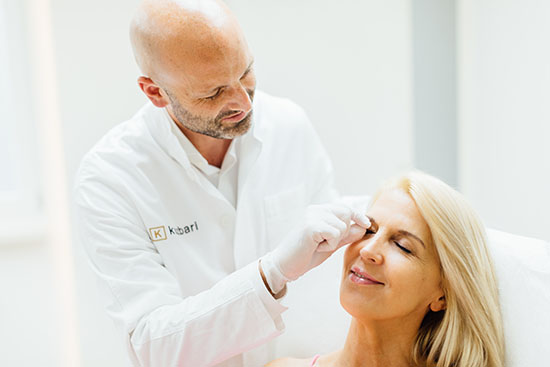
Where the lid margin sits is what counts
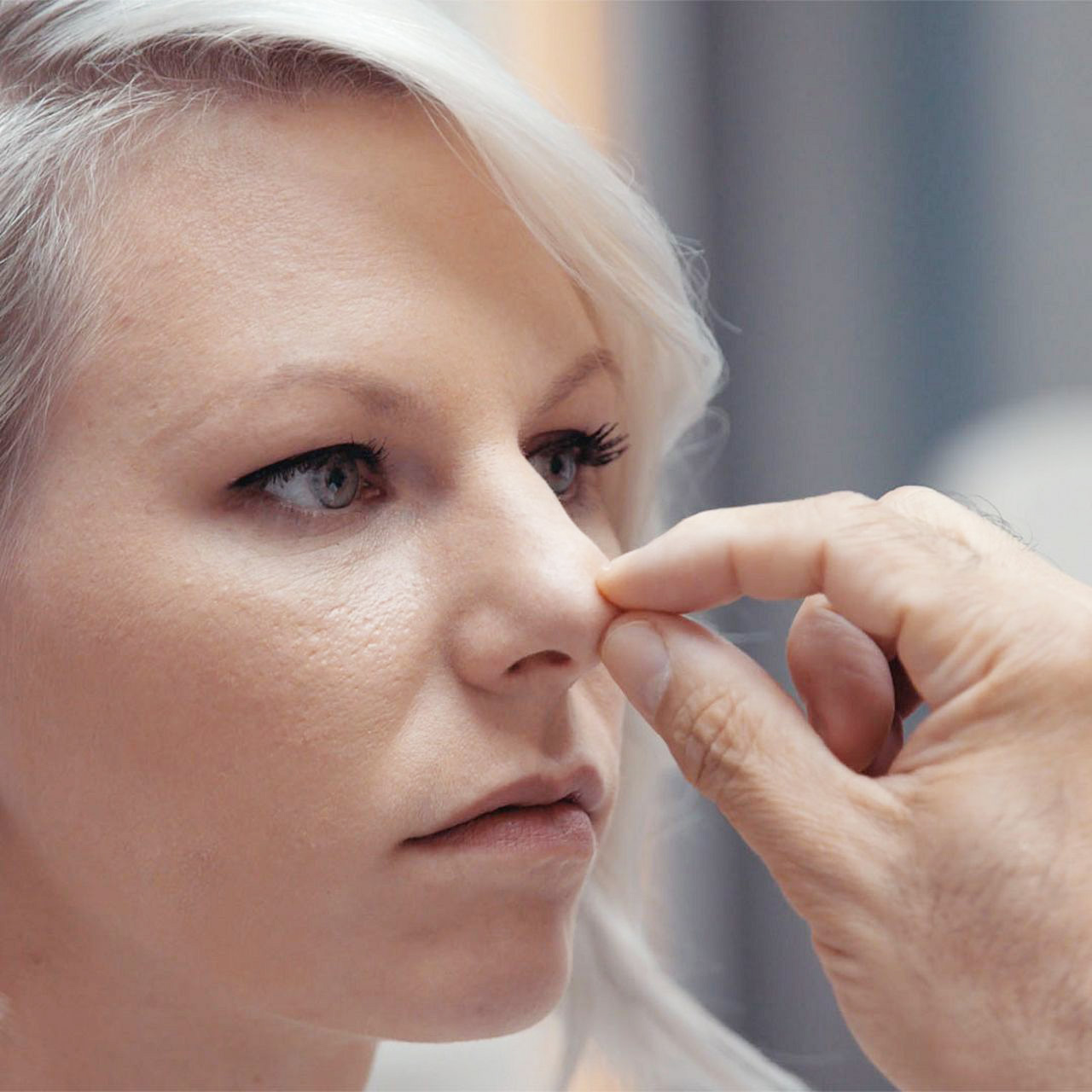
The measure is not the amount of skin but the height of the lid margin above the pupil. With a hooded lid the margin sits normally and skin pushes over it. With ptosis the margin itself sits too low — and removing skin changes nothing about that.
| Feature | Hooded lid | Ptosis |
|---|---|---|
| What droops | The skin above the upper lid; it folds down over the lashes. | The lid margin itself, because the levator muscle is too weak. |
| Self-test | Lift the excess skin with a finger and the eye is free again. | Even with the skin lifted, the margin stays low over the pupil. |
| How it feels | Pressure and heaviness on the lid, often worse in the morning. | Effort to keep the eye open; the forehead joins in unconsciously. |
| What is operated on | Skin, parts of the muscle and protruding fat are removed to a defined extent. | In addition the levator muscle is shortened or reattached in the right position. |
| Who establishes it | Usually those affected notice it themselves in the mirror. | The examination at the first consultation, measuring lid height and muscle function. |
Hooded lid or brow? What makes sense when
DDr. Jessica Wittmann explains when the lid skin is the problem and when the brow is — and what that means for the choice of procedure.
Where ptosis comes from
The treatment follows the cause, which is why an exact diagnosis always comes first. Four groups appear regularly in lid surgery.
What a drooping lid means day to day
Ptosis is more than a question of appearance. When the lid margin reaches into the pupil, the upper field of vision narrows. Many people compensate unconsciously: they raise their brows, furrow their forehead, sometimes tilt the head slightly back. That goes on all day without anyone noticing — except in the evening, when the forehead and neck are tense.
The correction therefore often brings more than a fresher appearance: the eye opens more easily. In addition, the horizontal forehead lines frequently ease, because the forehead muscle no longer has to help open the eye.
- The eye opens without effort.
- The upper field of vision is free again.
- The forehead no longer has to help constantly — horizontal lines often ease.
- The gaze reads as awake without the expression changing.
- An asymmetry between the lids can be evened out in the same operation.
How the correction works
The approach is the same as for an upper eyelid lift: a precisely placed incision in the natural lid crease, which later disappears into the crease. Through this approach the levator muscle is also reached. It is shortened or reattached in the right position on the lid, so that the lid can open far enough.
Because lid height is the result, we set it with the eye awake. Under local anaesthesia you can open your eyes during the procedure; the height is adjusted directly against the result and compared with the other side. That is why ptosis surgery is done under local anaesthesia rather than general anaesthesia.
If there is excess skin alongside the muscle weakness — the common case — both are treated in the same session. A second operation is not needed for that.
- First consultationAbout an hour
- ProcedureDay case, no overnight stay
- AnaesthesiaLocal or twilight sedation
- Length of the operation1 to 4.5 hours
- Suture removalAfter about a week
- Back at workFrom 3 days (desk work)
- Back among peopleAfter 1 to 3 weeks
- SportAfter 2 to 3 weeks
- Final resultAfter 2 to 3 months
- CostFrom €2,600
Guide figures for the correction of a drooping upper lid at the Kuzbari Centre. What applies to you depends on the extent of your procedure and is settled after the examination.
- First consultation with measurement
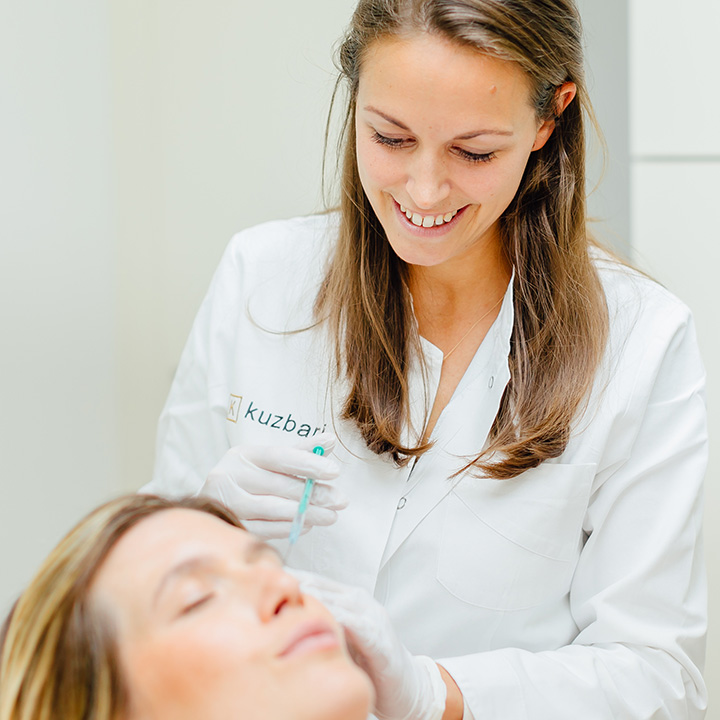
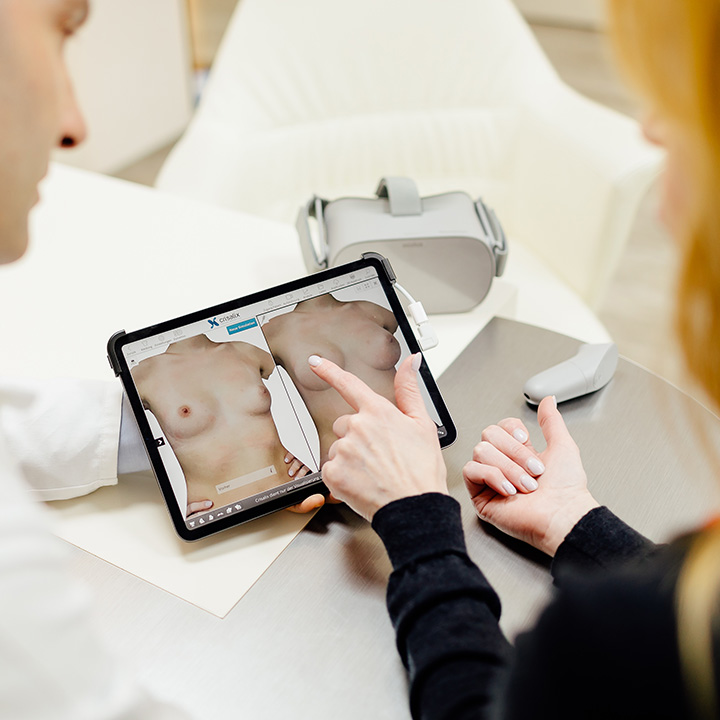
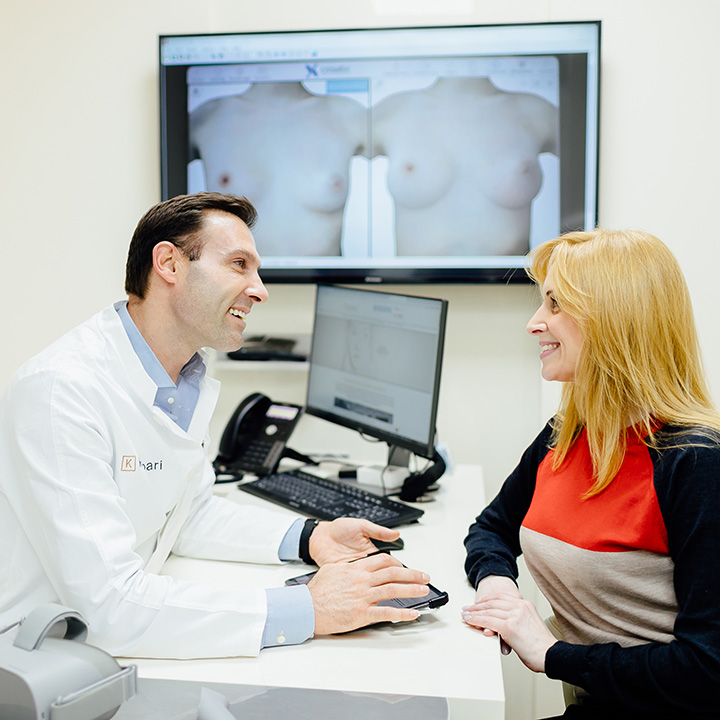
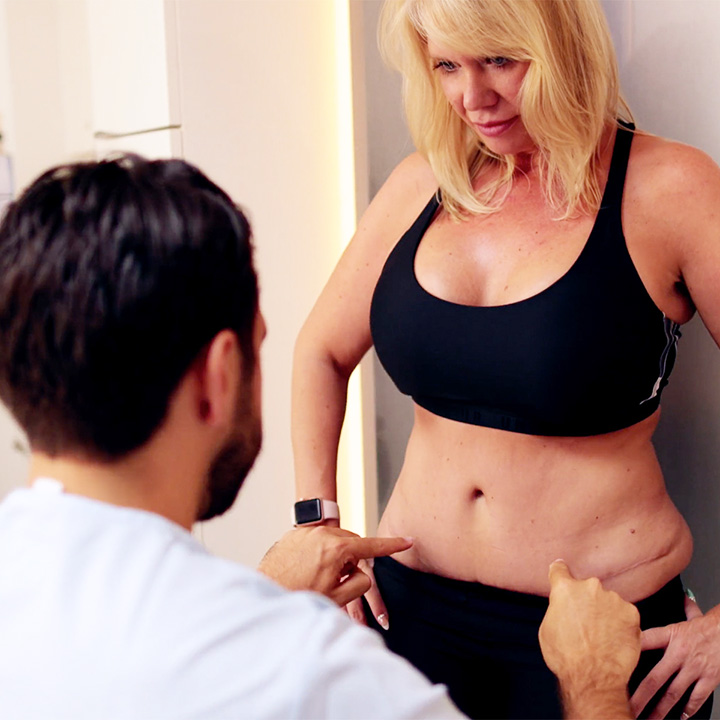
We take professional photographs, look at them together on a large screen and examine the lid region. We measure the height of the lid margin above the pupil and the function of the levator muscle. Please bring photographs of yourself from about the age of 18 — they show us where your lid once sat.
- Safety check and planning
The Kuzbari Safety Check clarifies previous illnesses, medication and anything that has to be stopped beforehand. You receive your surgical plan and the notes for the first days afterwards, so that you are prepared at home.
- Marking up while seated
Marking up is done seated, because gravity then acts as it does in everyday life. That takes ten to fifteen minutes, during which we go through the sequence step by step once more.
- The operation
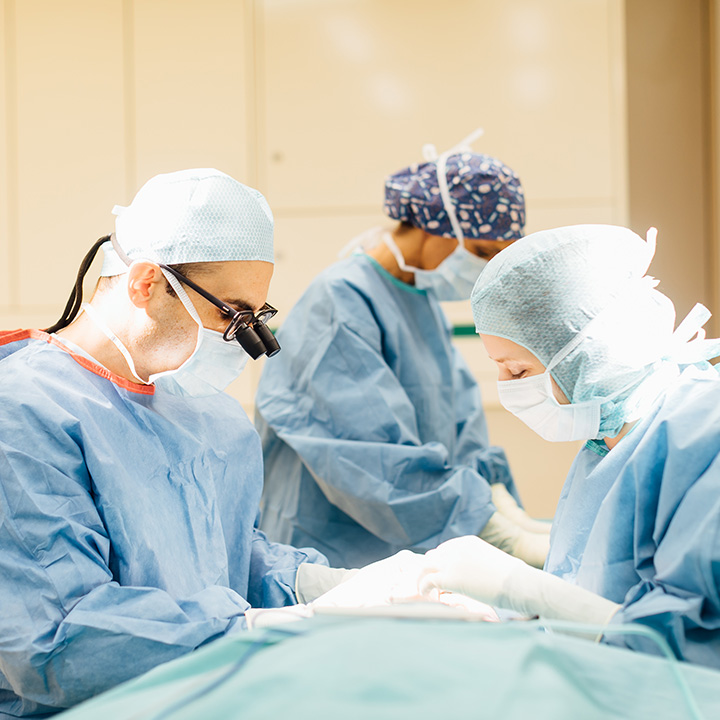
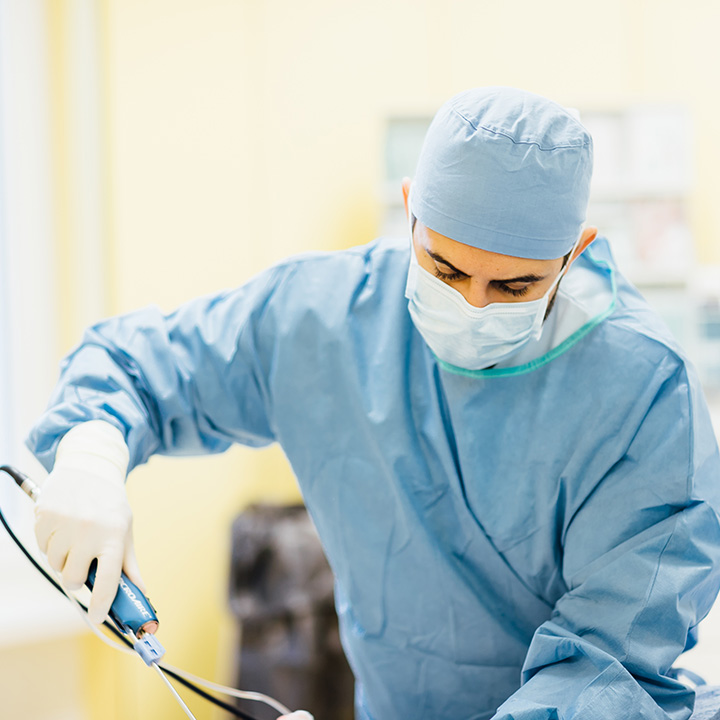
The procedure takes place as a day case in our own theatres, under local anaesthesia and, if you wish, with twilight sedation. Because the theatres are ours, the work is done without time pressure. Most patients go home two to three hours later.
- Swelling and suture removal
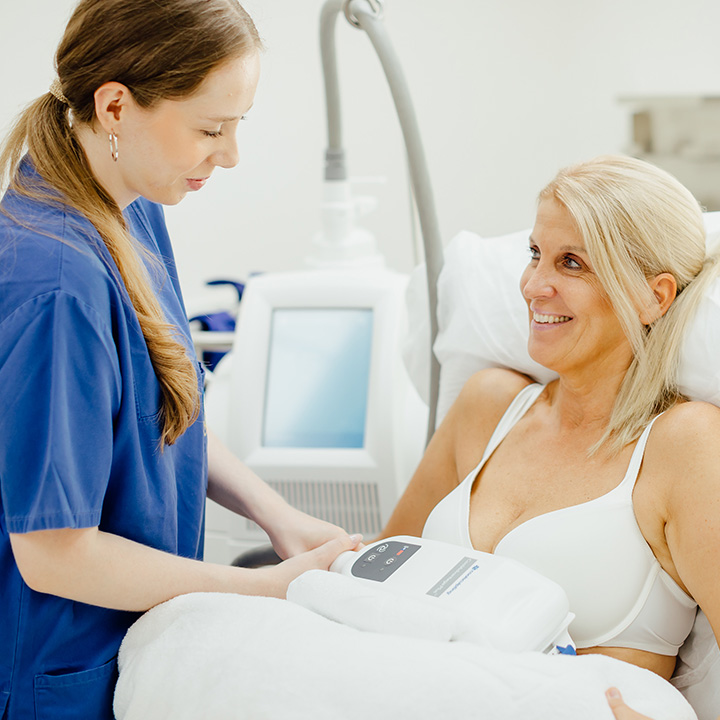
Swelling increases over the first three days and then recedes. Cooling helps. We remove the sutures after about a week. Medically most people are fit for desk work again after three days.
- Back among people
After one to three weeks you are ready to be seen again. Sport is possible after two to three weeks. The scar in the lid crease fades over months and is usually no longer visible later.
- The final result
The final lid height appears after two to three months, once the last swelling has gone. Every follow-up appointment until then is included.
- First consultation with photo analysisincluded
- Diagnostics and surgical planningincluded
- Operation in our own theatresincluded
- Local anaesthesiaincluded
- Suture removal and scar adviceincluded
- Every follow-up appointmentincluded
Through Kuzbari Finance over up to five years, 9.99% annual percentage rate.
Results from the Kuzbari Centre
The first case is genuine ptosis: in this patient the right lid sat lower, more so towards evening. It was corrected by levator reinsertion — reattaching the levator muscle — plus bilateral upper eyelid blepharoplasty.
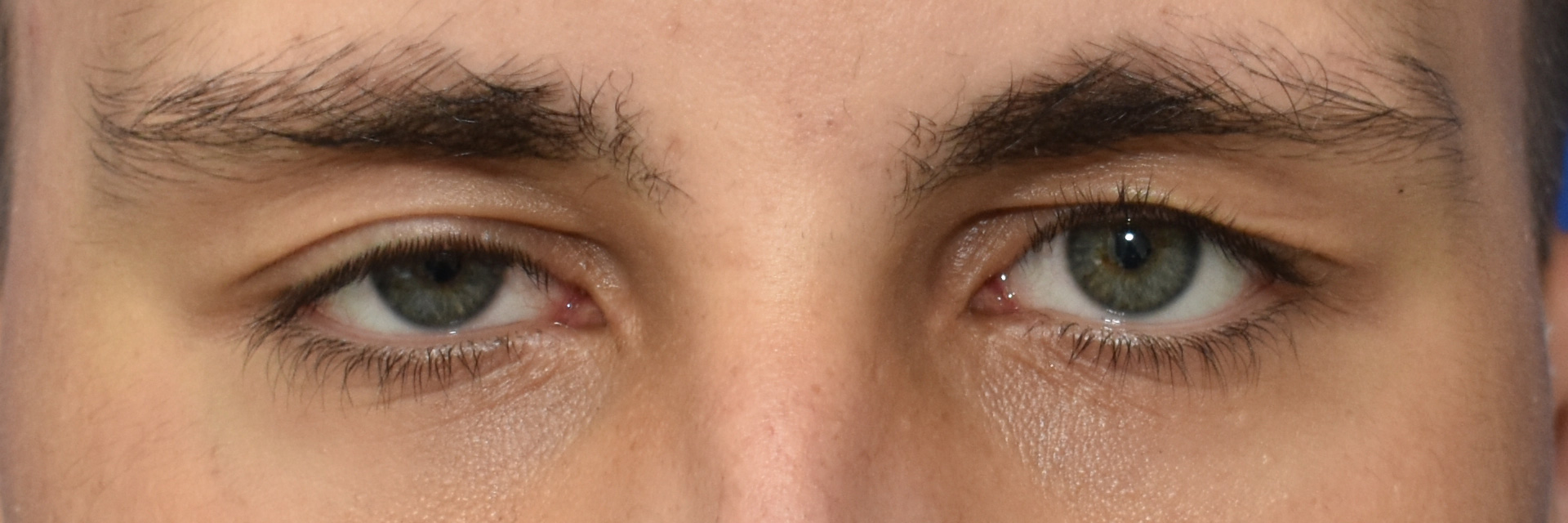
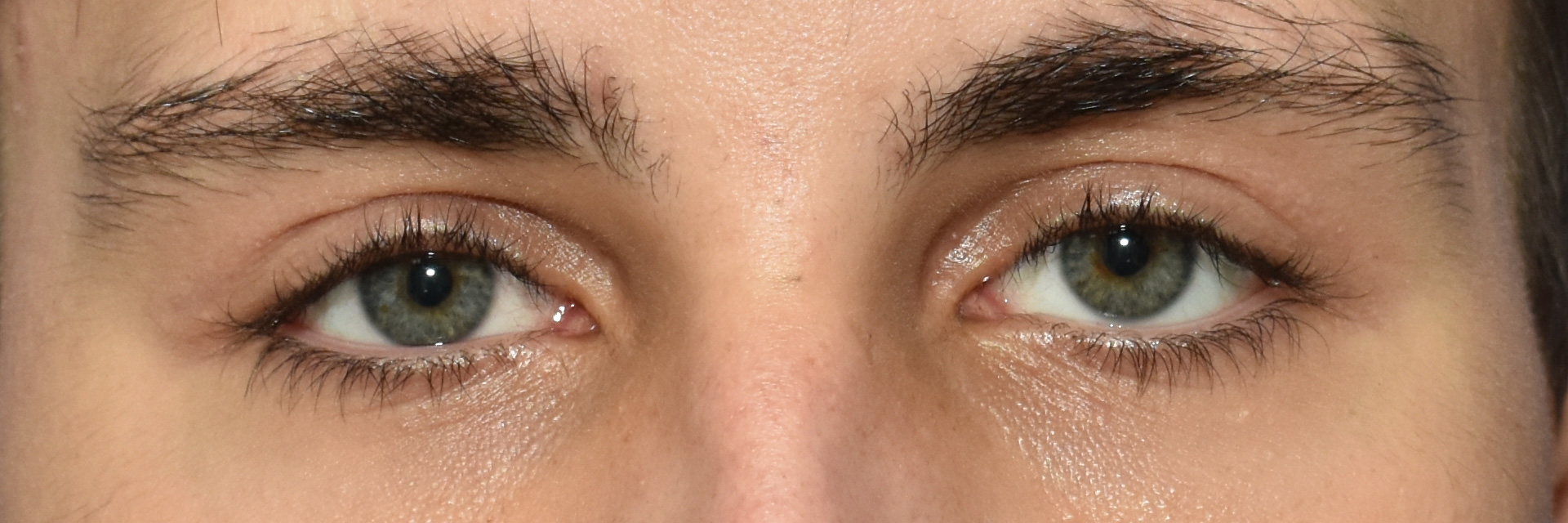
Drag the slider to compare before and after.
- Case
- 22988
- Age
- 22 years
- View
- Looking straight ahead
- Anaesthesia
- Local or twilight sedation
Photographs of patients who have consented to publication. Every lid heals differently; a result shown here cannot be transferred to anyone else.
More cases from the Kuzbari Centre
Every case comes from a patient of this centre. The findings and the procedure are given below each pair, so you can judge what was done and what was not.
- Case 22988
before 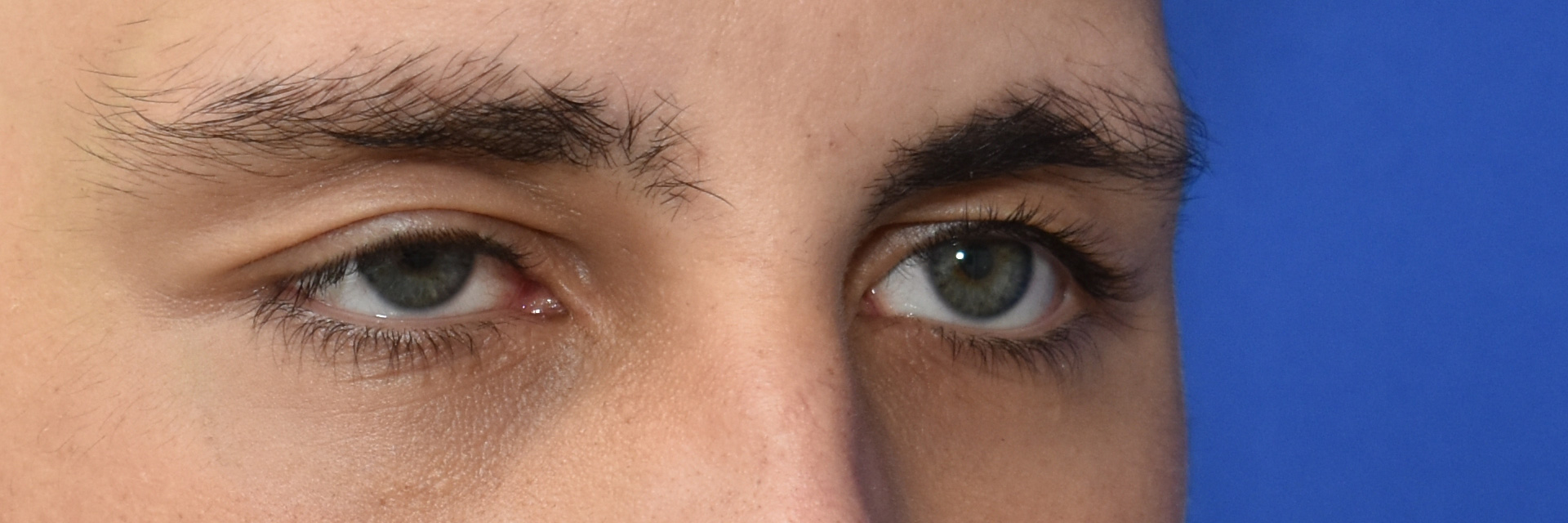
after 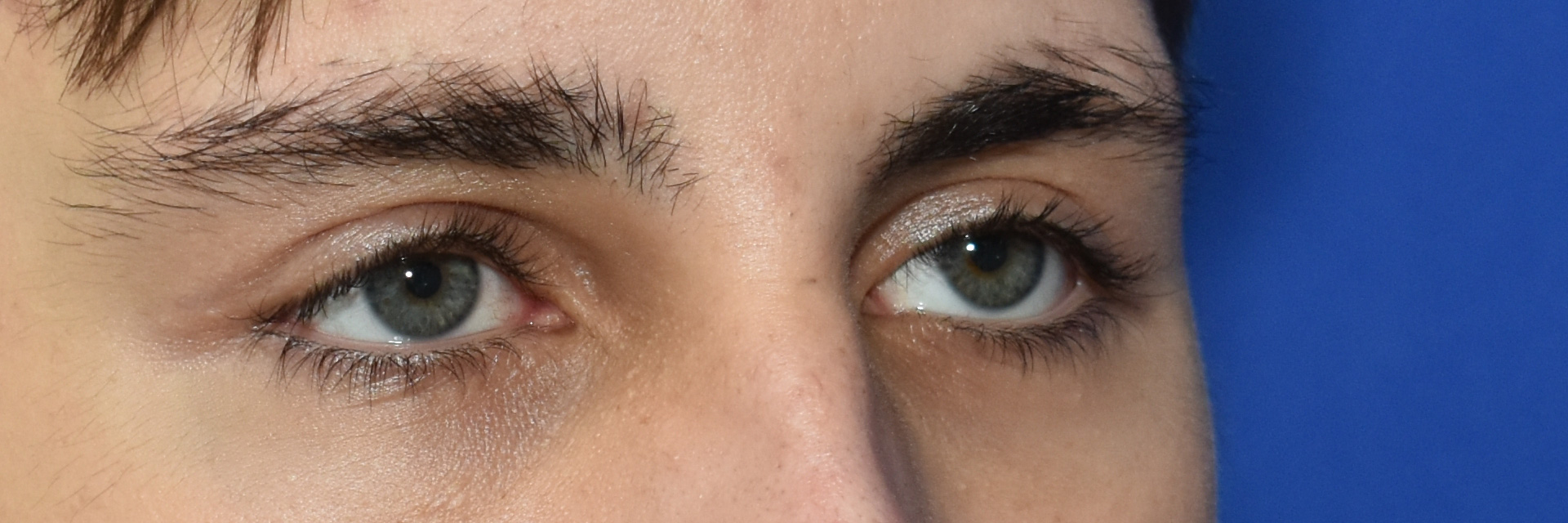
Findings: Asymmetric lids: the right lid sat lower, more so towards evening, and had worsened after losing about 15 kg. Procedure: Correction of the drooping lid by levator reinsertion plus bilateral upper eyelid blepharoplasty.
- Case 19717
before 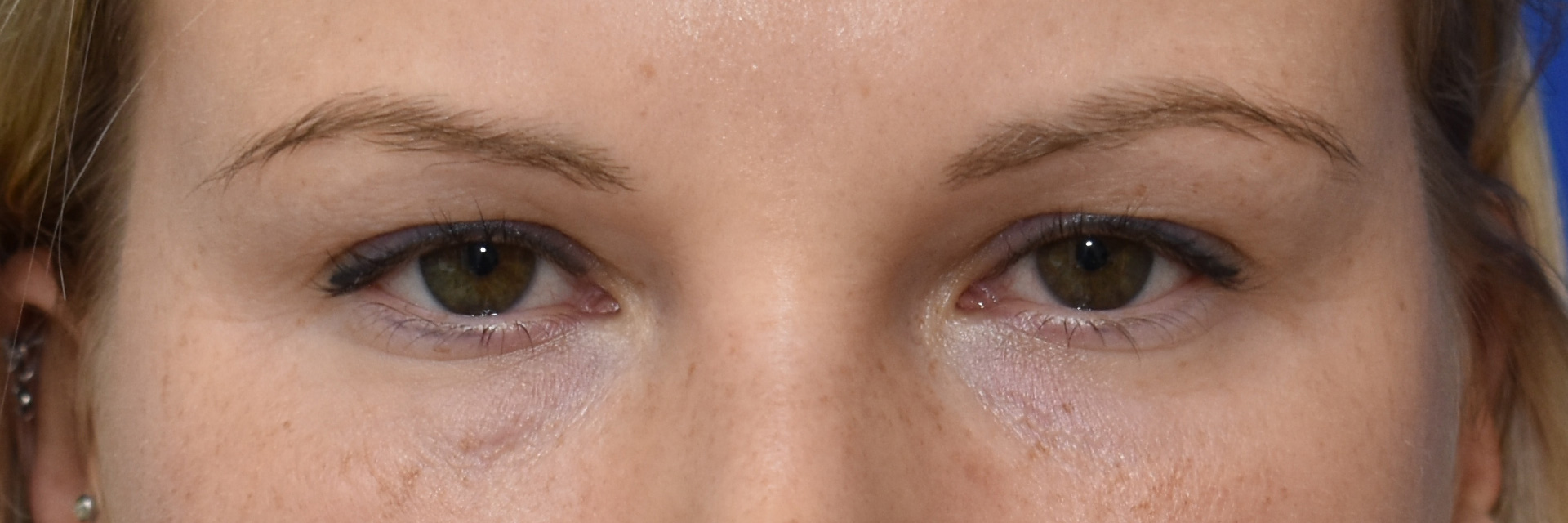
after 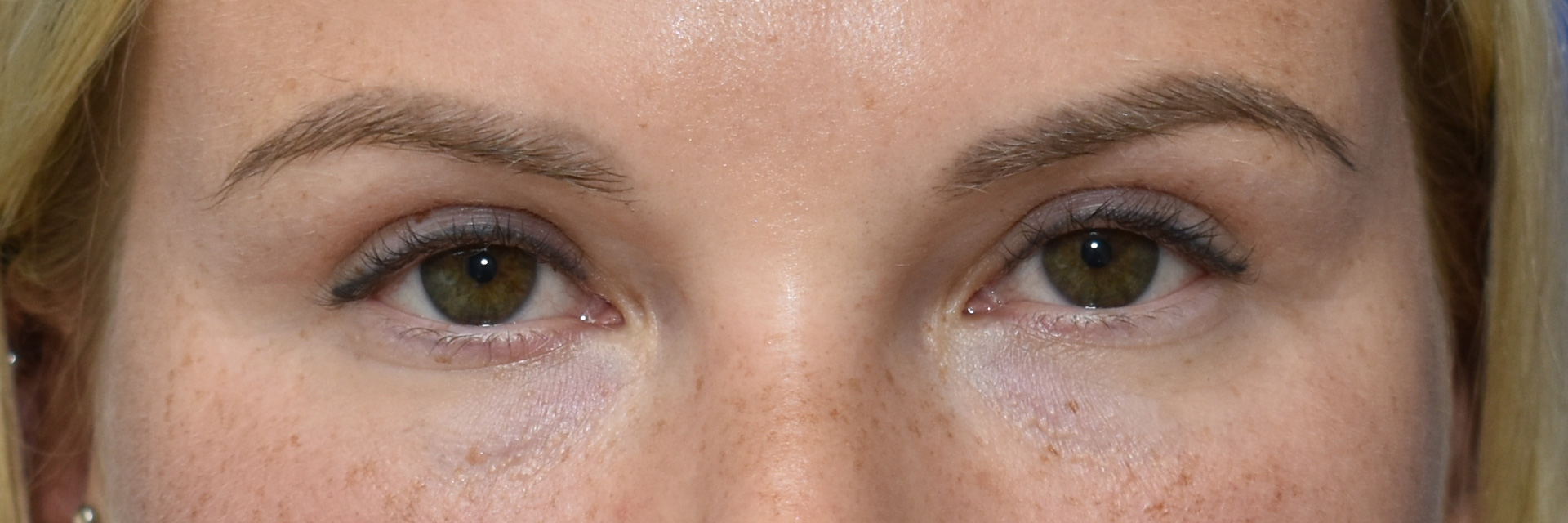
Findings: Pressure on the upper lids and a permanently raised forehead; when relaxed, people told her she looked stern. Procedure: Upper eyelid blepharoplasty.
- Case 19539
before 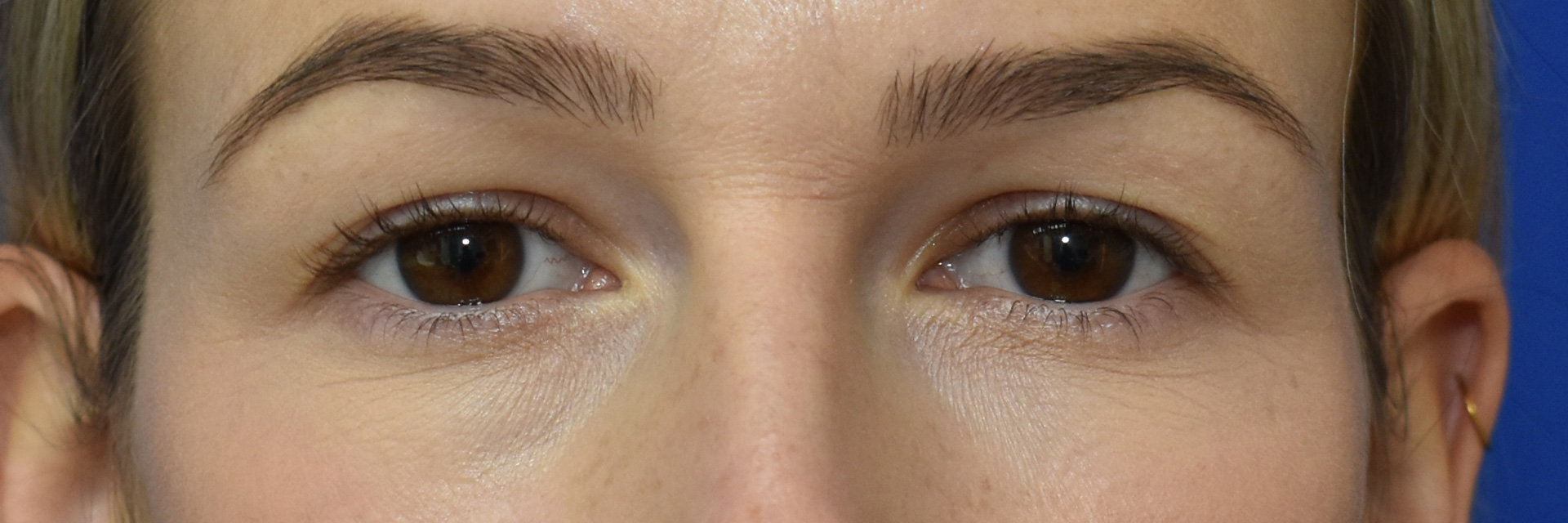
after 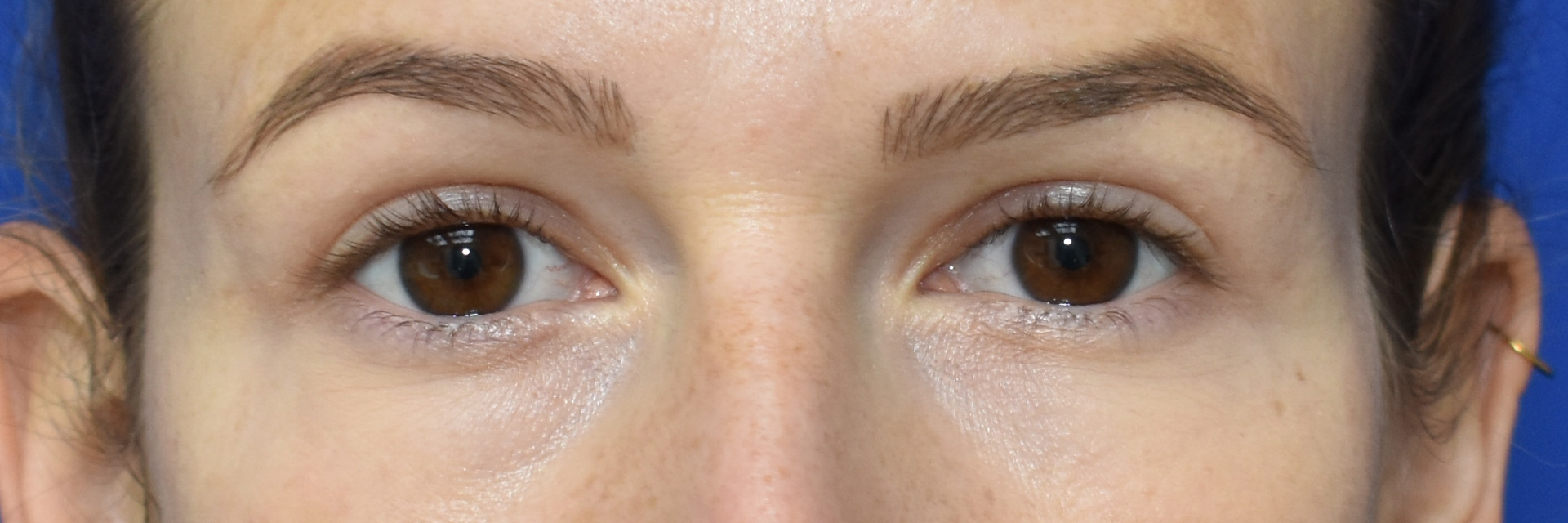
Findings: Pressure on the upper lids and tension across the forehead, because she constantly furrowed her brow at the screen. Procedure: Upper eyelid blepharoplasty.
- Case 18170
before 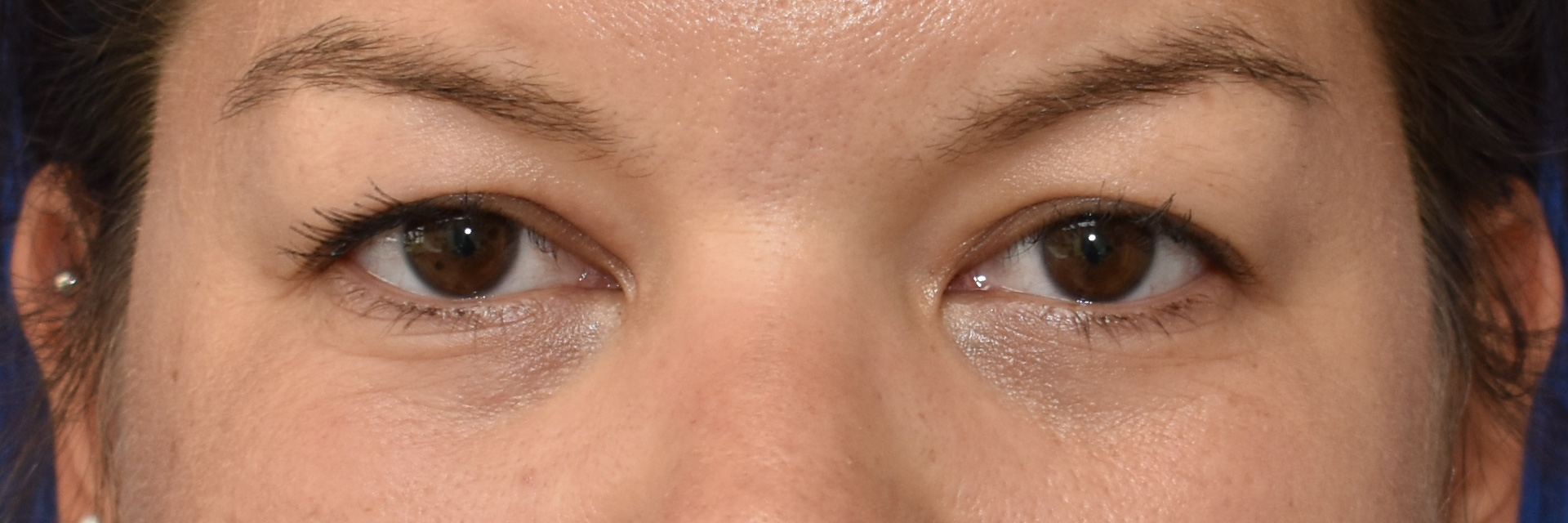
after 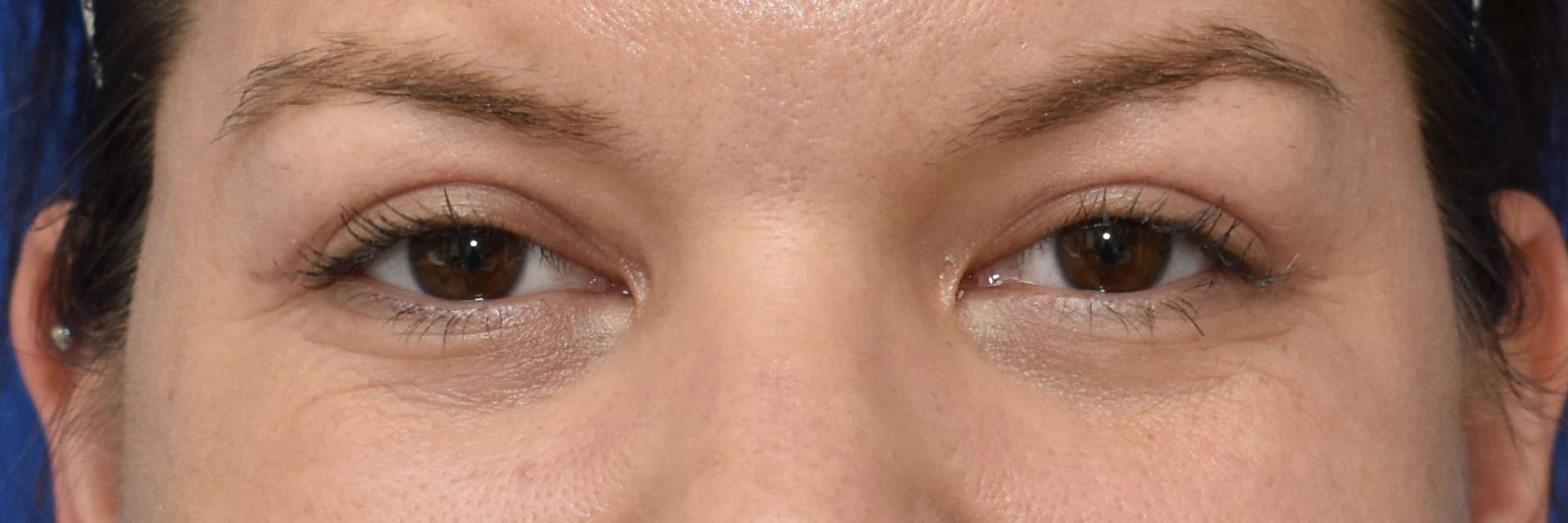
Findings: Excess skin and fullness in the lids plus a feeling of pressure; the patient found her own gaze tired. Procedure: Upper eyelid blepharoplasty.
- Case 19502
before 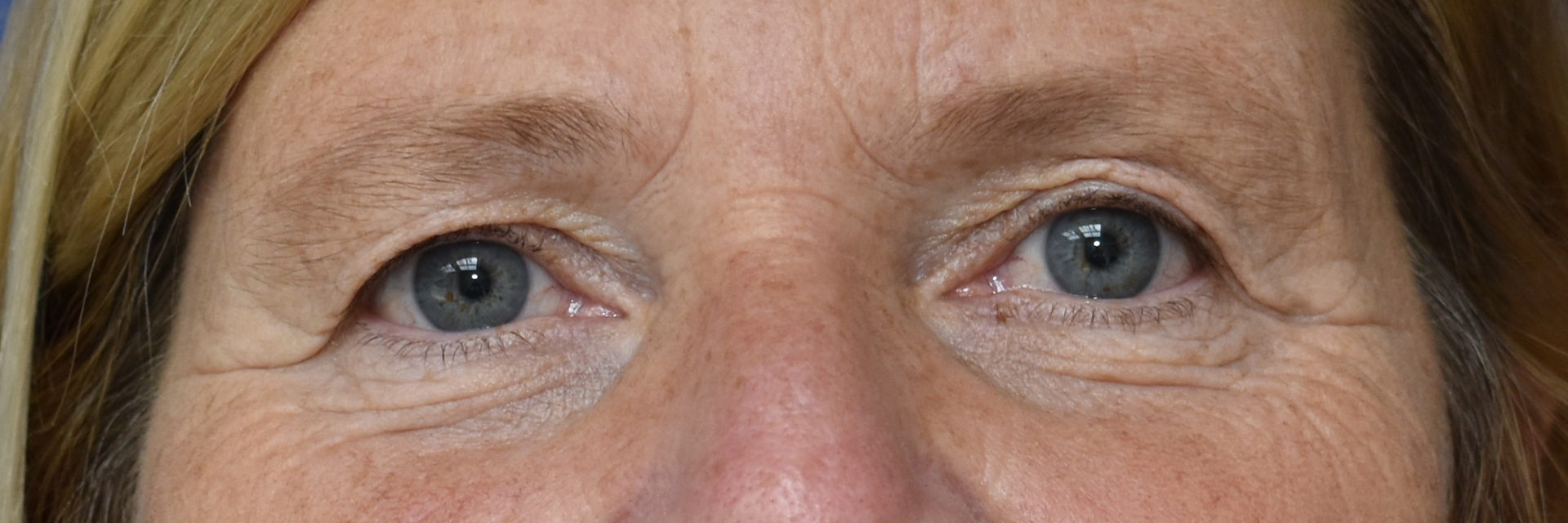
after 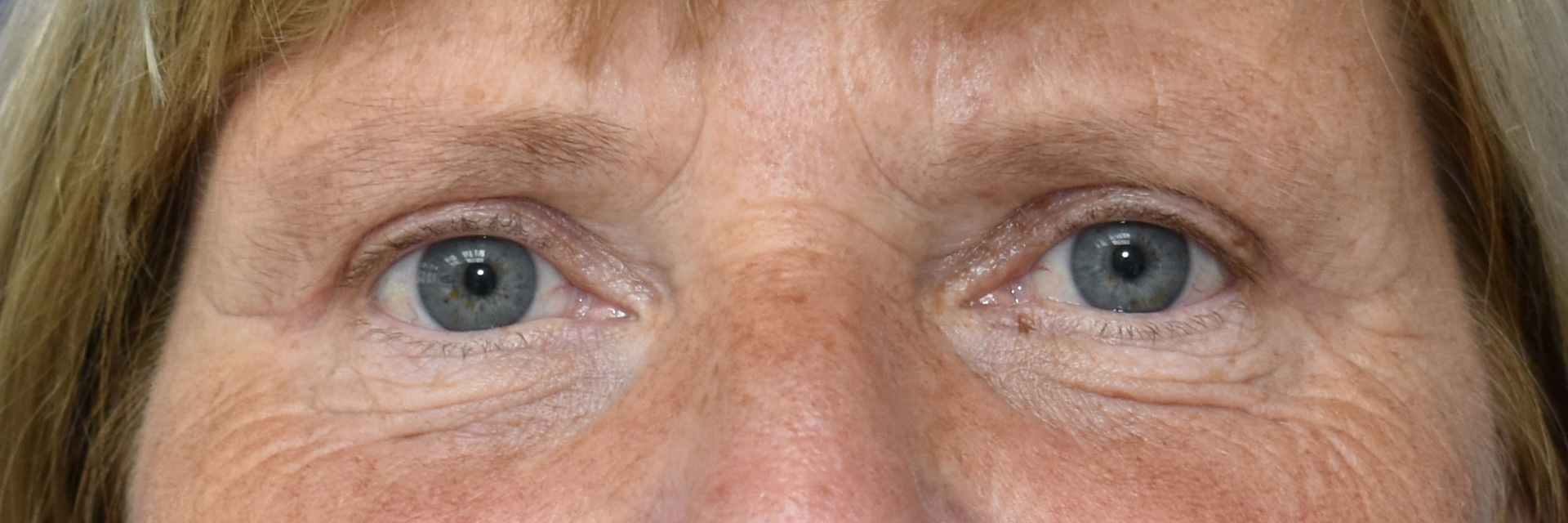
Findings: Increasing excess skin on both upper lids, more pronounced in the evening and when tired. Procedure: Upper eyelid blepharoplasty and internal brow pexy.
- Case 20330
before 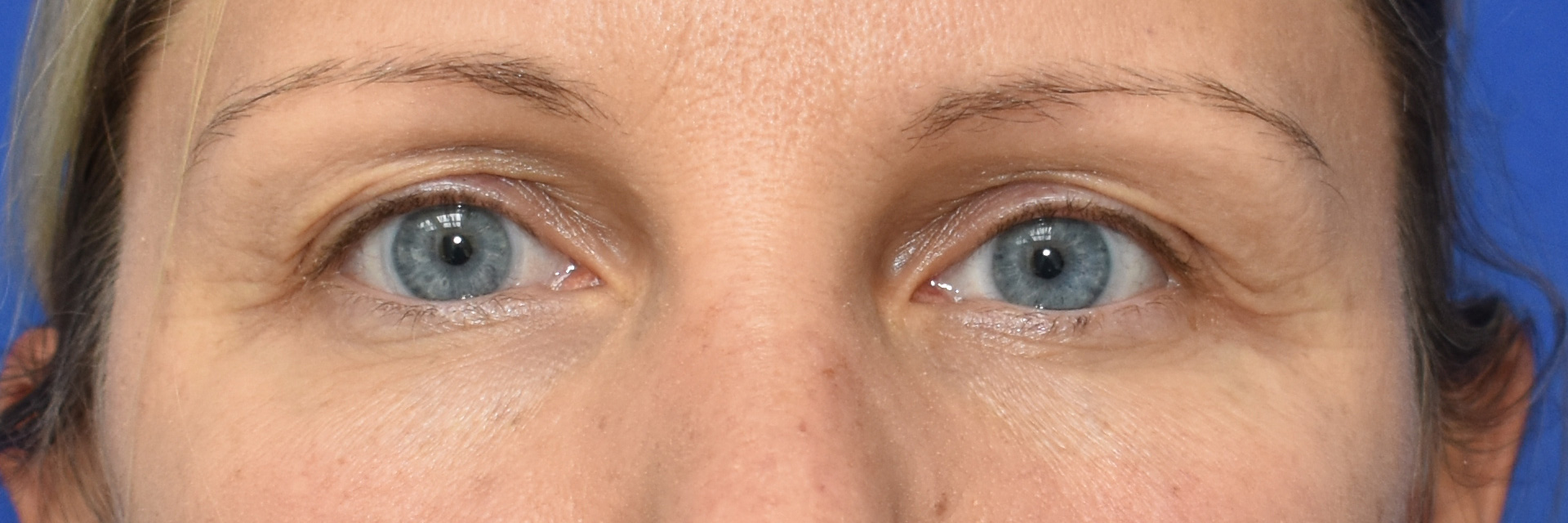
after 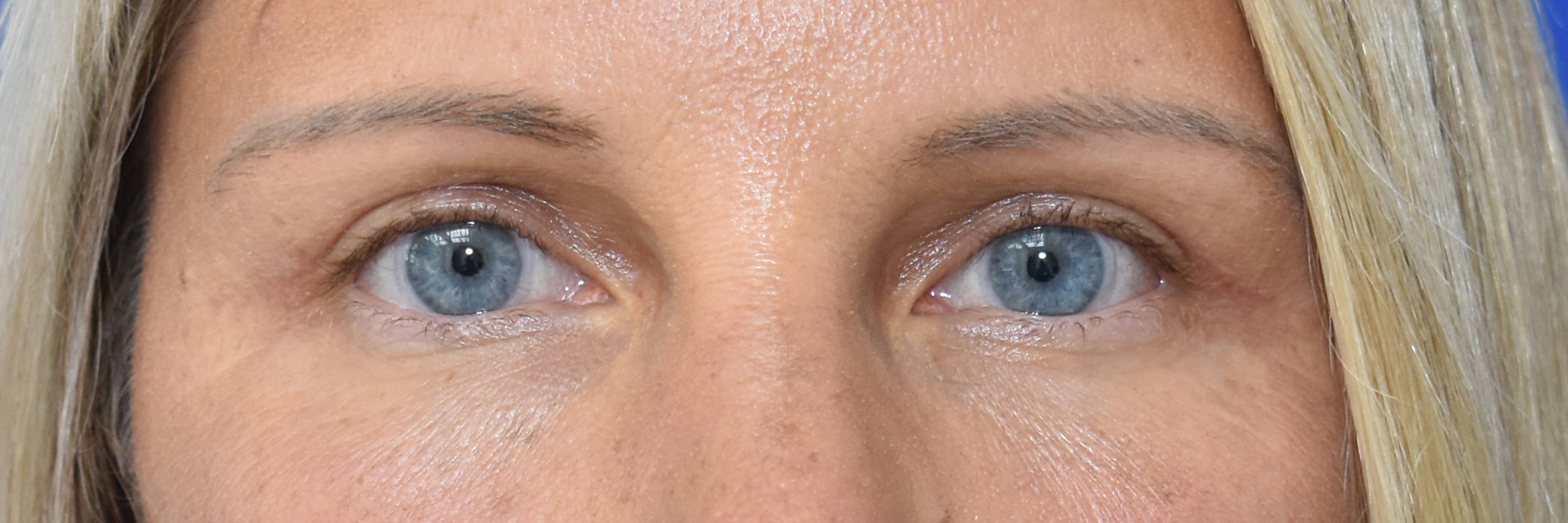
Findings: Increasing excess skin on both upper lids. Procedure: Upper eyelid blepharoplasty and internal brow pexy.
Photographs of patients who have consented to publication. Every lid heals differently; a result shown here cannot be transferred to anyone else.
Who operates on eyelids at the Kuzbari Centre
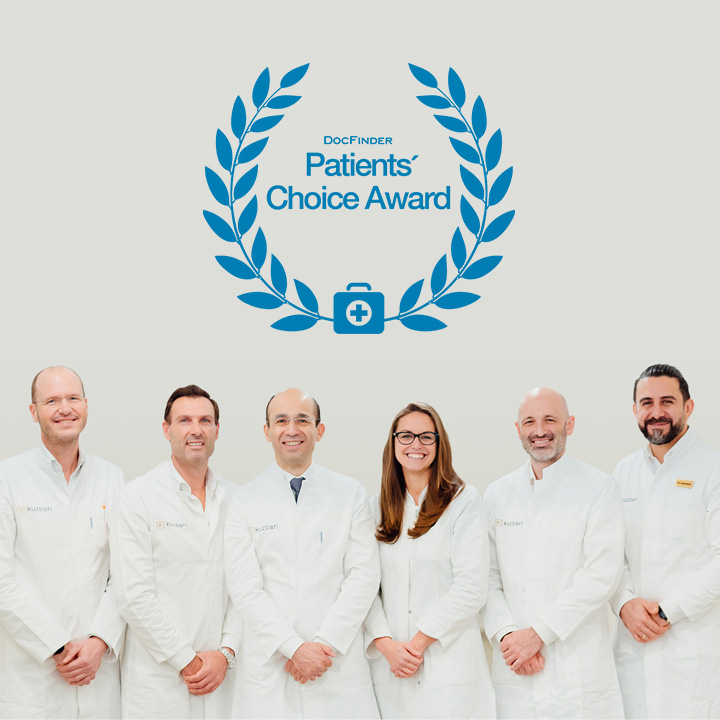
Three specialists at the centre operate on eyelids. Whoever advises you also operates on you — and sees you again at every check-up. You choose who you feel most comfortable with.

Focus on facial surgery, several times an award winner of the Austrian Society for Aesthetic Surgery. He operates on both upper and lower lids and measures his work by a result nobody recognises as surgery.
View profile
She works on the face only, combining surgical precision with a fine sense of what a single millimetre at the lid changes.
View profile
He combines international training with a treatment plan drawn up for each patient. Alongside eyelid surgery, facelifting and wrinkle treatment are his focus.
View profileFrequently asked questions about ptosis
What is eyelid ptosis?
A congenital or acquired weakness of the levator muscle. The upper lid droops and can only be raised part of the way; depending on the degree, the lid margin covers some of the pupil. The upper field of vision narrows and the gaze reads as tired.
How do I tell ptosis from a hooded lid?
A simple self-test: lift the excess skin of the upper lid with a finger. If the lid margin still sits low over the pupil, that points to ptosis — the lid itself is drooping, not just the skin above it. We make the definite diagnosis at the examination.
Can ptosis affect vision?
Yes. If the lid margin reaches into the pupil, it restricts the upper field of vision. Many people compensate unconsciously with permanently raised brows, which in turn can cause tension in the forehead and neck.
Am I awake during the operation?
Yes, and in ptosis surgery that is an advantage: under local anaesthesia we can have you open your eyes during the procedure and fine-tune the lid height directly against the result. Twilight sedation is possible on request; it is an additional module.
How does ptosis surgery differ from an upper eyelid lift?
The approach is the same — an incision in the natural lid crease. In an upper eyelid lift, skin, parts of the muscle and protruding fat are removed. With ptosis the levator muscle is additionally shortened or reattached, so that the lid opens far enough.
Can ptosis occur in young people too?
Yes. Besides the age-related form there are congenital cases and those following injury, eye surgery or long wear of hard contact lenses. The treatment follows the cause — which is why the diagnosis always comes first.
How long does recovery take?
We remove the sutures after about a week. Medically most people are fit for work again after three days and ready to be seen after one to three weeks. Sport is possible after two to three weeks; the final result appears after two to three months.
Can ptosis come back?
In rare cases a further correction is needed, for instance if the muscle tendon slackens again over the years. Precise measurement before the procedure and careful technique keep that risk small; it is discussed in the consent consultation.
What does correcting a drooping upper lid cost?
From €2,600, and the figure covers the consultation, the operation, local anaesthesia, suture removal and every follow-up appointment. Anything additional in your case is stated in the written quotation after the examination.
Who performs the operation?
Dr Christoph Grill, DDr Jessica Wittmann and Dr Shawqi Arafat. You choose the specialist you prefer — and are advised, operated on and followed up by the same person.
Your eyelid check-up
About an hour of time, professional photographs, an examination of your lid region, a look at photographs of you as a young adult and a written quotation — without obligation and without pressure.
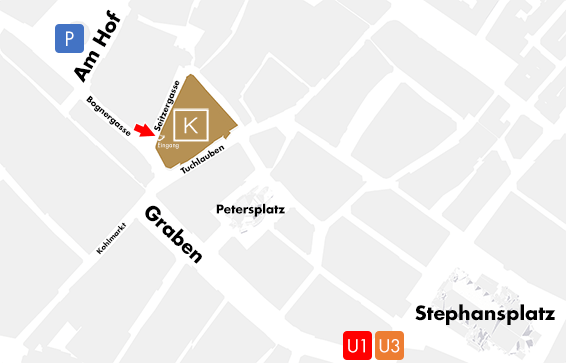
Monday to Friday, 08:00 to 18:00 · Seitzergasse 2-4, 1010 Vienna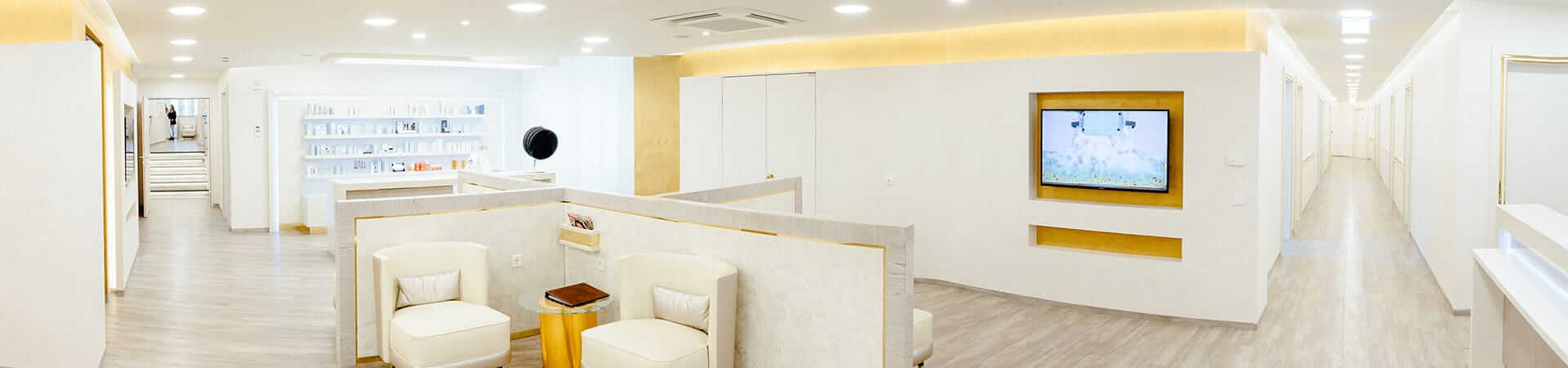


 01 358 28 01
 Book now