


















Functional rhinoplasty
Our nose is not only a central feature of the face but, above all, an organ for breathing. It filters, moistens and warms the air we breathe in. When nasal breathing is obstructed, everyday life can suffer considerably — from exhaustion through restless sleep to reduced performance in sport or at work.
- Free nasal breathing as the aim
- Septum, turbinates, nasal valves
- Operation 1 to 4 hours
- Our own operating suite
At the Kuzbari Centre for Aesthetic Medicine in Vienna we specialise in functional rhinoplasty that solves these problems surgically. At the same time we offer the possibility of including aesthetic aspects, since functional and shaping improvements often go hand in hand. In this way we achieve not only a better quality of life through freer breathing but also a harmonious, natural appearance.
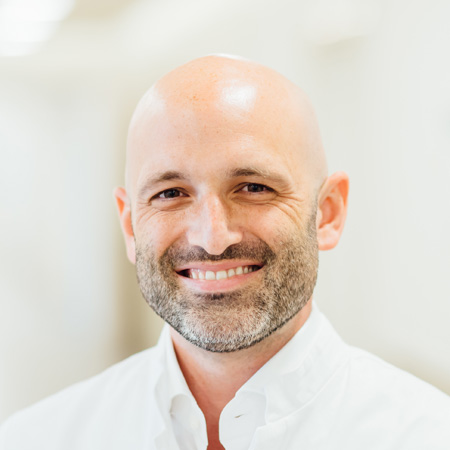
The Kuzbari experts for this service:


- 2,000+Nasal operations
- 3Nasal surgery specialists
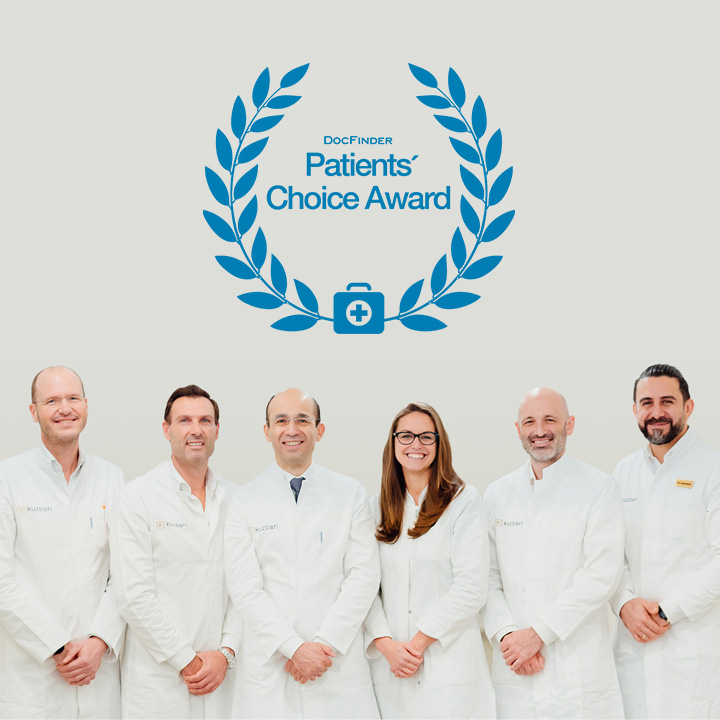
- 11Times in a row Patients’ Choice Award
- 38DocFinder awards in total

What is a functional rhinoplasty?
Functional rhinoplasty, also called septoplasty or rhinoplasty with a functional focus, aims at restoring unimpeded nasal breathing. It corrects anatomical problems in the nose that obstruct the flow of air.
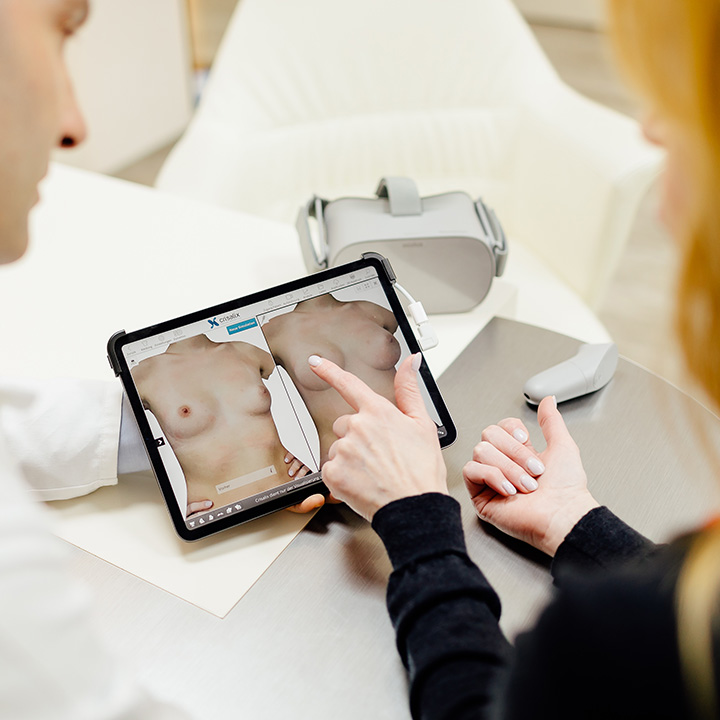
At the Kuzbari Centre these procedures are carried out by Univ. Doz. Dr. Rafic Kuzbari, Dr. Christoph Grill and DDr. Jessica Wittmann. Thanks to our Vectra 3D simulation you can see in advance how the correction will change the outer shape of the nose, should that be treated as well. The operation is carried out as an inpatient procedure with one overnight stay — including the Kuzbari Safety Check and quality guarantee.
Why the nose is more than an air pipe
Every breath through the nose accomplishes three things in fractions of a second: the air is brought to body temperature at the turbinates, it is moistened, and dust, pollen and germs remain caught in the mucous membrane. Anyone who has to breathe through the mouth loses all three at once. The consequences are dry mucous membranes, more frequent infections, restless sleep and often the feeling of not being rested in the morning.
There is also the nasal cycle: the turbinates swell and subside in alternation, so that one side is always more strongly ventilated than the other. If one side is narrowed to begin with, this alternation becomes noticeable — many patients report that "sometimes one side and sometimes the other" closes up. That is no coincidence but a sign that the reserve is missing.
Common breathing problems and their surgical treatment
Many people suffer from obstructed breathing caused by structural problems in the nose. These can be congenital, caused by accidents or infections, or develop over the years. The complaints range from chronic nasal congestion through mouth breathing to snoring, sleep apnoea or headaches. At the Kuzbari Centre we investigate these causes carefully and treat them surgically.

Three narrow points, three causes
On its way, the air has to pass three points: the nasal valve just behind the nostril, the space between the septum and the lower turbinate and finally the transition to the throat. Each of these points can be narrowed on its own — and frequently it is more than one.
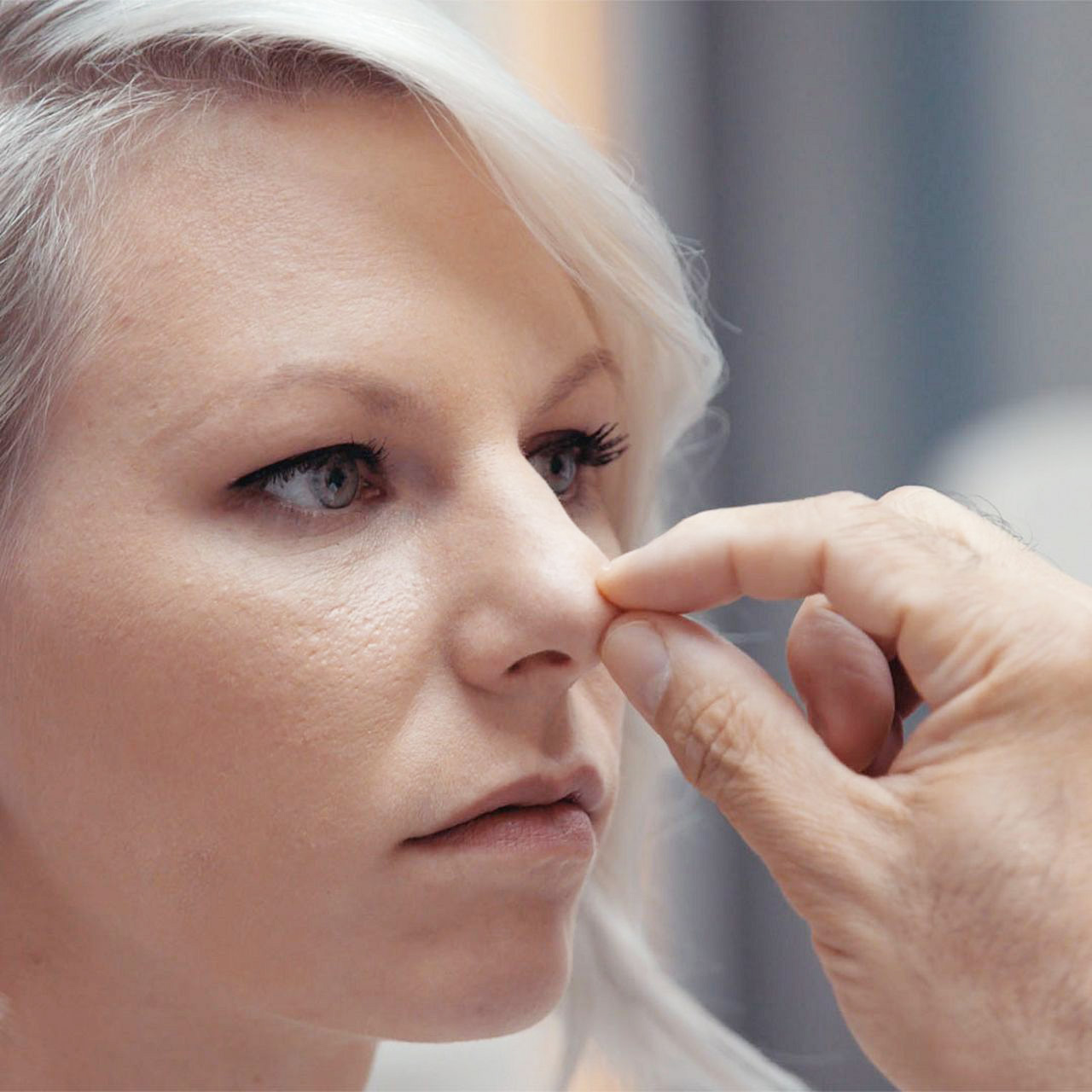
Which one it is in your case cannot be guessed. It shows itself during the examination from the inside, in a side-by-side comparison and with a simple test: if you pull the nostril slightly to the side while breathing in and the air suddenly flows freely, the narrowing lies at the nasal valve.
| Findings | What you notice | What we do |
|---|---|---|
| Deviated septum | One-sided congestion, frequent sinus infections, restless sleep. | In a septoplasty the septum is straightened and stabilised — often with cartilage from your own nose. The result: symmetrical airflow, fewer infections, more restful sleep. |
| Enlarged turbinates | A feeling of pressure, mouth breathing, alternately blocked sides, worse at night. | A turbinoplasty reduces these structures carefully without giving up their function — the turbinates still have to warm and moisten the air. |
| Nasal valve insufficiency | The nostrils draw inwards when breathing in deeply; breathlessness during sport and when lying down. | We stabilise the valve with spreader grafts or cartilage struts in order to secure an open airway. |
| Other causes | Persistent congestion despite a straight septum, impaired sense of smell, pressure over the cheeks. | Diseases of the sinuses, polyps, scars from previous operations or a crooked outer nose are treated as well or referred for specialist assessment, depending on the findings. |
These corrections are part of the everyday work of nasal surgery. They improve not only breathing but frequently also reduce accompanying symptoms such as headaches, exhaustion or a greater susceptibility to colds. Most people are fit to socialise after one to three weeks and fit for work after three to seven days.
Functional rhinoplasty at a glance
- Aim of the operationFree, even nasal breathing
- Duration1 to 4 hours
- AnaesthesiaGeneral anaesthesia
- StayOne night as an inpatient
- Nasal packingNot necessary
- SplintAround 10 days, if required
- Fit for workAfter 3 to 7 days
- Fit to socialiseAfter 1 to 3 weeks
- SportAfter 4 to 6 weeks
- Final resultAfter 6 to 12 months
Guide values for a functional rhinoplasty at the Kuzbari Centre. What applies to you depends on the scope of your procedure and is established after the examination.
Careful diagnosis — and when we involve an ENT specialist
In every case a careful assessment of nasal function and of the possible causes of the breathing difficulties is required. While some obstructions of nasal breathing are resolved as a matter of routine during plastic surgery of the nose, other conditions require treatment by a specialist in ear, nose and throat medicine.
If your condition calls for it, we naturally involve an ENT specialist and coordinate with them to draw up a treatment plan for you together. This applies, for instance, to chronic inflammation of the sinuses, to polyps or where an allergy is suspected that should be treated first.
Honest classification matters to us: not every blocked nose is a surgical problem. A mucous membrane swollen by an allergy does not improve through an operation. This is why we also tell you in the initial consultation if surgery is not the right answer in your case.
Why function and form often go hand in hand
A purely functional rhinoplasty is directed at breathing. At the Kuzbari Centre we nevertheless always keep aesthetic considerations in mind, where this is possible and wanted. The reason is anatomical: the inner structure of the nose, the septum above all, is closely connected with the outer shape. A correction of the septum can influence the nasal tip or the bridge — and vice versa.
Functional problems often go together with dissatisfaction about the shape, as with a crooked nose: a nose that looks crooked is usually crooked inside as well. Anyone who has both treated in one procedure needs only one anaesthetic and one healing phase.
- One procedure, one anaesthetic, one healing phase instead of two separate operations.
- While breathing is improved, the width of the nose or the tip can be adjusted at the same time.
- The Vectra 3D simulation shows in advance how functional changes affect the shape.
- If the bridge has to be worked on, the nose-bridge-preserving technique is often an option.
- If the tip is moved, we stabilise it with cartilage-supported techniques.
This holistic approach calls for experience. At the Kuzbari Centre, Dr. Christoph Grill and DDr. Jessica Wittmann work exclusively on facial surgery; alongside them is Univ. Doz. Dr. Rafic Kuzbari, the founder of the centre. More on the functional-aesthetic rhinoplasty
Nasal packing is not necessary here
Nasal packing has a bad reputation. Many patients who have already had a nasal operation with packing know that removing it can be very unpleasant. This video explains what lies behind that and what the alternatives are.
The procedure, step by step
Consultation, preparation, operation, inpatient care and aftercare all take place in the same building.
- Initial consultation with examination from the inside
We listen, examine the nose from the outside and from the inside, check nasal breathing side by side and assess the septum, the turbinates and the nasal valves. Afterwards you know what is causing your obstructed breathing.
- Informed consent and preparation
The consent discussion, your medical history and laboratory values, the anaesthetic preparation via the pre-anaesthesia clinic in the building and the medicines that have to be discontinued.
- The operation
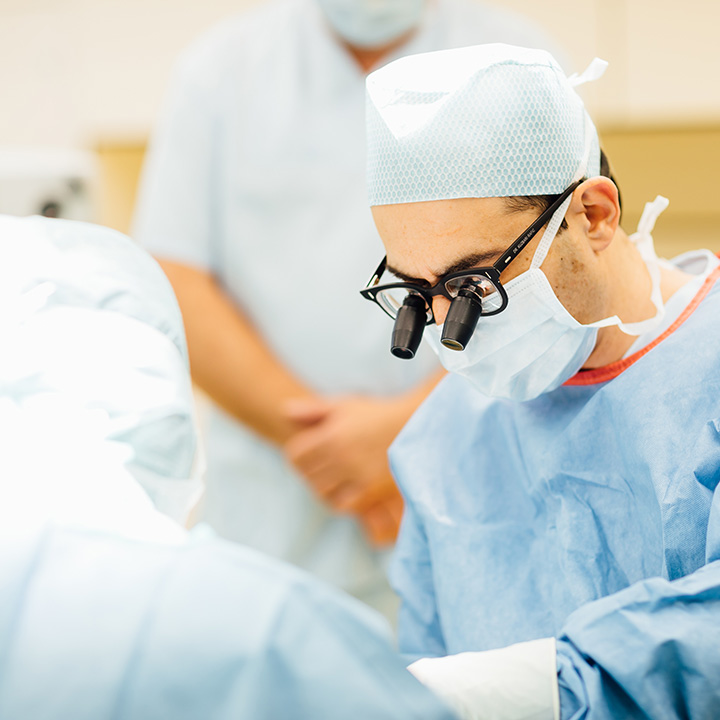
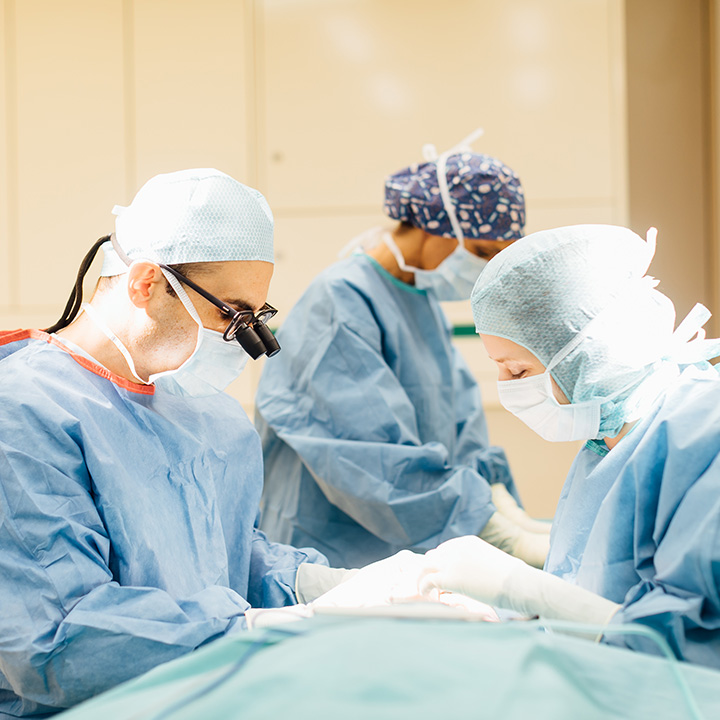
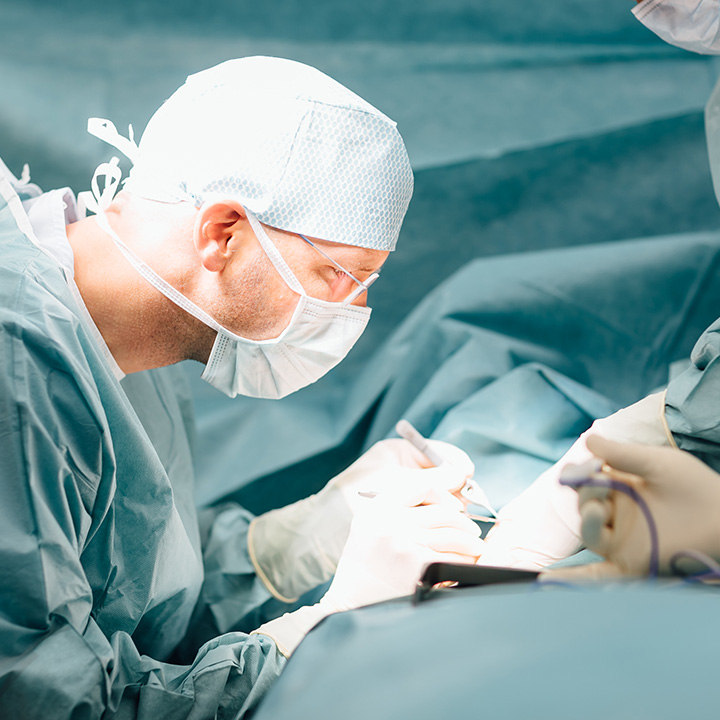
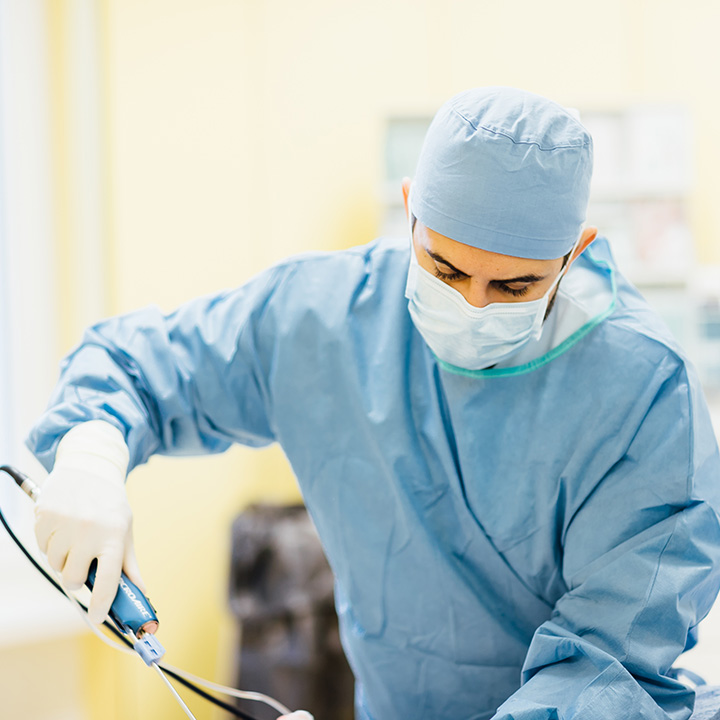
The operation takes place in the centre's own operating theatres, under general anaesthesia. Depending on the scope, it takes one to four hours. Because the operating theatres belong to us, we operate without time pressure — for as long as it takes for the result to be right. How long a procedure takes is decided by the findings, not by the appointment schedule.
- Inpatient in the building
After the recovery room you spend one night in a patient room of your own. The nursing staff is there around the clock. Nasal packing is not necessary.
- Follow-up talk and discharge
Examination and discussion of the course of events in your room. You can leave the Kuzbari Centre before 10 a.m.
- Mucous membrane and care
The mucous membrane needs time. Nasal rinses and care sprays keep it moist and loosen crusts. Most people are fit for work after three to seven days and fit to socialise after one to three weeks; sport is possible again after four to six weeks.
- Breathing settles in
The full effect shows itself once the swelling has completely subsided. All check-up appointments up to that point are included.
We really do take our time: the initial consultation
A nasal operation has to run precisely, and that begins long before the day of surgery. This is why we take over an hour for you as early as the initial consultation.

A great deal happens in that hour
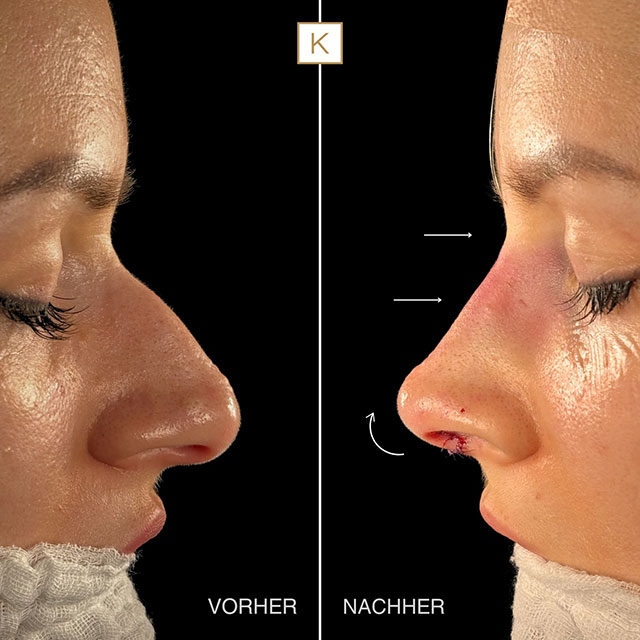
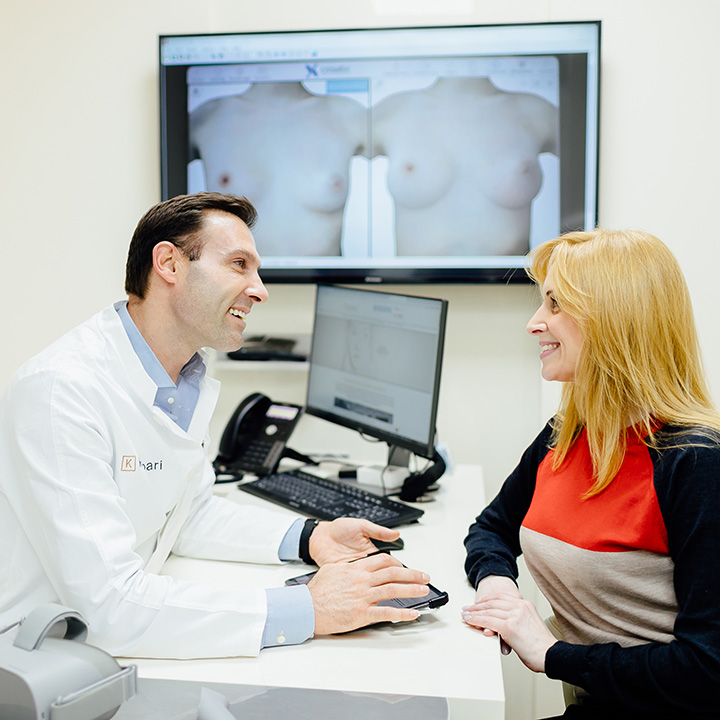
We get to know one another, we listen to you and we answer all your questions. We examine the nose from the inside and check at which of the three narrow points the air is held up. With our Vectra 3D technology we produce a three-dimensional simulation if the shape is to be changed as well. We show you before-and-after photographs of comparable noses, explain the procedure in detail — and give you the time you need. We will never try to push anyone into an operation.
Arrange your consultation appointment by telephone on +43 1 358 28 01 or through our online booking at the end of this page.
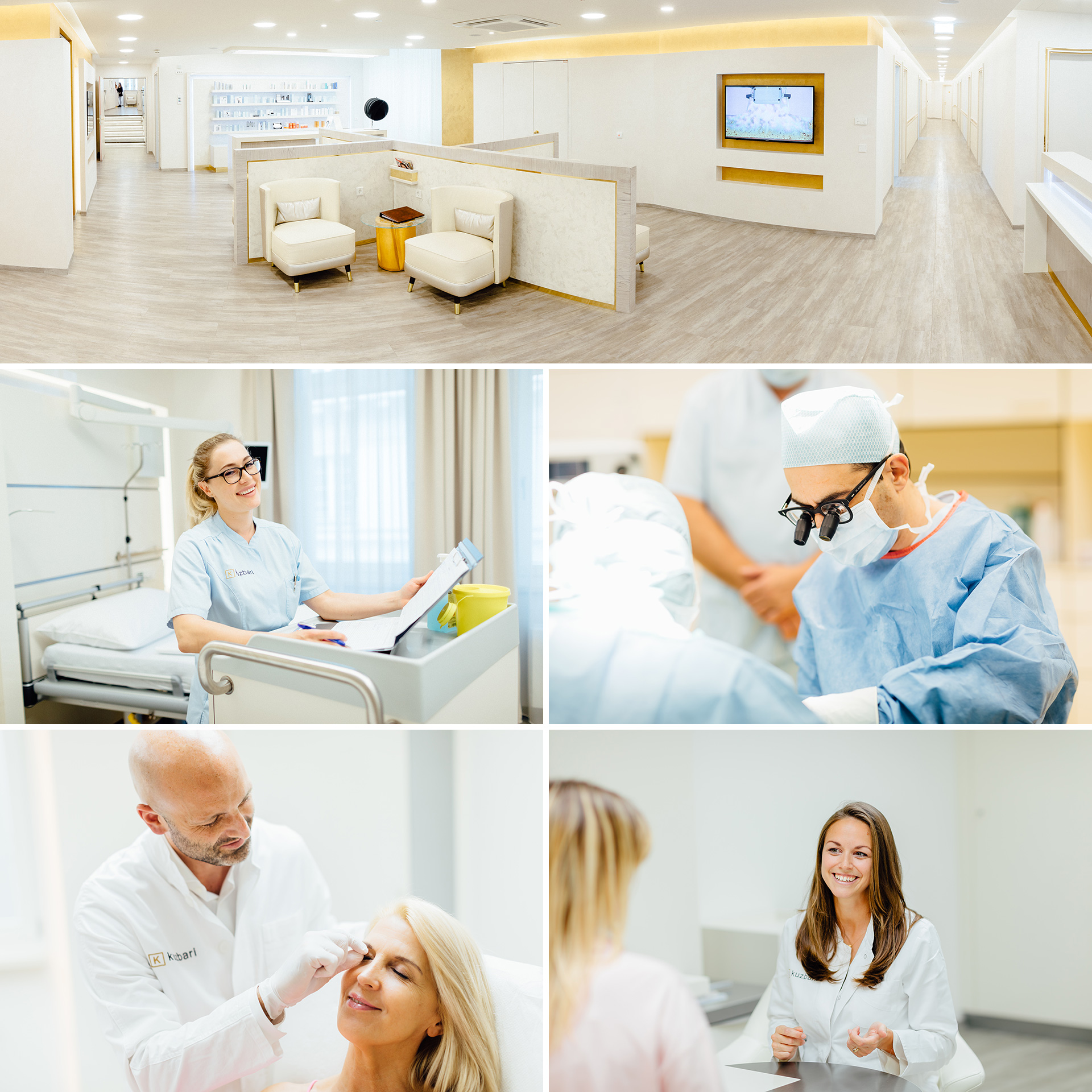
Everything under one roof
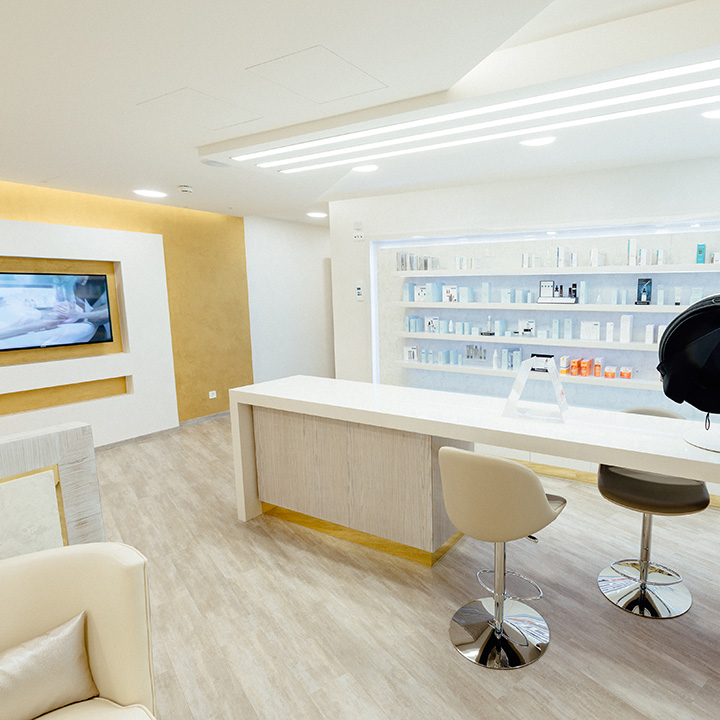
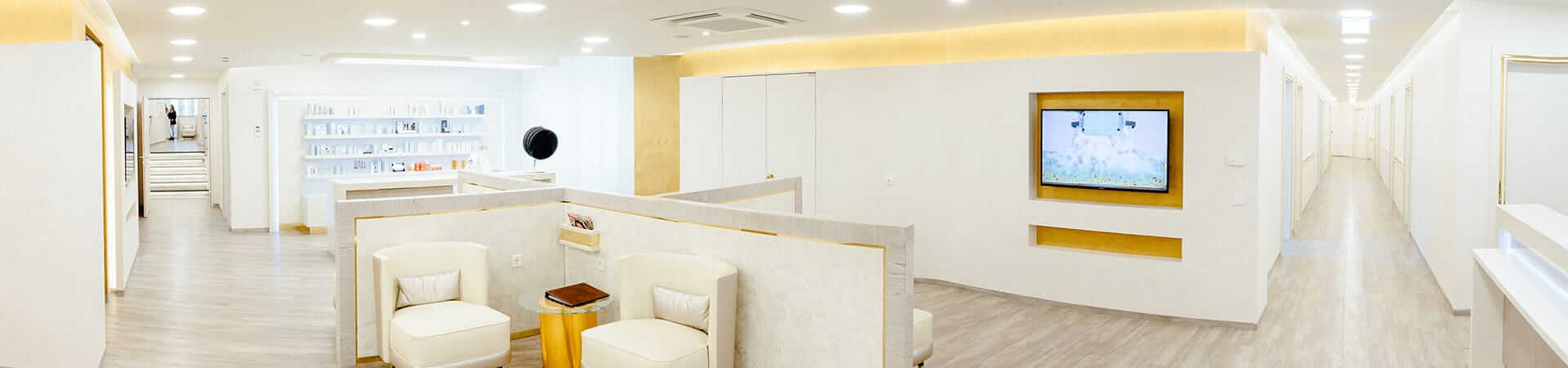
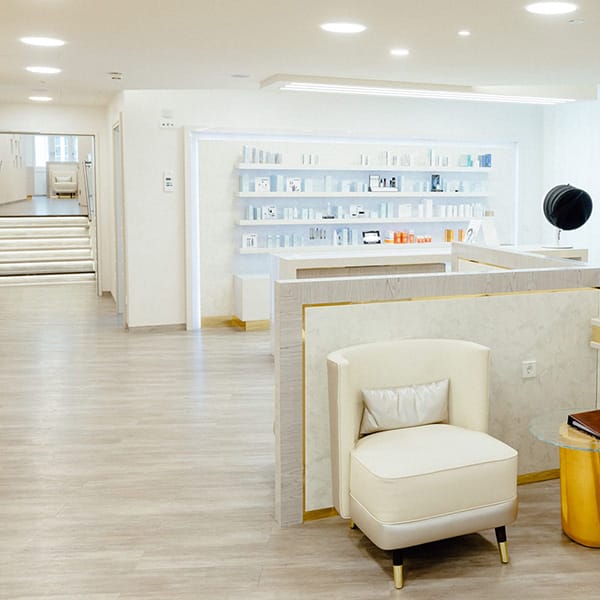
The Kuzbari Centre has its own operating theatres, equipped for rhinoplasty — and therefore the luxury of free scheduling. Our well-rehearsed team of doctors, anaesthetists and practice assistants works exclusively in aesthetic medicine.
For you that means: no journeys across the city, no changing contacts, and an operating time determined by the findings. More about the 360° nasal surgery centre
Who operates on noses at the Kuzbari Centre
Whoever advises you also operates on you — and sees you again at the check-ups.

Focus on facial and nasal surgery, multiple award winner of the Austrian Society for Aesthetic Surgery.
To the profile
Works exclusively on the face and, where the findings are suitable, with the nose-bridge-preserving technique.
To the profile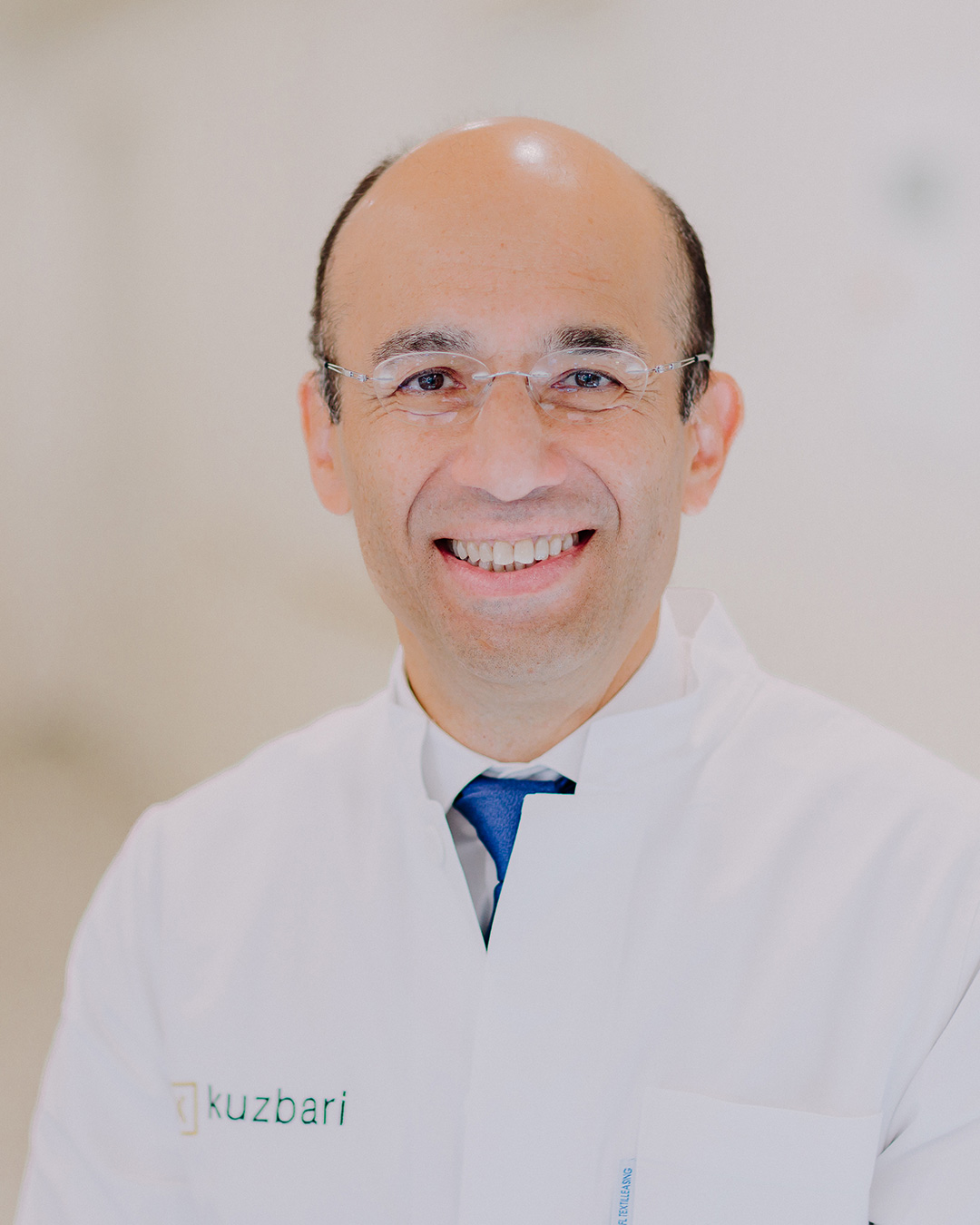
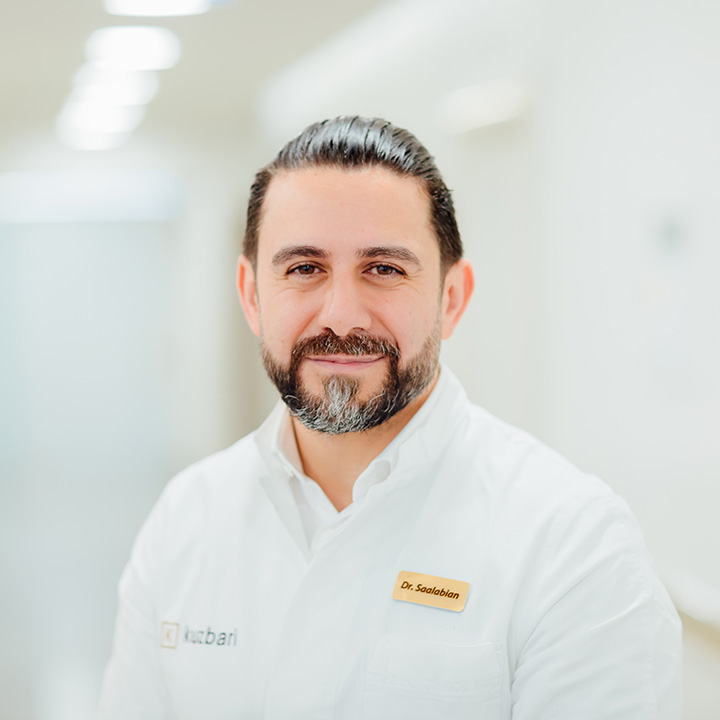
Founder of the Kuzbari Centre. He also takes on difficult revision operations and has worked with the piezotome for years.
To the profileCosts
The price depends on the effort involved. If only the septum is straightened, the procedure is manageable; if turbinates, nasal valves and a shape correction are added, it increases. After the examination you receive a written cost estimate.
- Initial consultation and examinationincluded
- Operation, anaesthesia and assisting teamincluded
- Overnight stay and cateringincluded
- All check-up appointmentsincluded
The costs can be spread over up to five years through Kuzbari Finance, at an annual percentage rate of 9.99 %.
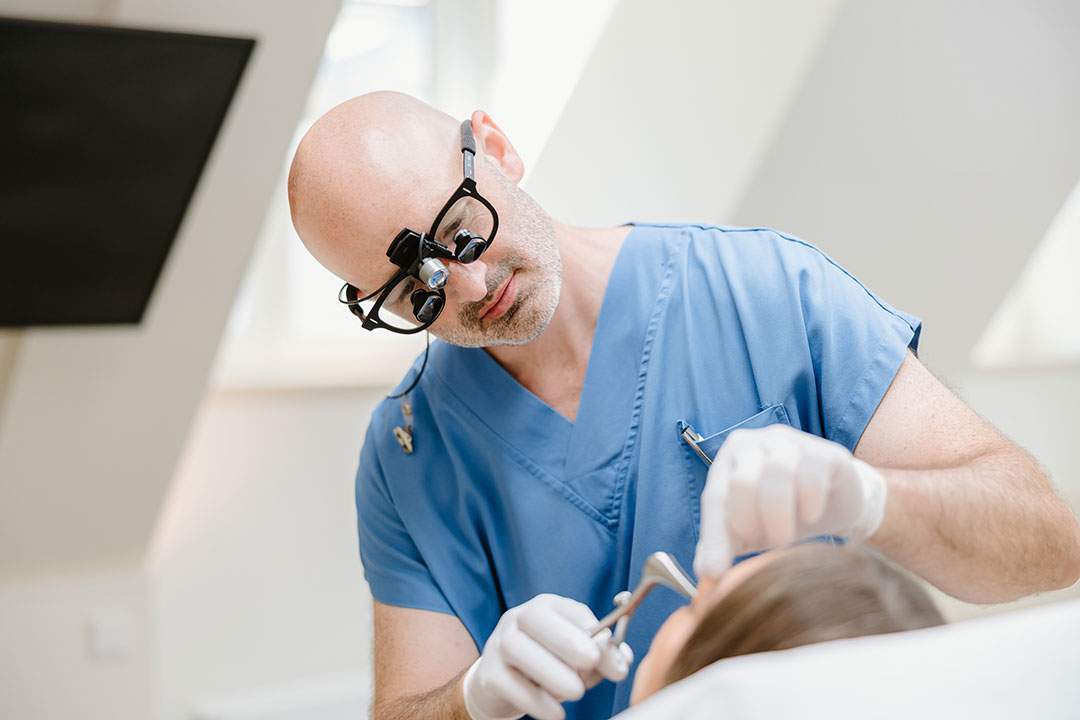
Checking nasal breathing 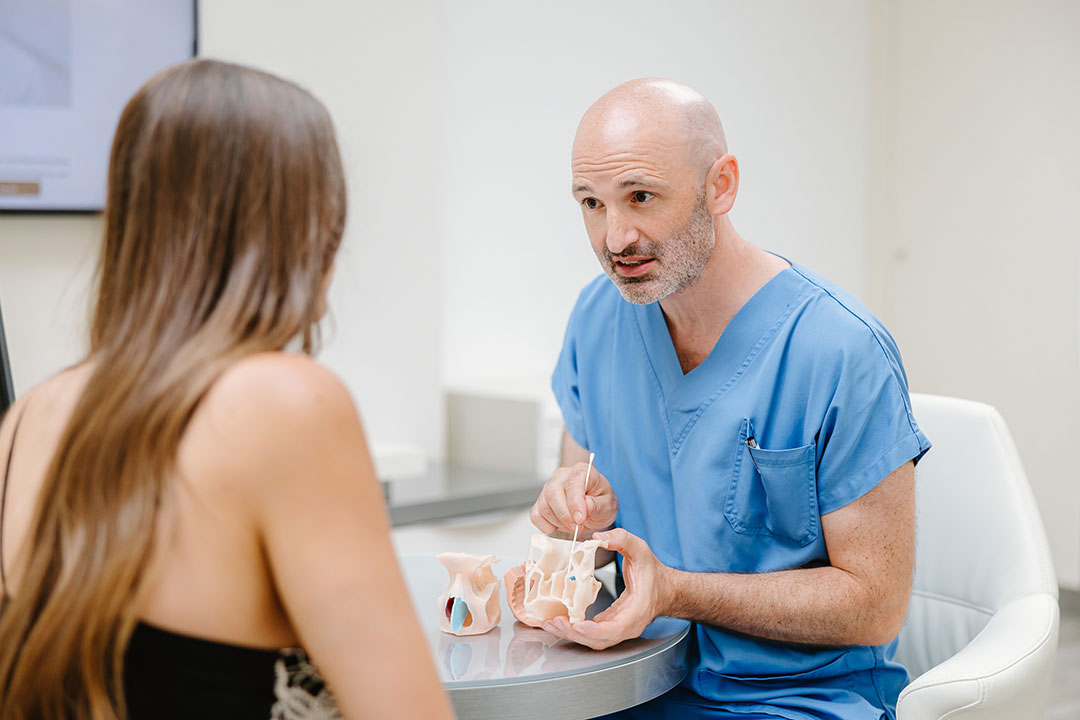
Nasal function on the model 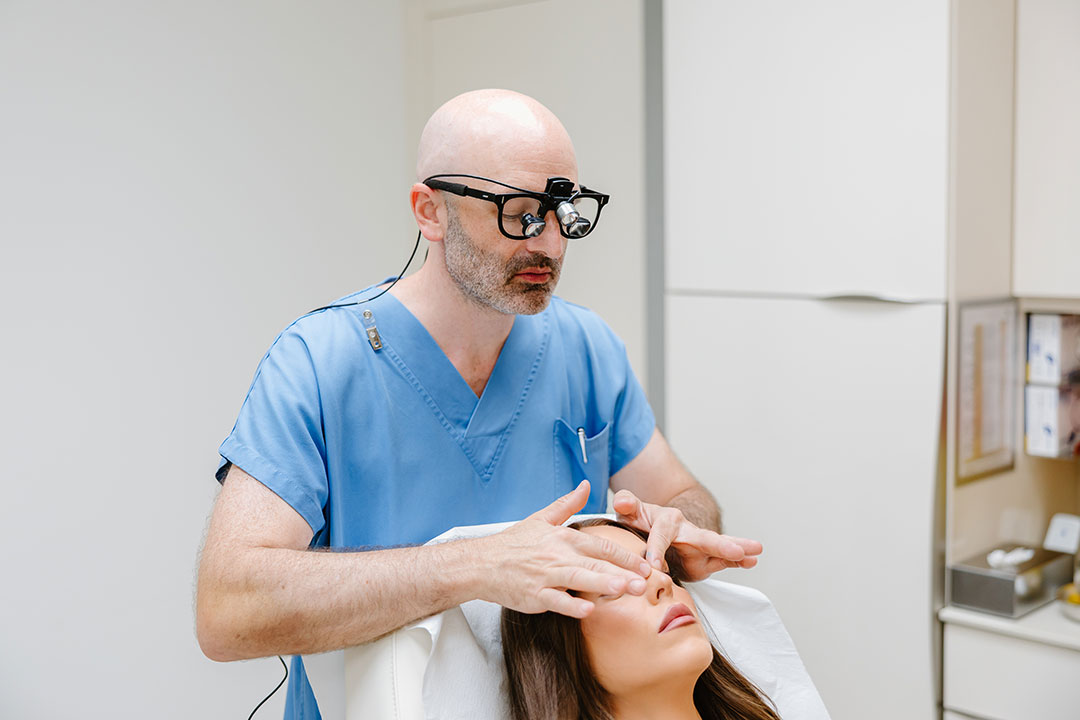
Examination before the operation
Frequently asked questions about functional rhinoplasty
What is a functional rhinoplasty?
A surgical procedure that resolves anatomical causes of obstructed nasal breathing — a deviated septum, enlarged turbinates or collapsing nasal valves. The aim is free, even nasal breathing. On request, the outer shape can be adjusted in the same procedure.
How do I know the cause is anatomical?
Typical signs are a nose that is blocked on one side or alternately, mouth breathing, restless sleep, snoring and the feeling of not being rested in the morning. This can only be established with certainty during the examination from the inside, side by side and under exertion.
Will my nose look different afterwards?
Only if you wish it or if the findings require it. The inner and the outer nose are connected: a correction of the septum can influence the tip or the bridge. What will change is discussed beforehand — with the 3D simulation where needed.
Do I need nasal packing?
No. At the Kuzbari Centre nasal packing is not necessary. After the operation you wear, if required, a nasal splint or a nasal plaster for around ten days.
How long does the operation take?
One to four hours, depending on the scope. Because the operating theatres belong to us, we operate without time pressure — for as long as it takes for the result to be right. How long your operation will take we tell you after the examination.
When will I be able to breathe freely again?
Expect not to breathe freely through your nose for some weeks — that is due to the swelling of the mucous membrane and is part of the healing process. The full effect shows itself once the swelling has subsided, which can take up to six months.
How long will I be out of action?
Most people are fit for work after three to seven days and fit to socialise after one to three weeks. Sport is possible again after four to six weeks.
Does the operation help against snoring?
Free nasal breathing frequently improves sleep noticeably. Snoring, however, often has several causes, not all of which lie in the nose. If sleep apnoea is suspected, it should be investigated before any operation.
When do you involve an ENT specialist?
Whenever your condition calls for it — for instance with chronic inflammation of the sinuses, with polyps or where an allergy is suspected. We then coordinate and draw up a treatment plan together.
Can congestion caused by an allergy be operated on?
A mucous membrane swollen by an allergy does not improve through an operation. If an anatomical narrowing is present in addition, an operation can give back the reserve. Which applies in your case is clarified beforehand.
Are there any scars?
With a correction of the septum alone all incisions lie inside the nose; no visible scars remain. If the outer shape is changed at the same time, the open technique adds a small incision on the columella whose scar is barely visible later.
How much does a functional rhinoplasty cost?
A rhinoplasty starts at 9,350 euros, everything included. The price depends on the effort involved. For a previously operated nose it is from 9,950 euros, from 10,900 euros or from 11,900 euros, depending on complexity. After the examination you receive a written cost estimate.
Your consultation
Over an hour of time, an examination of the nose from the inside, and a clear answer to the question of what is causing your obstructed breathing — without obligation.
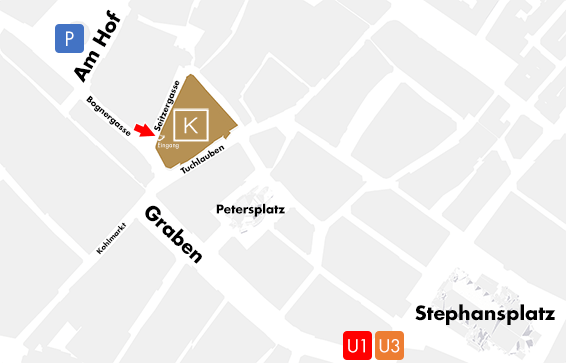
Monday to Friday, 08:00 to 18:00 · Seitzergasse 2-4, 1010 ViennaBook an appointment for your
rhinoplasty now!
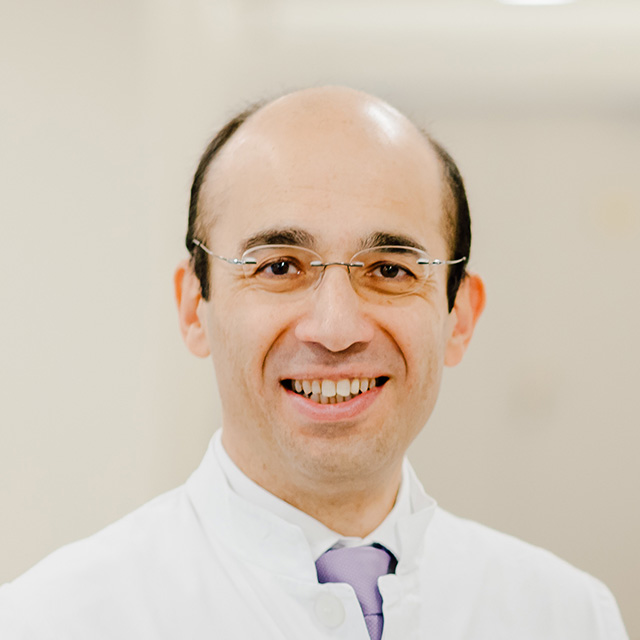
Facial surgery is among the areas of focus at the Kuzbari Centre. That is why three specialists with us deal exclusively with the "supreme discipline" of plastic surgery, and whichever of them you decide on: all stand for genuine bespoke work, the highest possible quality and the greatest possible safety. You will find the appointment booking for Univ. Doz. Dr. Rafic Kuzbari on this page.
In the following overview you can book appointments with our rhinoplasty specialists Dr. Christoph Grill and DDr. Jessica Wittmann.
Here you will find an overview of our rhinoplasty experts:
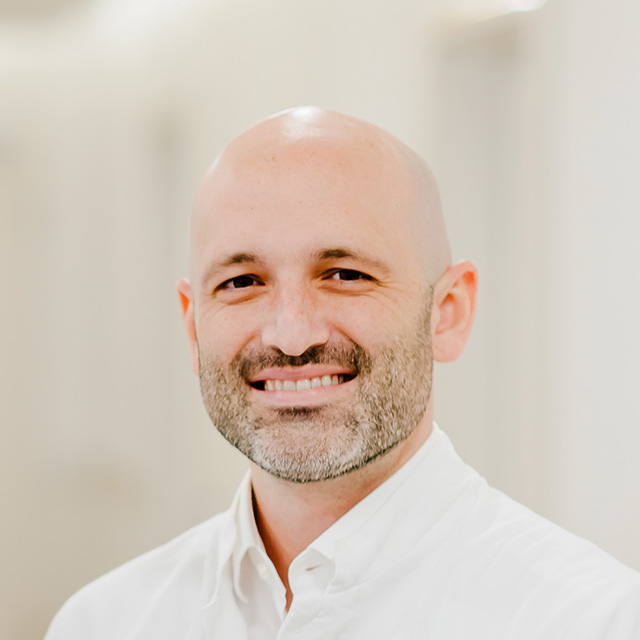
Details & appointment booking
3D simulation
Inpatient procedure
with overnight stay
Kuzbari
operating wing
Kuzbari
Safety Check
Kuzbari
quality guarantee
Photo documentation
2-3 weeks
downtime
Aftercare
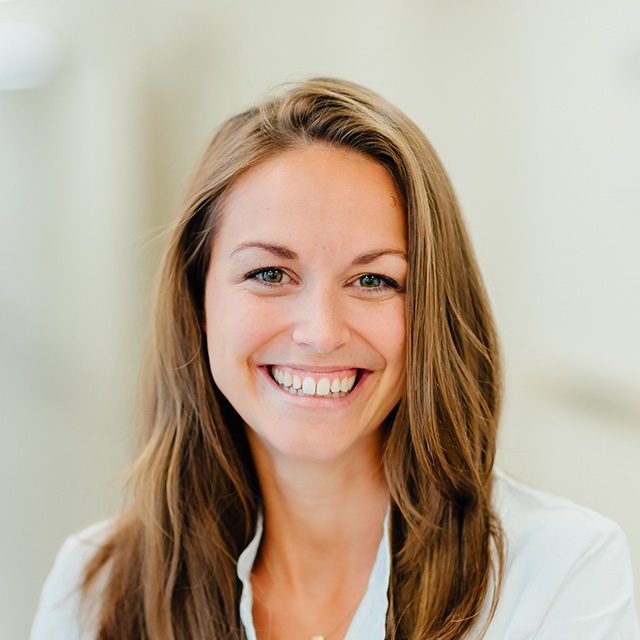
Details & appointment booking
3D simulation
Inpatient procedure
with overnight stay
Kuzbari
operating wing
Kuzbari
Safety Check
Kuzbari
quality guarantee
Photo documentation
2-3 weeks
downtime
Aftercare
Details & appointment booking
3D simulation
Inpatient procedure
with overnight stay
Kuzbari
operating wing
Kuzbari
Safety Check
Kuzbari
quality guarantee
Photo documentation
2-3 weeks
downtime
Aftercare


 01 358 28 01
 Book now