












Nasal hump correction
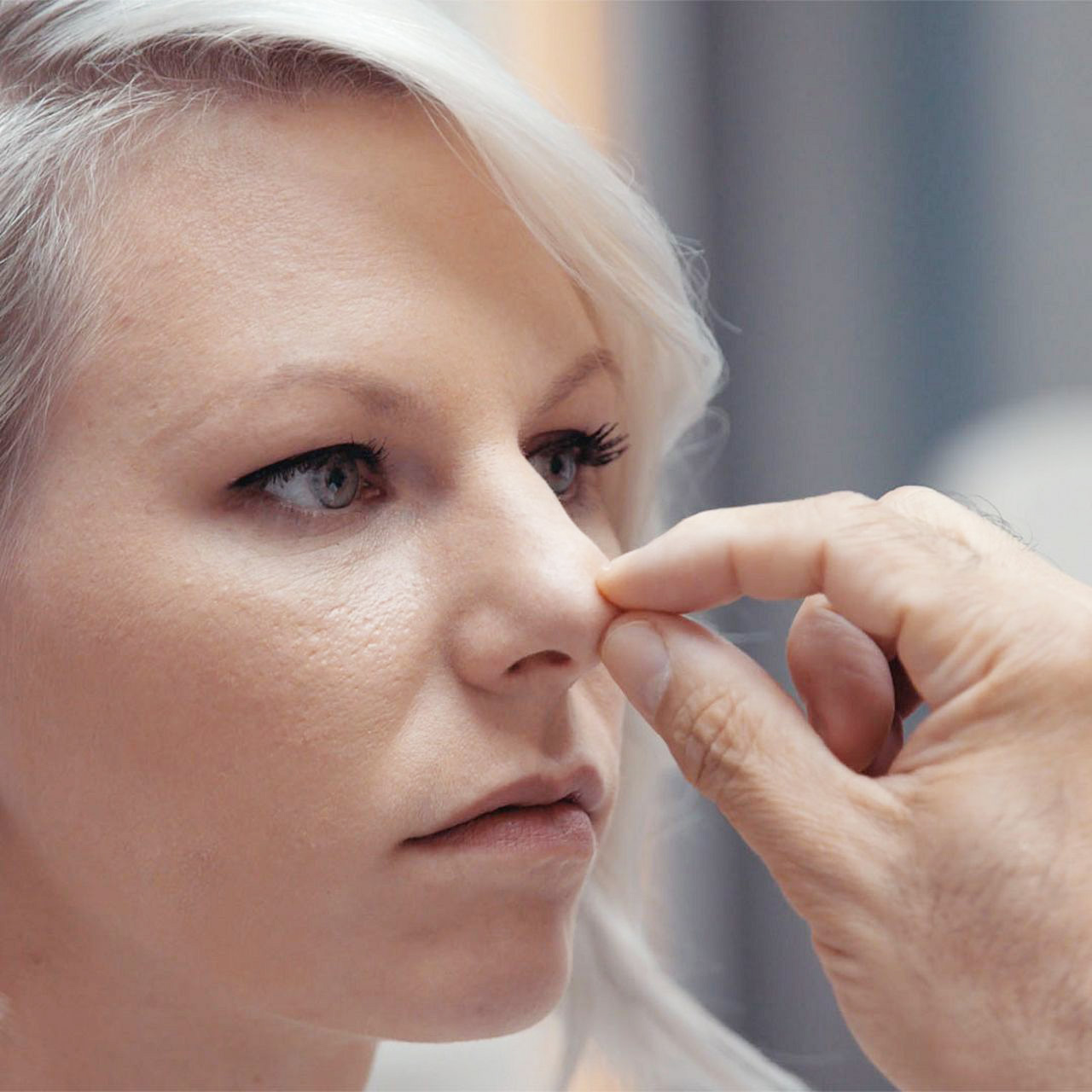
Do you look at your profile in the mirror and find yourself bothered by a hump, an unevenness or a crooked line on your nasal bridge? Perhaps your bridge looks too flat or out of keeping with your features. Details like these can influence the whole impression of a face — a targeted correction of the nasal bridge can change that.
- Smooth, straighten or build up the hump
- Nose-bridge-preserving technique
- Operation 1 to 4 hours
- 3D simulation beforehand
At the Kuzbari Centre we understand that the nasal bridge plays a central role in the aesthetics of your face. That is why we rely on individual solutions that underline your natural beauty without looking artificial.
Our patients come to us with a wide range of concerns: many wish to have a bothersome hump removed, others want a crooked bridge straightened or a flat profile built up. What they have in common is the wish for a harmonious, natural result that suits their face. With our experience, the 3D simulation and a process that takes place in the same building from the consultation to the last check-up, we work towards a balanced nasal bridge.
The Kuzbari experts for this service:


- 2,000+Nasal operations
- 3Nasal surgery specialists
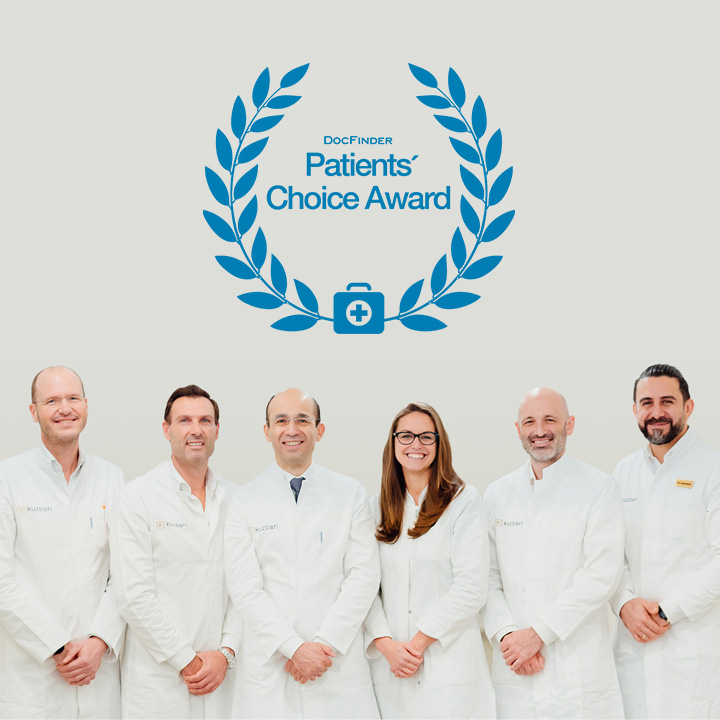
- 11Times in a row Patients’ Choice Award
- 38DocFinder awards in total
Nasal surgery is one of our focal points
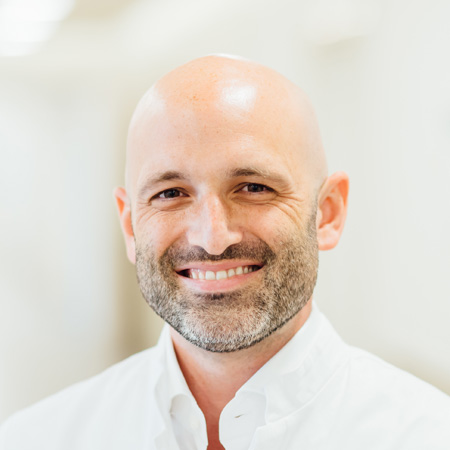
At the Kuzbari Centre, Dr. Christoph Grill and DDr. Jessica Wittmann work exclusively on facial surgery; alongside them is Univ. Doz. Dr. Rafic Kuzbari, the founder of the centre. This specialisation matters particularly for rhinoplasty: it calls for the highest degree of precision and years of experience, since aesthetics and function have to be brought into harmony in a single operation.
From the initial consultation with 3D simulation through the operation in our own operating theatres to the aftercare, we look after everything so that your nasal hump correction is safe, precise and as pleasant as possible.
Why a correction of the nasal bridge?
The nasal bridge decisively shapes the profile of your face. A pronounced hump, a crooked line or a bridge that is too flat can disturb facial harmony. A correction of the bridge makes it possible to address these irregularities and create a balanced, aesthetic profile. Whether it is about smoothing a hump, straightening a deviation or building up a flat bridge — at the Kuzbari Centre we rely on subtle changes that bring out your natural beauty.
For a harmonious result the nasal tip often has to be adjusted as well, because bridge and tip strongly influence one another aesthetically. If only the hump is reduced, the new straight line can suddenly make the nose look longer or the tip appear lower than before. The aesthetic goal of the operation is therefore worked out together in the 3D simulation — with the whole nose in view, not just the hump.
Nasal hump correction at a glance
- Aim of the operationSmoothing a hump, straightening or building up the nasal bridge
- Duration1 to 4 hours
- AnaesthesiaGeneral anaesthesia
- Stay1 night as an inpatient
- SplintAround 10 days
- Fit for workAfter 3 to 7 days
- Fit to socialiseAfter 1 to 3 weeks
- SportAfter 4 to 6 weeks
- Final resultAfter 6 to 12 months
- SurgeonsUniv. Doz. Dr. Rafic Kuzbari, Dr. Christoph Grill, DDr. Jessica Wittmann
Special features: 3D simulation from three perspectives, our own operating theatres, the piezotome in every nasal operation, 38 DocFinder Patients’ Choice Awards.
The nose-bridge-preserving technique
With the nasal bridge, the technique determines the result particularly clearly — more so than with any other part of the nose. The bridge is the line everyone sees in profile, and the skin over it is thinner in places than at any other point of the face.
We work a great deal with the modern nose-bridge-preserving technique, known as dorsal preservation, as well as with hybrid techniques — not exclusively with the traditional structural septorhinoplasty. The natural nasal bridge is preserved instead of being removed and rebuilt.
This has three advantages: the result looks particularly natural, it is stable in the long term, and the risk of later irregularities on the nasal bridge is reduced — which matters above all with thin skin, because there every tiny edge becomes visible. Certain deviations also recur less often.
| Feature | Nose-bridge-preserving | Structural |
|---|---|---|
| Basic idea | The bridge is preserved as a unit and lowered | The hump is removed and the bridge rebuilt afterwards |
| The profile line | Remains your own | Is surgically reshaped |
| With thin skin | Lower risk of visible edges | Requires very careful smoothing and often a covering layer |
| When it makes sense | The gentler choice for many findings | When the bridge has to be rebuilt in any case |
| Decision | After examination and 3D simulation | After examination and 3D simulation |
The nose-bridge-preserving technique is not generally superior, but for many findings it is the gentler choice. Which technique suits your nose depends on the shape of the hump, on the position of the septum and on the thickness of your skin. We discuss this in the initial consultation, before you decide.
The piezotome for work on the bone
The bony part of a hump is worked on with the piezotome, an ultrasound instrument that cuts and smooths bone while leaving soft tissue, mucous membrane and blood vessels untouched. For patients this means more precise work on the bone and, as a rule, fewer bruises and less swelling in the days afterwards. The piezotome is not a rhinoplasty method in its own right but a tool for one step; planning and experience remain decisive. We use it as standard in every nasal operation.
And the nasal tip?
When the hump is lowered, the relationship between bridge and tip changes too. So that the tip carries the new profile line, we stabilise it using modern cartilage-supported techniques. This considerably reduces the risk of drooping of the nasal tip over the years. More on the nasal tip correction
Too crooked, too wide, too pointed? The most common shape problems of the nose
In this video DDr. Jessica Wittmann explains the most common shape problems of the nose, from the hump through the crooked nose to the wide nose, and how they affect form and function.
The course of your bridge correction
Four stages, one building: consultation, preparation, operation and aftercare all take place in the Seitzergasse, with the same people.
- Initial consultation: we take our time for you
A correction of the nasal bridge is a highly precise procedure that requires careful planning. This is why we take over an hour in the initial consultation to understand your wishes and needs exactly. This conversation is the first step towards your new nasal bridge.
- Preparation: everything for your safety
Once you have decided, we prepare you for the procedure: medical examinations, laboratory values, a check of nasal function, the discussion with the anaesthetist and a detailed surgical plan based on the 3D simulation.
- The operation: in safe hands
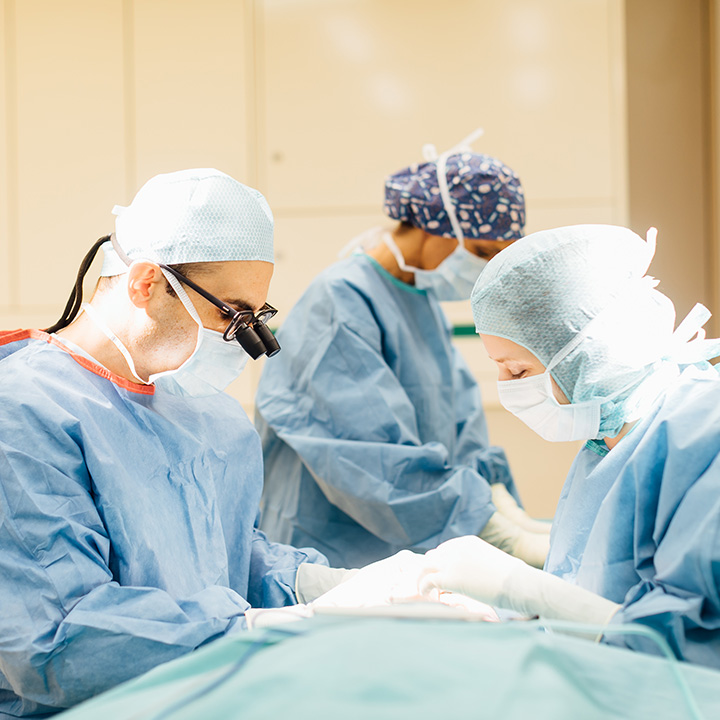
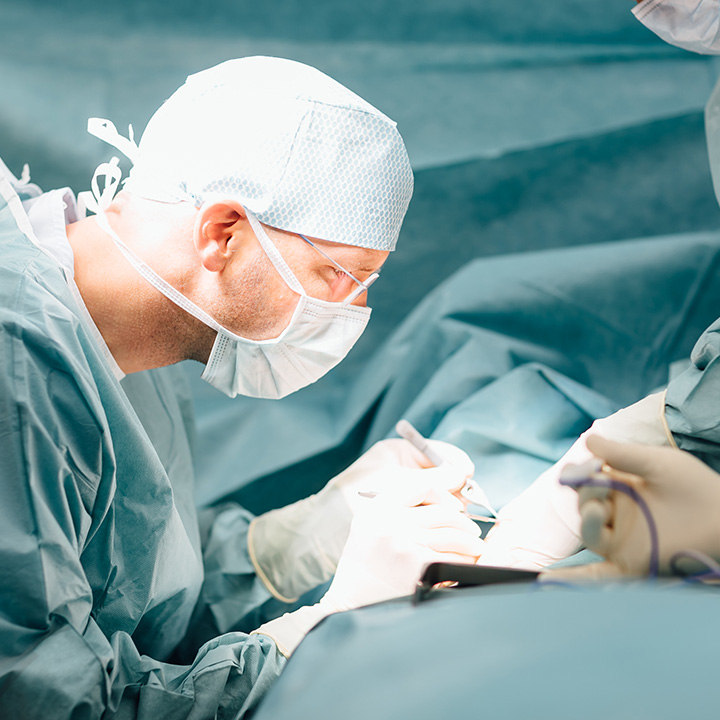
Before the operation your surgeon and the anaesthetist come to your room. The operation takes one to four hours. Because the operating theatres belong to us, we operate without time pressure — for as long as it takes for the result to be right. How long a procedure takes is decided by the findings, not by the appointment schedule.
- Recovery room and patient room
Immediately after the operation we look in on you in the recovery room. You wear a small nasal splint or plaster that stabilises your bridge. Afterwards you spend one night in a patient room of your own; the nursing staff is there around the clock. Nasal packing is not necessary.
- Follow-up talk and discharge
The next morning Dr. Grill or DDr. Wittmann holds a detailed follow-up talk with you, examines your nose and discusses how things went. You can leave our centre before 10 a.m. You are given your surgeon's number for times outside consulting hours.
- The course of healing
Swelling and discolouration are normal and reach their peak after two to three days. After that they subside. We remove the splint or plaster after about ten days. Most people are fit for work after three to seven days and fit to socialise after one to three weeks.
- Long-term care
We accompany you with regular aftercare appointments until your nasal bridge has healed completely. The final result shows itself after six to twelve months, once all swelling has subsided. All check-up appointments are included.
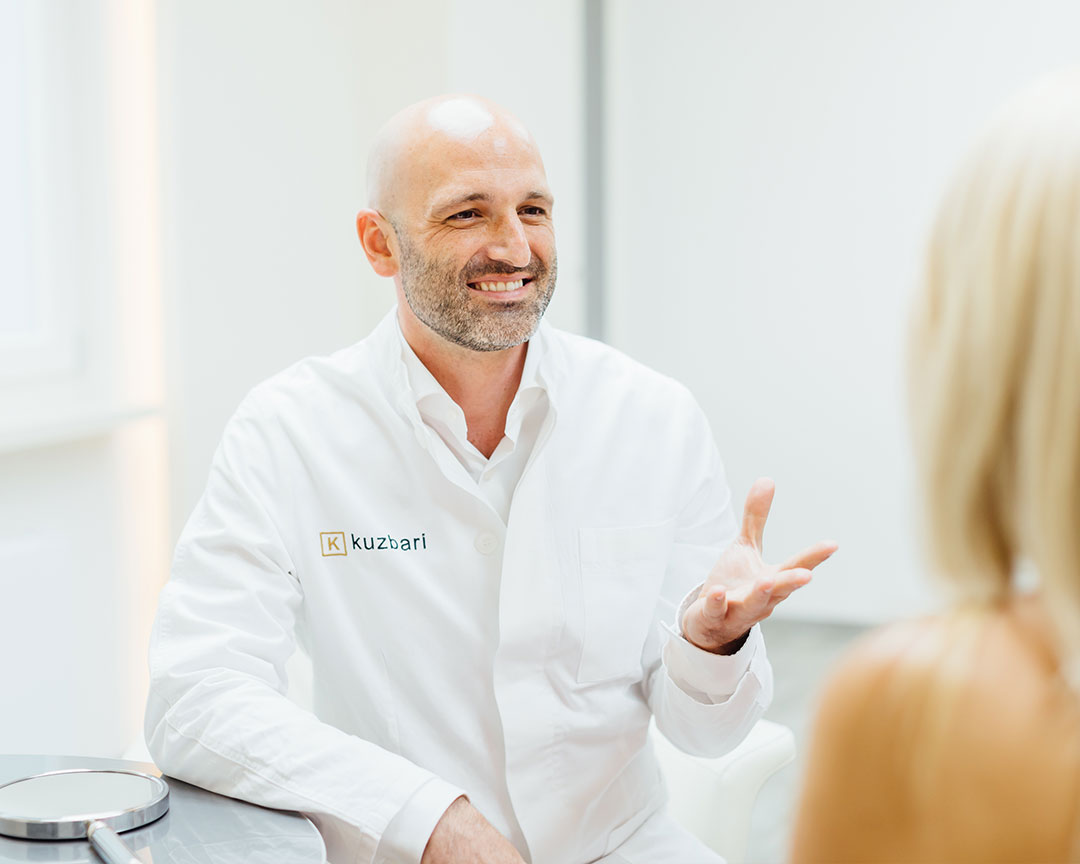 Step 1
Initial consultation with examination and 3D simulation. 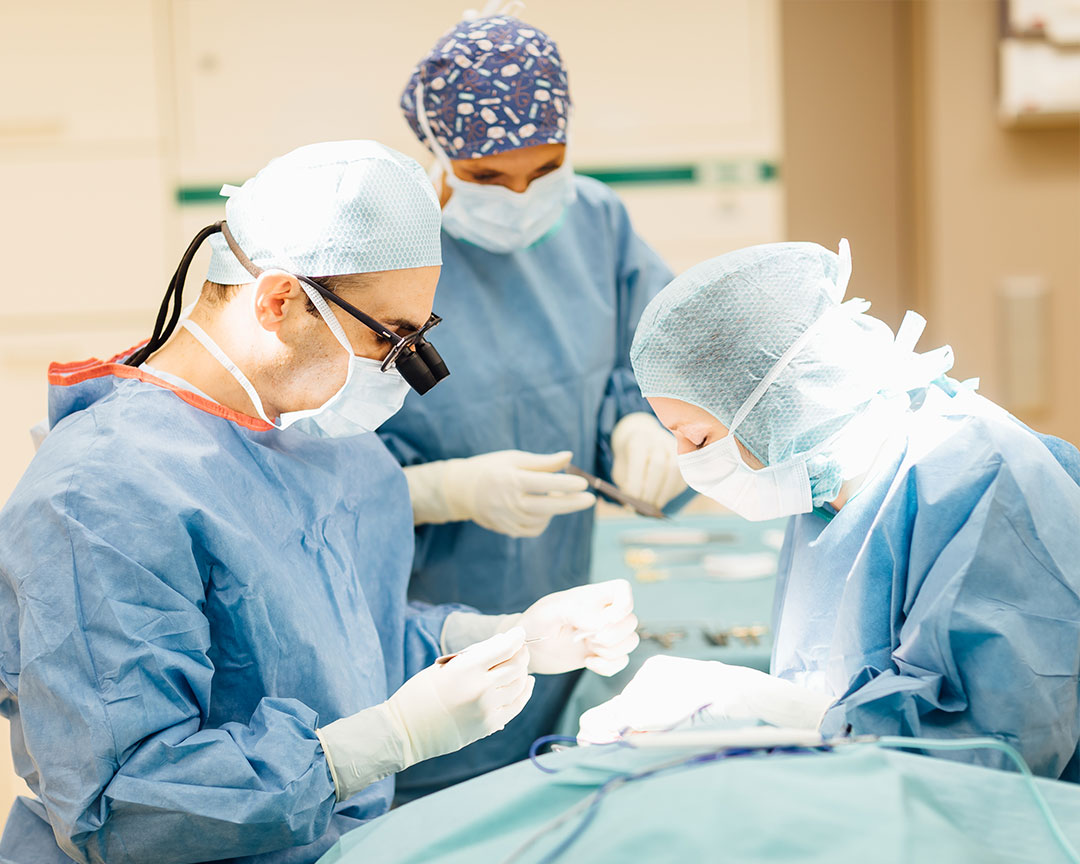 Step 2
Planning the procedure as a team. 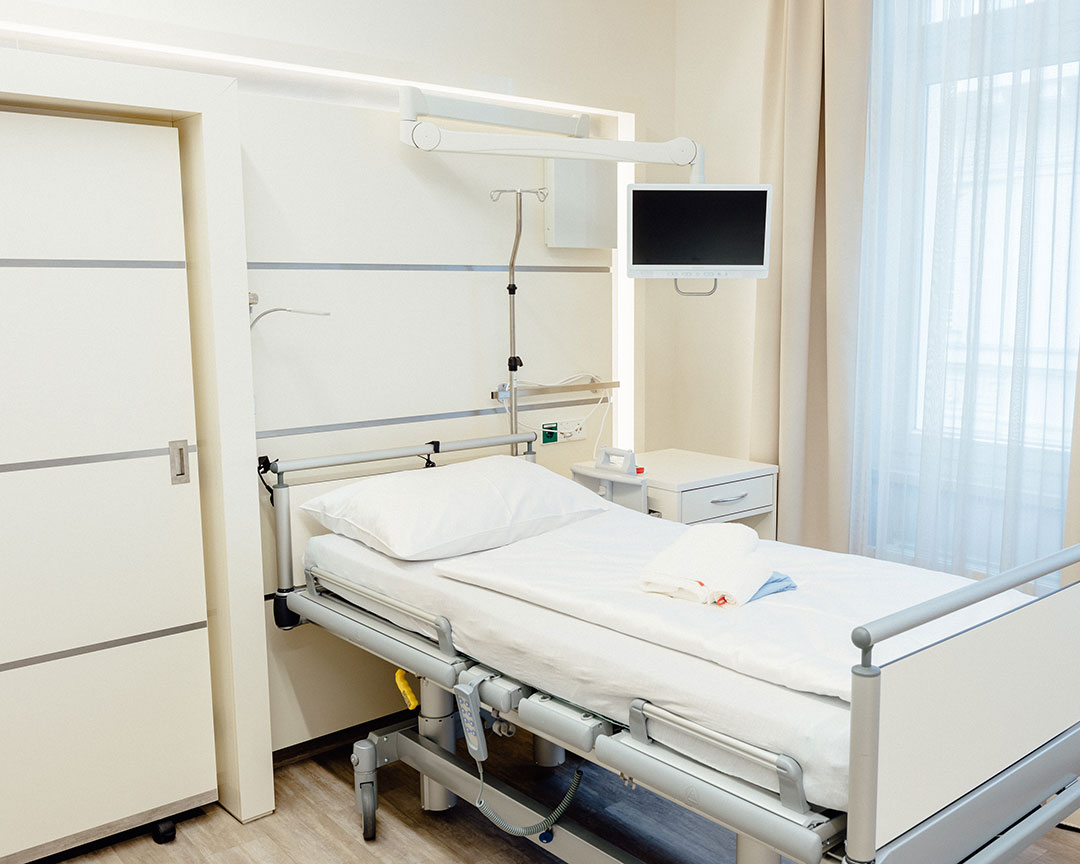 Step 3
The operation in our own operating suite. 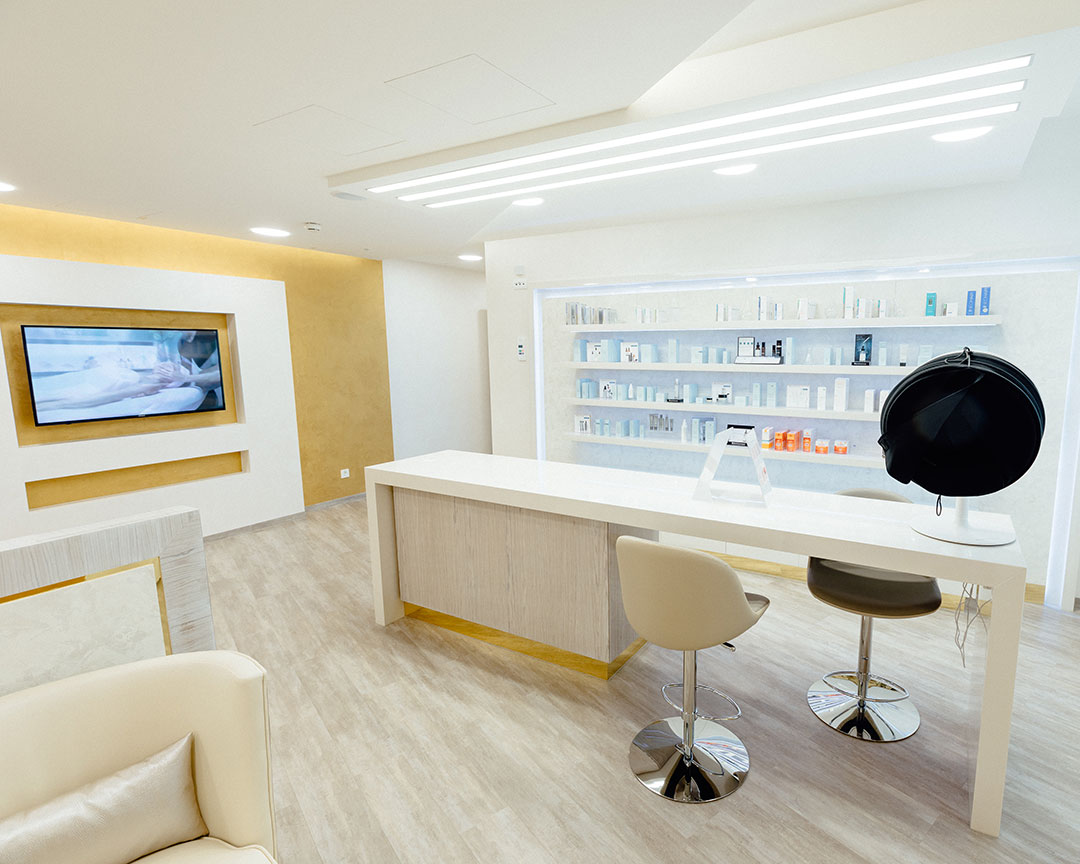 Step 4
Aftercare until the final result.
« Swipe to browse
What happens in the initial consultation
- Getting to know one another: we listen in order to understand your goals — whether smoothing a hump, straightening or building up the bridge — and your concerns.
- Detailed analysis: together with Dr. Grill or DDr. Wittmann we analyse your facial features and the anatomy of your nasal bridge, including profile and symmetry.
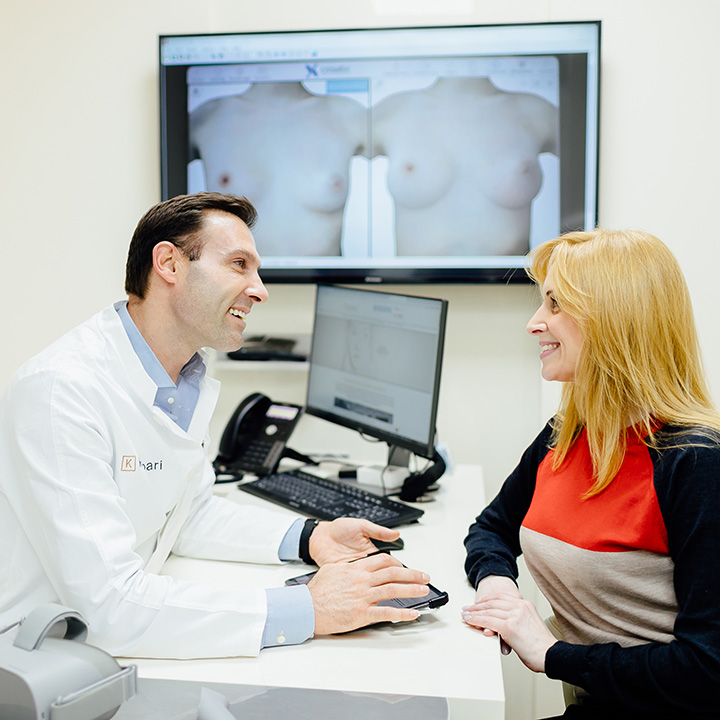
- 3D simulation with Vectra technology: we scan your nose and create a simulation of your possible new profile — not only from the side, but also from the front and from below.
- Before-and-after comparisons: we show you photographs of patients with similar starting points who have been operated on, for instance hump reductions or straightenings.
- Explanation of the procedure: we explain step by step how your bridge correction will proceed and answer all questions about technique, healing and costs.
- Time for your decision: we will never push you into an operation. You receive all the information and the time you need.
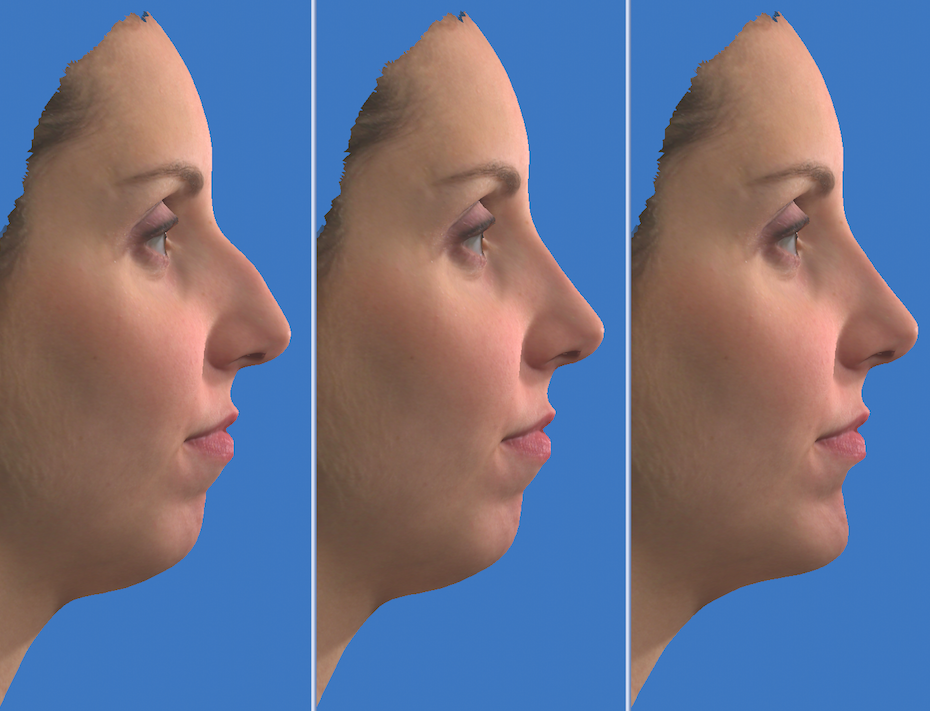
The hump on screen
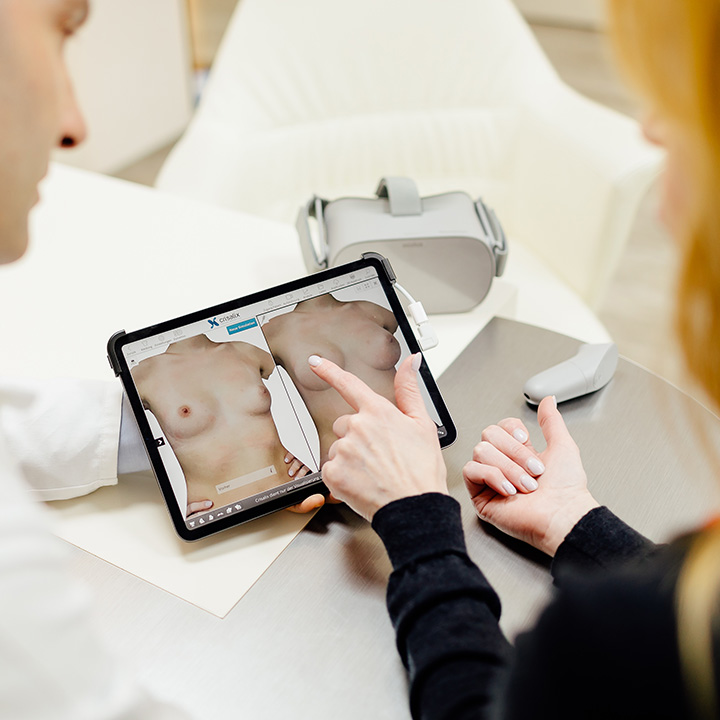
Our 3D simulation shows your future nose not only in profile but also from the front and from below. You therefore see your possible result from exactly the angles from which others see you every day — and before the operation we talk about the same picture.
With a hump that is particularly valuable: many patients underestimate how strongly a straight profile line changes the perception of the nose's length and of the tip. On the model this can be shown instead of described.
The greatest possible safety
Your safety has top priority at the Kuzbari Centre. We have three modern operating theatres equipped specifically for aesthetic procedures. Our team works exclusively in aesthetic medicine. As a licensed hospital we are inspected several times a year by independent bodies.
Our own hygiene team works continuously on implementing hygiene standards, while a quality management team keeps improving our processes and structures. All materials used are selected on the basis of scientific studies.
Results
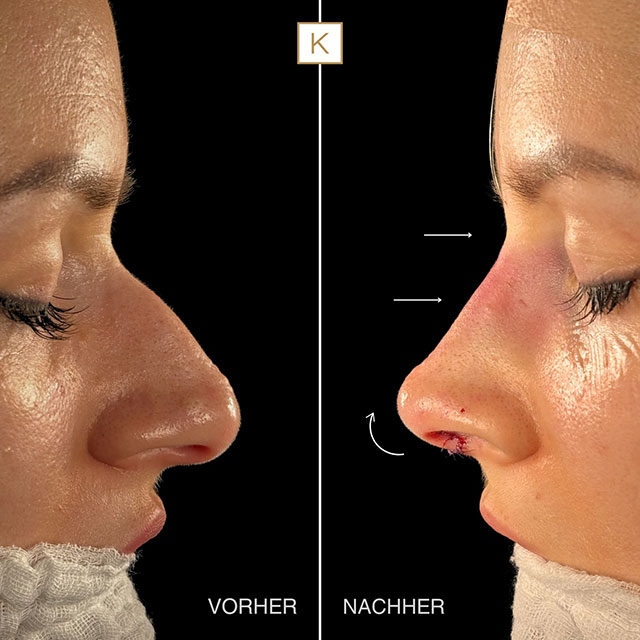
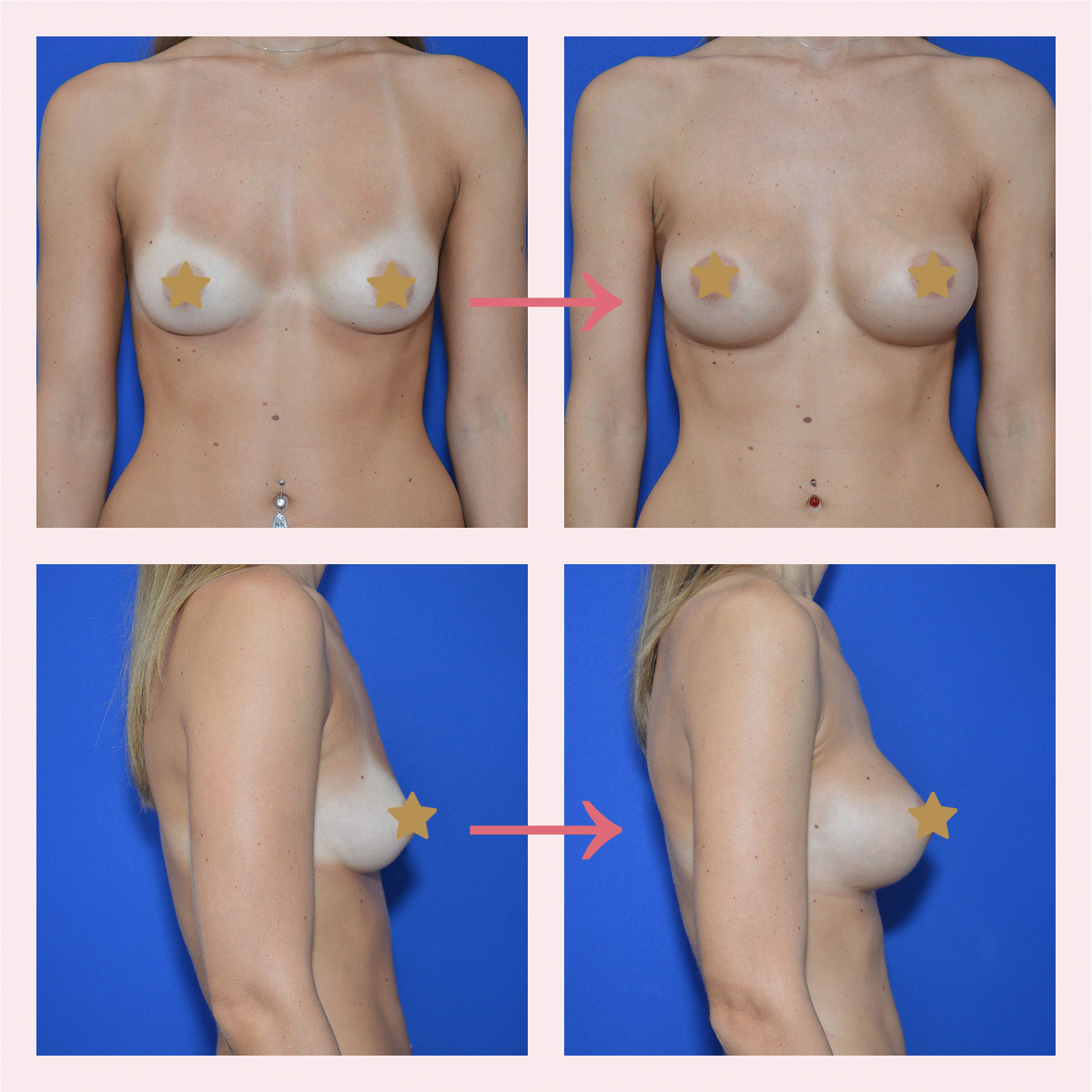
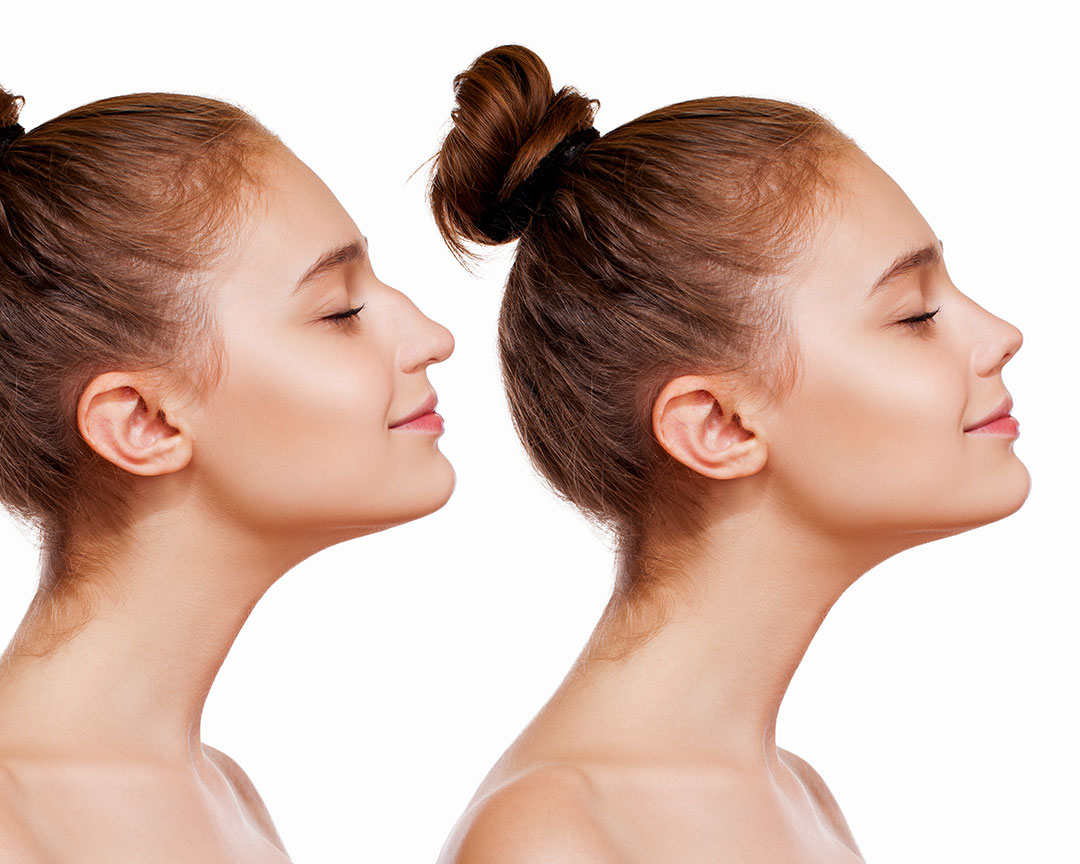
Before-and-after photographs show what was possible with one particular starting point. They do not show what is possible for you — that requires an examination.
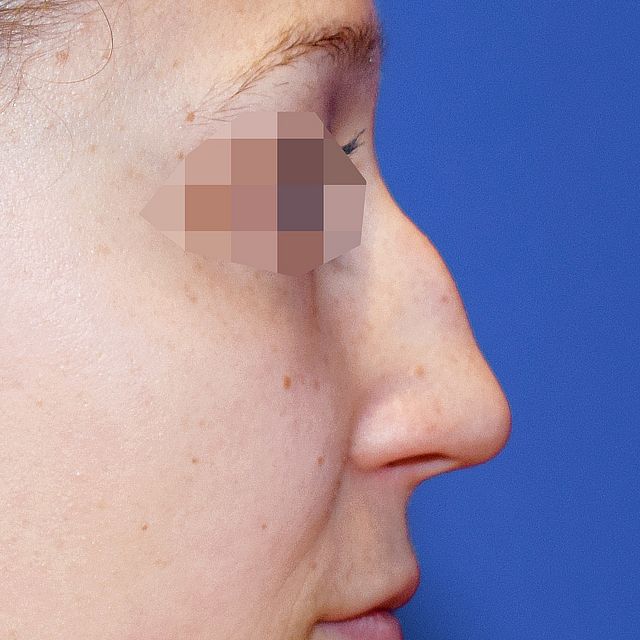
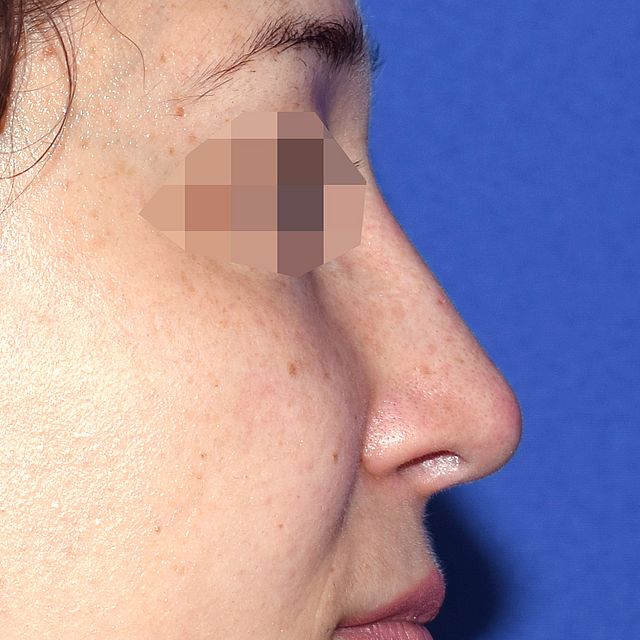
Smoothing of the nasal bridge in profile. Drag the slider to compare before and after.
- Procedure
- Nasal hump correction
- View
- Profile
- Anaesthesia
- General anaesthesia
Photographs of patients who have consented to publication. Every nose heals differently; a result shown here cannot be transferred to anyone else.
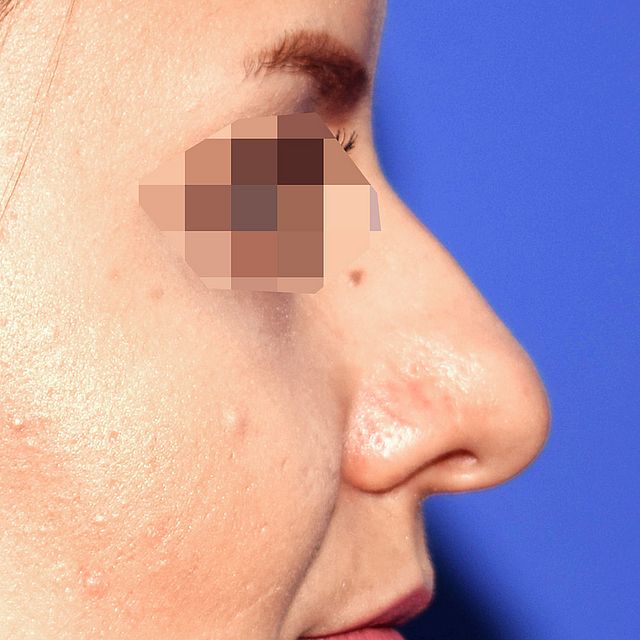
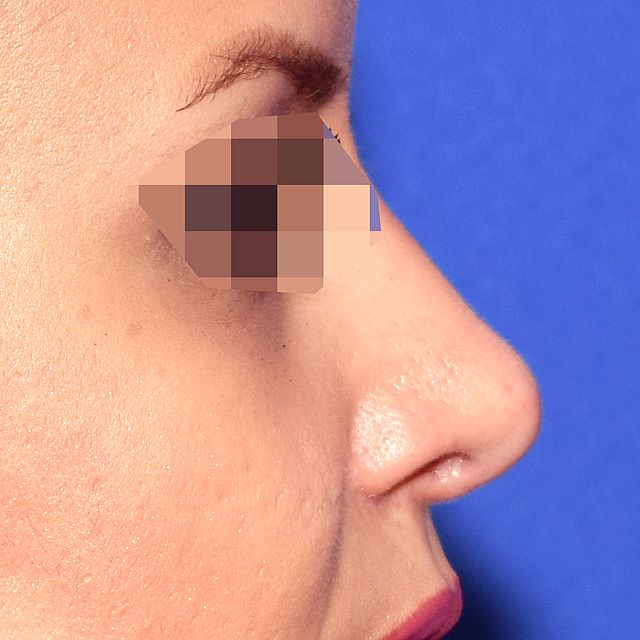
Straightening of the profile line with adjustment of the nasal tip.
- Procedure
- Nasal hump correction
- View
- Profile
- Photo taken
- After healing was complete
Photographs of patients who have consented to publication. Every nose heals differently; a result shown here cannot be transferred to anyone else.
The advantages of a bridge correction at the Kuzbari Centre
Who operates on your nasal bridge
Whoever advises you also operates on you — and sees you again at the check-ups.
Focus on facial and nasal surgery, multiple award winner of the Austrian Society for Aesthetic Surgery.
To the profile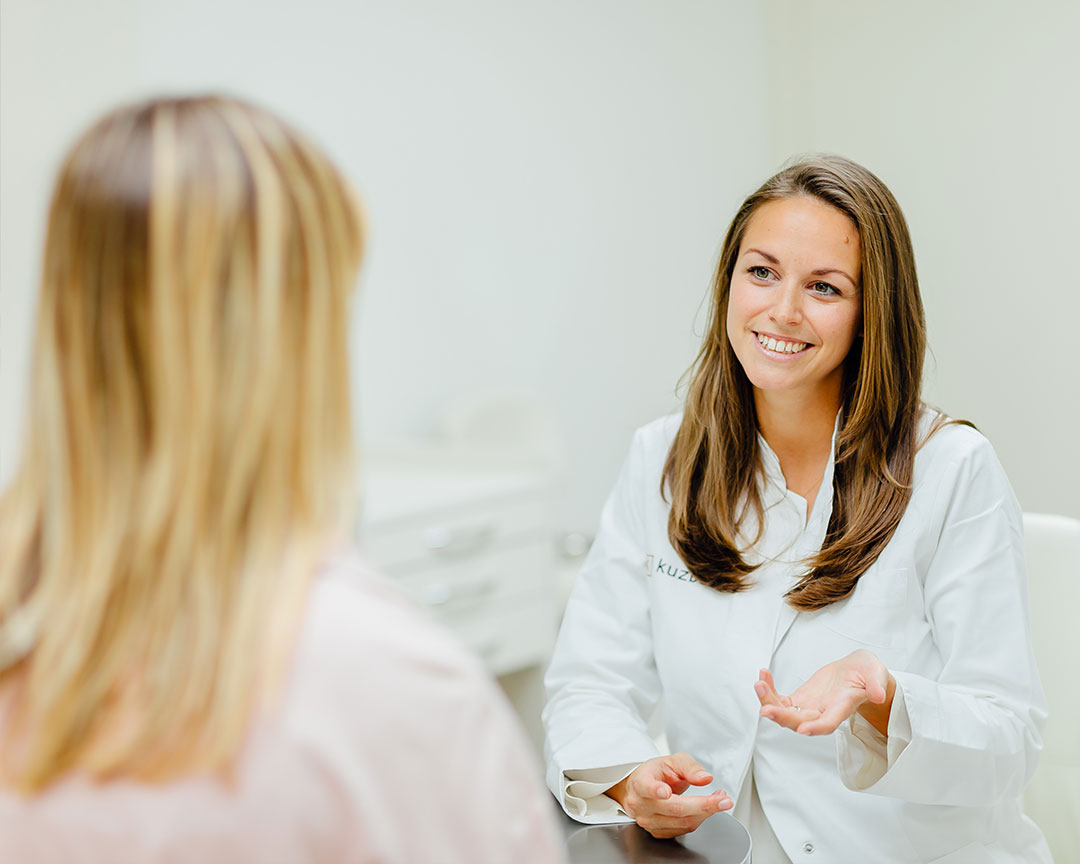
Works exclusively on the face and, where the findings are suitable, with the nose-bridge-preserving technique.
To the profile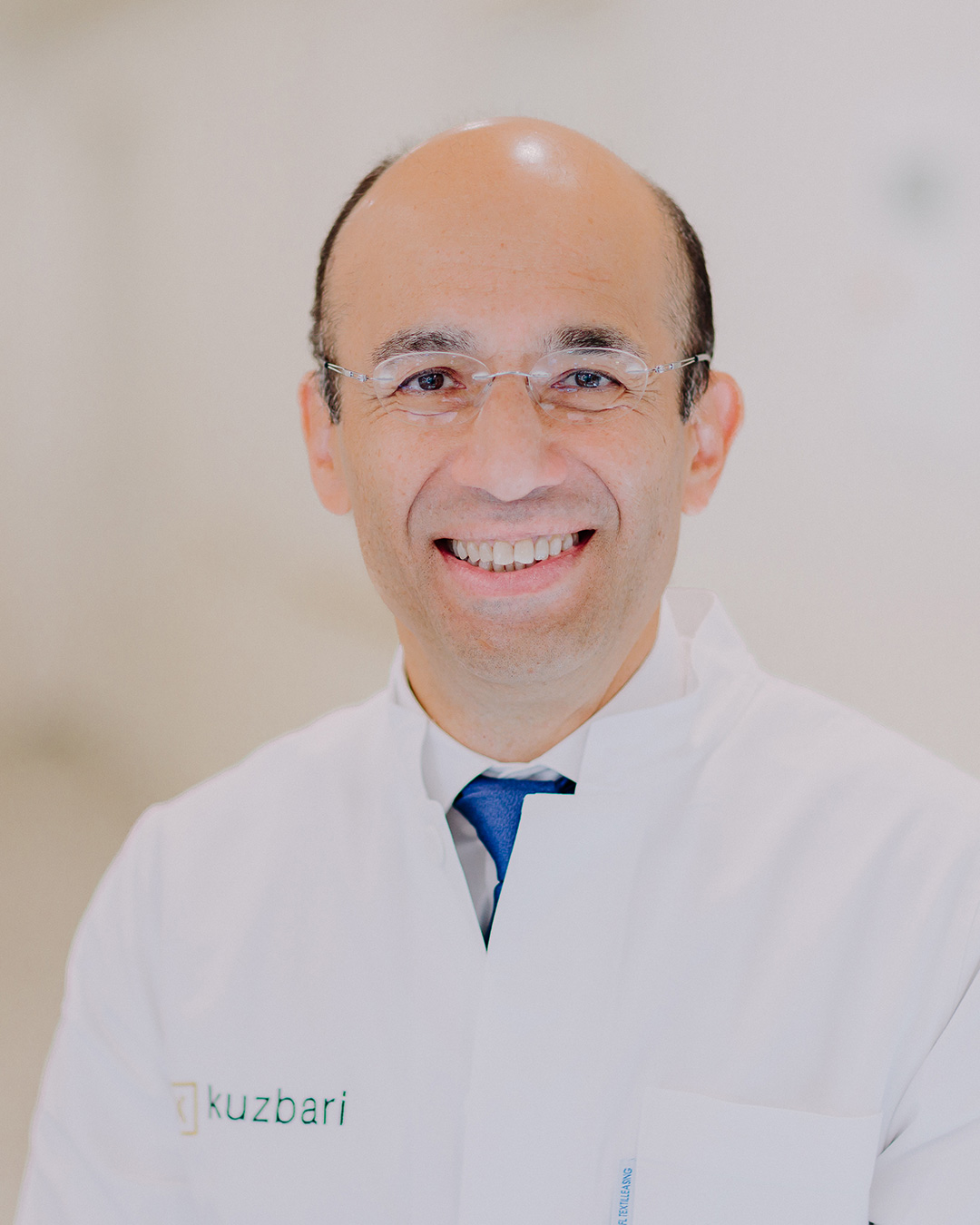
Founder of the Kuzbari Centre. He also takes on difficult revision operations and has worked with the piezotome for years.
To the profileCosts
The costs depend on the scope of the procedure: smoothing a hump alone is the simpler case, straightening a crooked nose with cartilage grafts the more demanding one. After the examination you receive a written cost estimate.
- Initial consultation and 3D simulationincluded
- Operation, anaesthesia and assisting teamincluded
- Overnight stay and cateringincluded
- All check-up appointmentsincluded
An initial consultation with three-dimensional simulation, a technique that suits your nose, and an operating time determined by the findings — this effort is the reason why a rhinoplasty has its price here. It is also the reason why the result is meant to last: a lifetime, not a few years.
The costs can be spread over up to five years through Kuzbari Finance, at an annual percentage rate of 9.99 %.
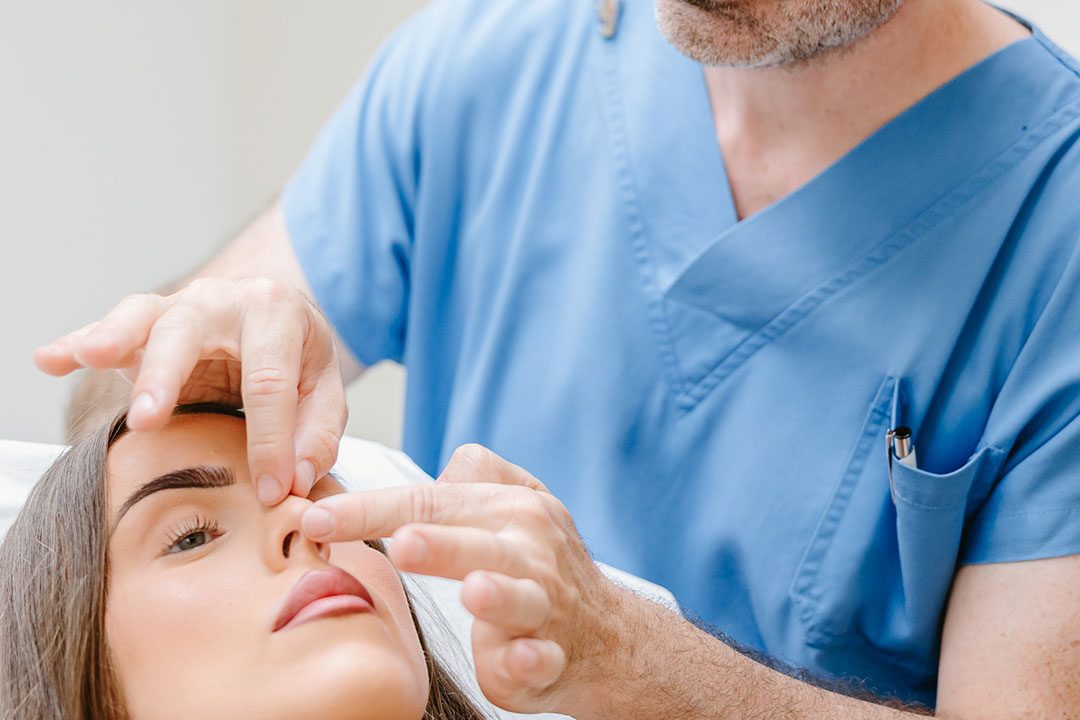
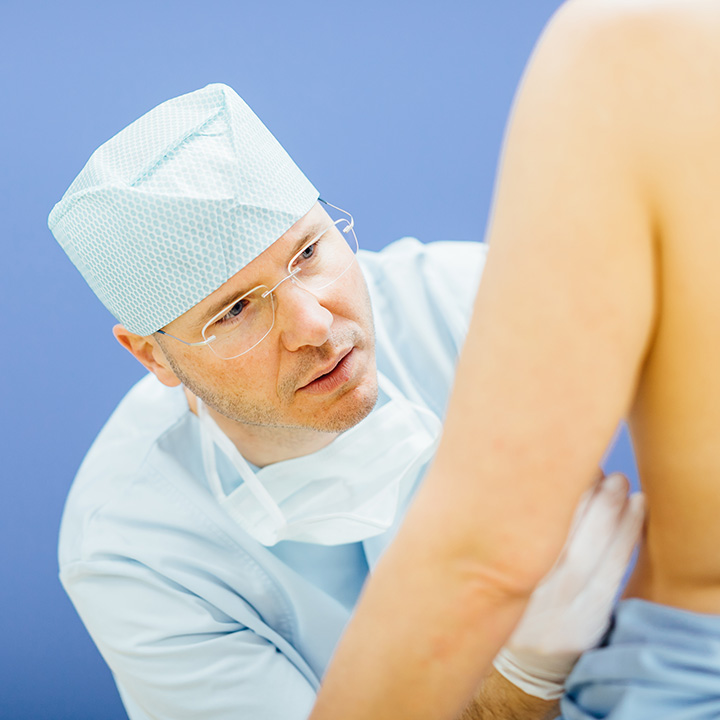
Examination of the nasal bridge 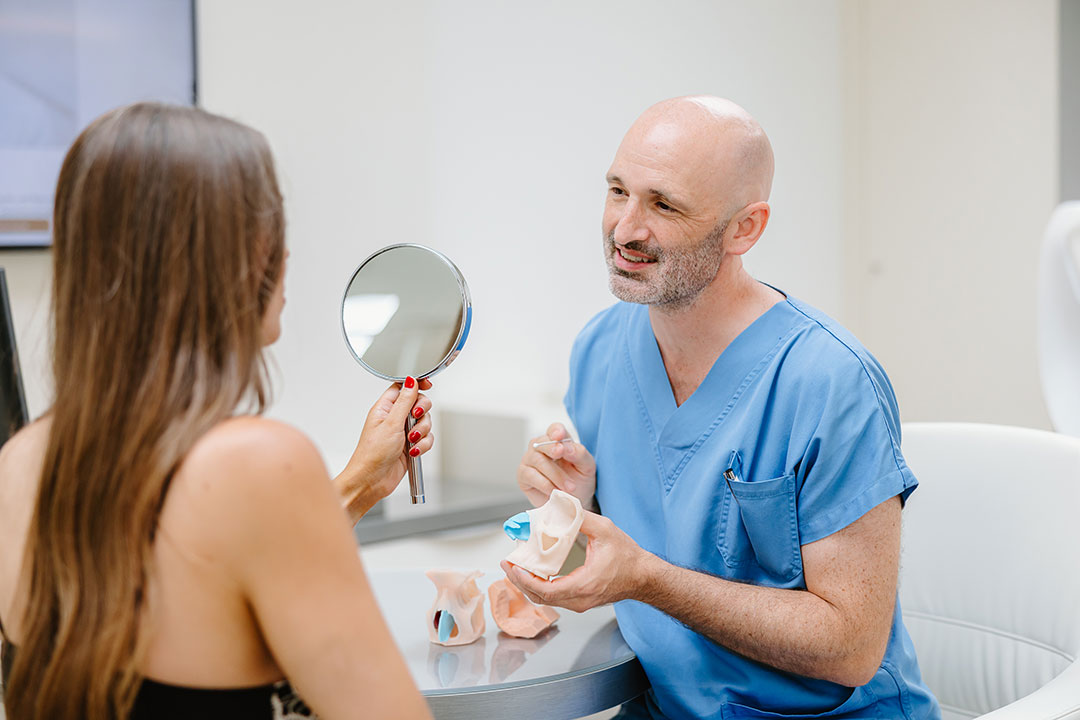
On the anatomical model 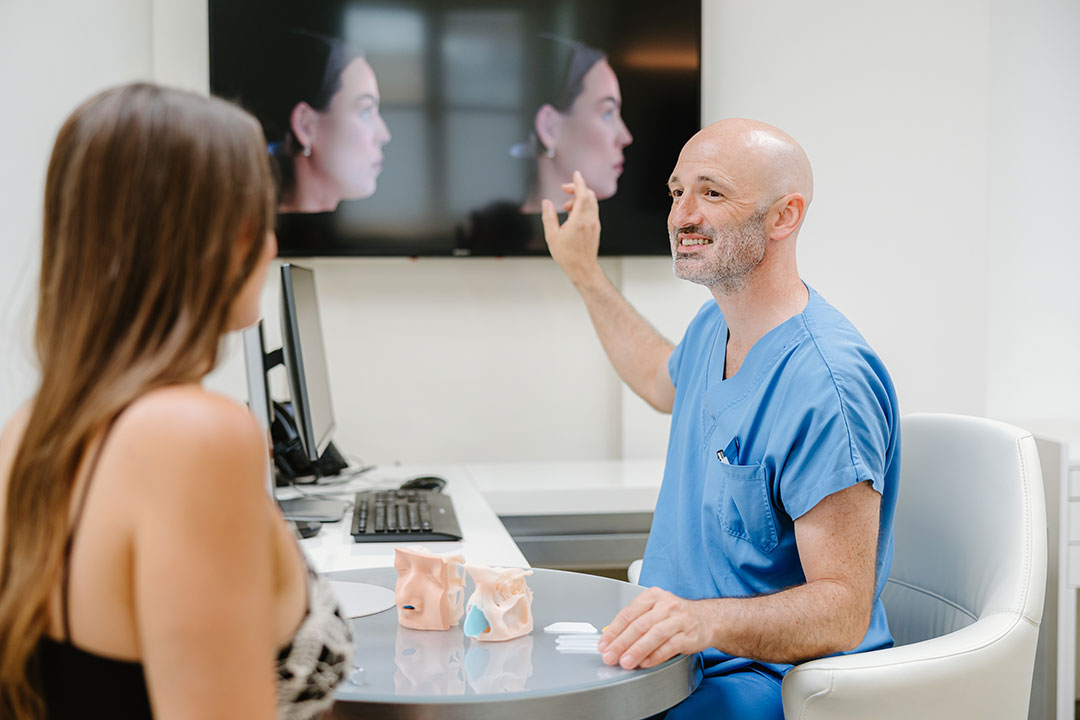
Discussing the 3D simulation
Frequently asked questions about nasal hump correction
Is a correction of the nasal bridge painful?
The operation itself is painless thanks to the general anaesthesia. After the procedure the pain is usually mild and easy to control with the prescribed painkillers. Most patients report a feeling of pressure or tension rather than pain.
What is the nose-bridge-preserving technique?
With the nose-bridge-preserving technique, known as dorsal preservation, the natural nasal bridge is preserved instead of being removed and rebuilt. We work a great deal with this modern technique as well as with hybrid techniques, not exclusively with the traditional structural septorhinoplasty. The result looks particularly natural, it is stable in the long term, and the risk of later irregularities on the nasal bridge is reduced. Certain deviations also recur less often.
Is the nose-bridge-preserving technique suitable for every nose?
No. It is not generally superior, but for many findings it is the gentler choice. Which technique suits your nose depends on the shape of the hump, on the position of the septum and on the thickness of your skin. We make this decision after the examination and the 3D simulation.
Why does the thickness of the skin matter?
Thin skin traces every fine edge of the framework beneath it, thick skin conceals them. With thin skin a particularly smooth and coherent nasal bridge is therefore important — one of the reasons why the nose-bridge-preserving technique is frequently the gentler choice here.
Does the nasal tip also have to be changed during a hump correction?
Frequently yes. Bridge and tip strongly influence one another aesthetically. When the hump is lowered, the nose can look longer or the tip appear lower. We stabilise the nasal tip using modern cartilage-supported techniques, which considerably reduces the risk of drooping of the nasal tip over the years.
How long does healing take?
Most people are fit for work after three to seven days and fit to socialise after one to three weeks. After four to six weeks you can resume sport and strenuous activities. The final result is visible after six to twelve months, in rare cases later.
Are there any scars?
Usually a small, barely visible scar remains on the columella, where necessary also small scars of about two millimetres on the bridge or on the nostril. In some cases the closed technique allows an operation without visible scars.
Can breathing be affected?
Our specialists take care to preserve or improve nasal function. Where needed, a correction of the septum can be integrated to improve breathing. Temporarily, breathing is restricted by swelling of the mucous membrane; that is part of the healing process.
What is a piezotome?
An ultrasound instrument with which bone can be cut and smoothed without injuring soft tissue, mucous membrane and blood vessels. It is not a rhinoplasty method in its own right but a tool for one step. We use it as standard in every nasal operation.
Do I need nasal packing?
No. At the Kuzbari Centre nasal packing is not necessary. After the operation you wear a nasal splint or a nasal plaster for around ten days.
How much does a correction of the nasal bridge cost?
A rhinoplasty starts at 9,350 euros, everything included. The costs depend on the scope of the procedure. For a previously operated nose the price is from 9,950 euros, from 10,900 euros or from 11,900 euros, depending on complexity. After the examination you receive a written cost estimate.
Is the result permanent?
The result is stable in the long term. The nose-bridge-preserving technique and the cartilage-supported stabilisation of the tip are designed precisely for that. Slight changes through ageing are possible but hardly affect the result.
Can a hump be treated without surgery?
For very small unevennesses, a treatment with fillers that builds up the area around the hump is an option in selected cases. It only works for a limited time and cannot replace the correction of a pronounced hump. In the consultation we clarify openly whether this is an option for you.
Your consultation
Over an hour of time, an examination from the outside and the inside, a 3D simulation and an honest assessment of what is possible for your nasal bridge — without obligation.
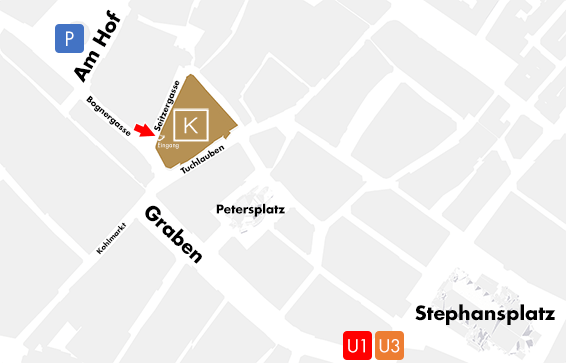
Monday to Friday, 08:00 to 18:00 · Seitzergasse 2-4, 1010 ViennaBook an appointment for your
rhinoplasty now!
Facial surgery is among the areas of focus at the Kuzbari Centre. That is why three specialists with us deal exclusively with the "supreme discipline" of plastic surgery, and whichever of them you decide on: all stand for genuine bespoke work, the highest possible quality and the greatest possible safety. You will find the appointment booking for Univ. Doz. Dr. Rafic Kuzbari on this page.
In the following overview you can book appointments with our rhinoplasty specialists Dr. Christoph Grill and DDr. Jessica Wittmann.
Here you will find an overview of our rhinoplasty experts:
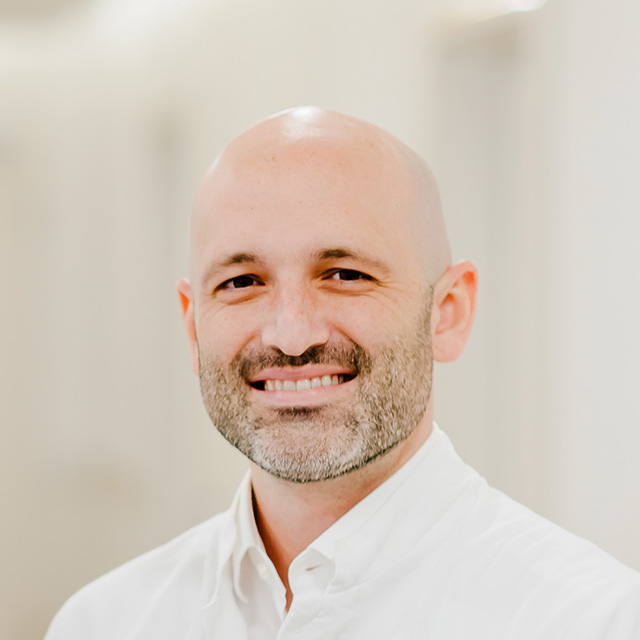
Details & appointment booking
3D simulation
Inpatient procedure
with overnight stay
Kuzbari
operating wing
Kuzbari
Safety Check
Kuzbari
quality guarantee
Photo documentation
2-3 weeks
downtime
Aftercare

Details & appointment booking
3D simulation
Inpatient procedure
with overnight stay
Kuzbari
operating wing
Kuzbari
Safety Check
Kuzbari
quality guarantee
Photo documentation
2-3 weeks
downtime
Aftercare
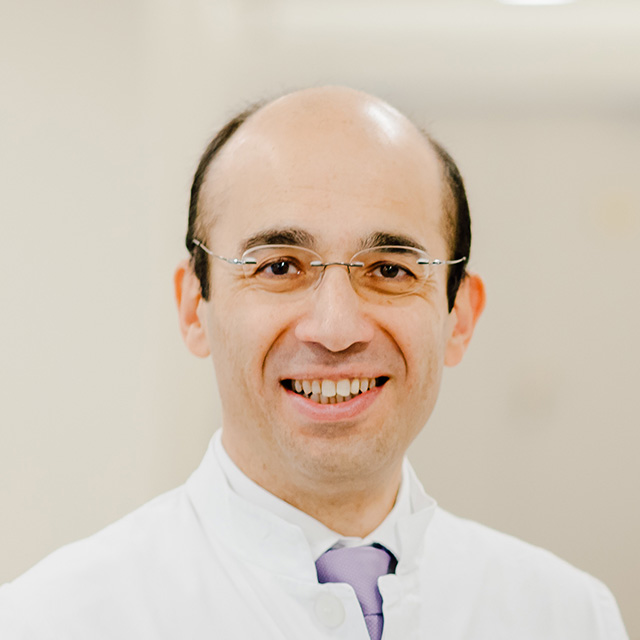
Details & appointment booking
3D simulation
Inpatient procedure
with overnight stay
Kuzbari
operating wing
Kuzbari
Safety Check
Kuzbari
quality guarantee
Photo documentation
2-3 weeks
downtime
Aftercare


 01 358 28 01
 Book now