











After the operation: healing, swelling and the outcome over the months
Immediately after nasal surgery you are swollen and discoloured. That swelling, however, only increases for the first three days. After that it subsides. Week by week the nose looks better — and the refined shape emerges over months.
- Splint around 10 days
- Fit for work in 3 to 7 days
- Socially presentable in 1 to 3 weeks
- Final outcome 6 to 12 months
Healing week by week
Healing after a rhinoplasty runs through stages that can be predicted quite well. Knowing them means not being alarmed in the first week and not growing impatient in the third month.
- The swelling increases
The eyelids are usually swollen and discoloured. That increases over the first three days and only then subsides. Sleep with your upper body raised and cool the cheeks, not the nose itself.
- Visibly better
The discolouration fades and the swelling eases. From a medical point of view most people are fit for work after three to seven days and can resume desk work and everyday activities.
- The splint comes off
After the operation a nasal splint or dressing is applied for around ten days. When it comes off you see your nose for the first time — still swollen, but already in its new shape.
- Out among people again
After one to three weeks you are socially presentable again. For a few weeks it is not possible to breathe normally through the nose; that settles once the mucosa has decongested.
- Sport possible again
Gentle movement earlier, endurance and strength training after four to six weeks. Contact sport and anything where the nose could take a knock we discuss separately at the check-up.
- The refined shape arrives
The obvious swelling has long gone; what remains is a fine residual swelling, above all at the tip. It recedes slowly and the contours grow sharper.
- The final outcome
The final outcome appears after six to twelve months. With thick nasal skin, rather at the upper end of that range. All check-ups until then are included.
Patience is part of the treatment
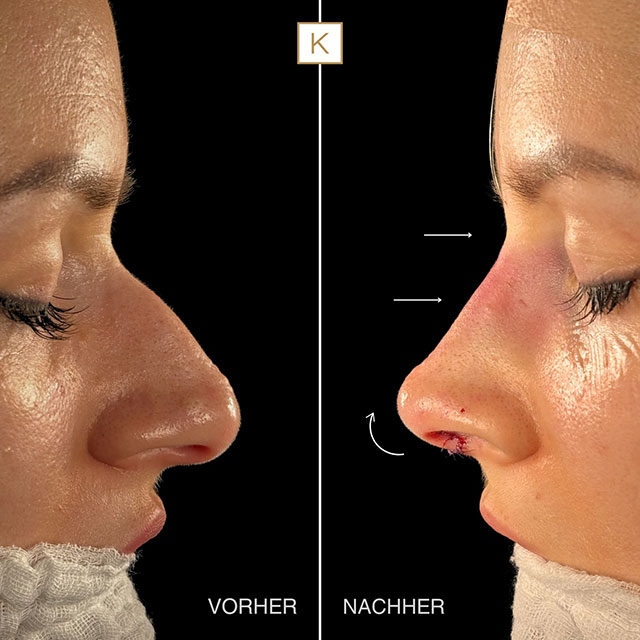
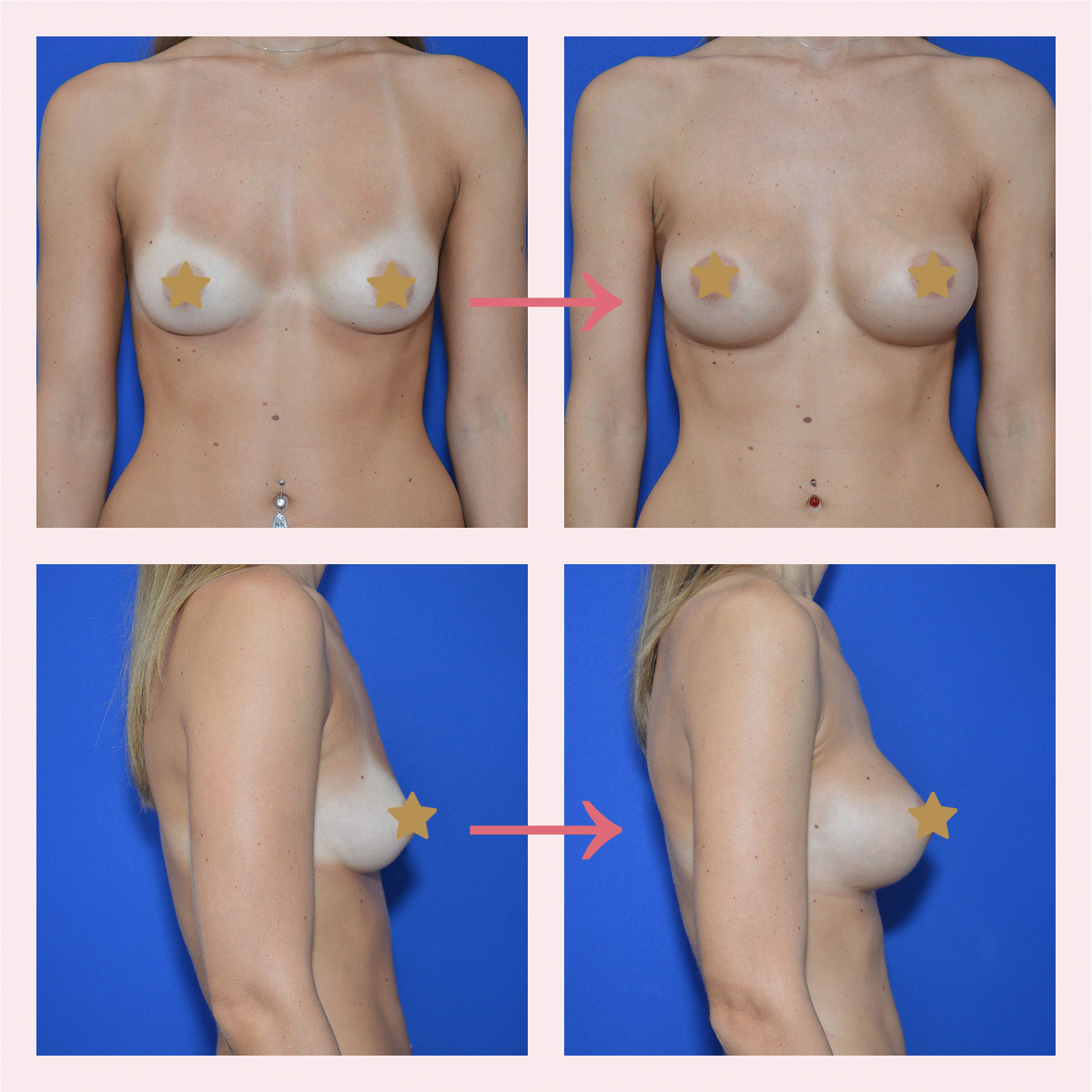
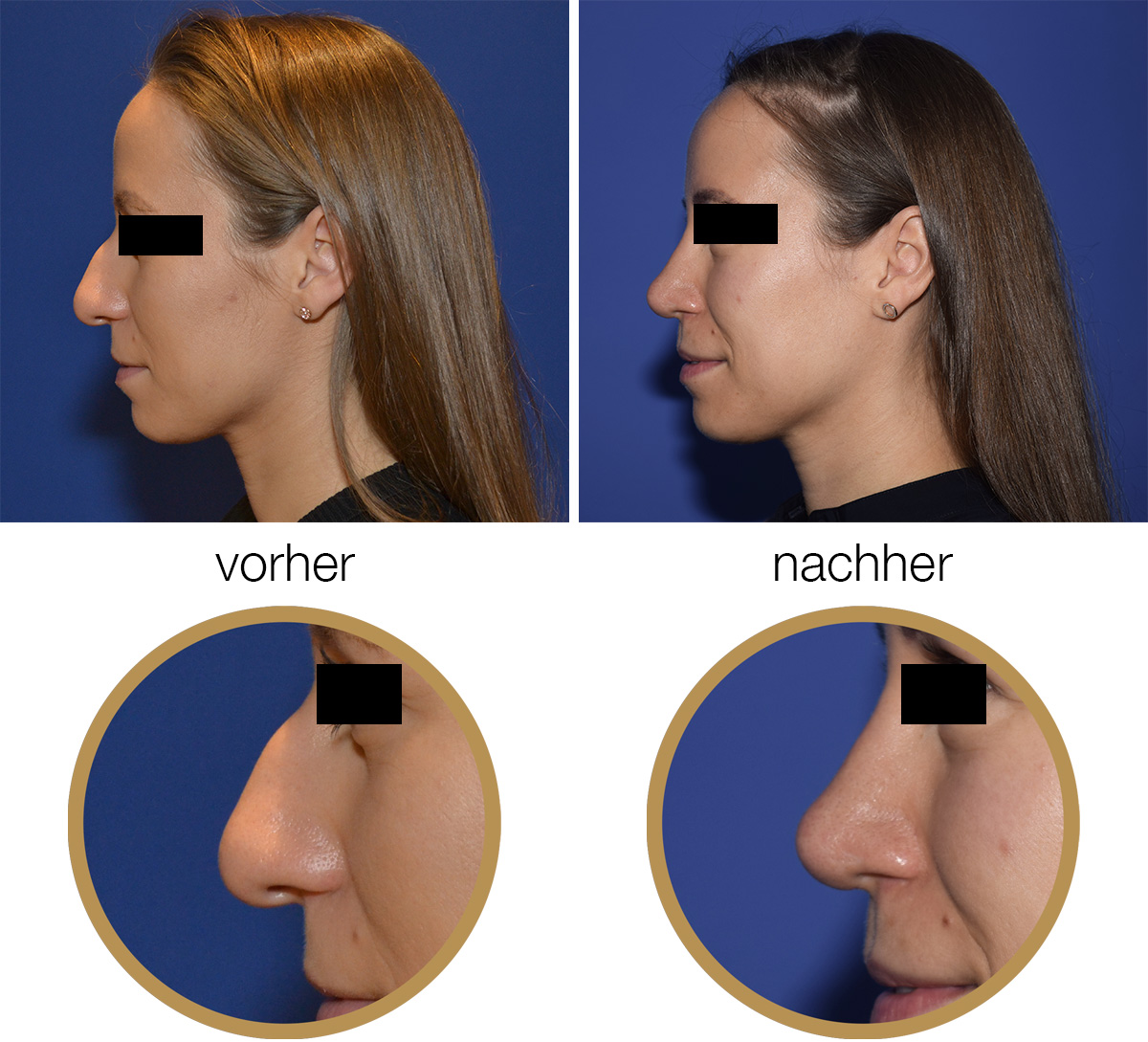
Before-and-after photographs always show the end state, never the road there. Months lie between the day of surgery and such a picture, months in which the nose changes. That is normal and part of healing.
Nasal surgery at a glance
- Final resultAfter 6 to 12 months
- Socially presentableAfter 1 to 3 weeks
- Fit for workAfter 3 to 7 days
- Length of surgery1 to 4 hours
- ProcedureGeneral anaesthesia, one night at the Kuzbari Centre
- RiskLow
- PainSlight
- SportAfter 4 to 6 weeks
- Splint or dressingAround 10 days
- Check-upsIncluded
Inconveniences: after the operation a nasal splint or dressing is applied for around ten days. The eyelids are usually swollen and discoloured. That increases over the first three days and only then subsides. For a few weeks it is not possible to breathe normally through the nose. In the first days after facial surgery one can feel somewhat low. That is normal. We are reachable and happy to support you through that short phase.
Effective tips for reducing swelling after a rhinoplasty
In this video DDr. Jessica Wittmann explains how to reduce swelling effectively after nasal surgery.
- Sleep with your upper body raised for the first few nights. That alone makes a visible difference in the morning.
- Cool the cheeks and the eye area, not the nose itself, and never directly on the splint.
- Avoid hot baths, saunas and sunbeds for the first weeks — heat makes the swelling increase again.
- Bend down as little as possible and lift nothing heavy.
- Do not blow your nose. If you need relief, talk to us about a nasal rinse or a decongestant spray.
- Do not rest glasses on the bridge in the first weeks; how to manage that we discuss at the check-up.
- Protect the nose from direct sun and use sun protection as soon as the splint is off.
Time off and everyday life
If you would rather people did not notice that you have had surgery, reckon with one to three weeks of social downtime. From a purely medical point of view most patients are fit for work again after three to seven days and can resume desk work and everyday activities.
Bear in mind that your friends and family will notice the new, more beautiful shape of your nose sooner or later. A nose cannot be hidden, after all. That is also probably the reason you want this operation.
One point that is rarely mentioned: in the first days after facial surgery one can feel somewhat low. That is normal and passes as soon as the swelling recedes. We are reachable and happy to support you through that short phase.
Interview after the rhinoplasty
In this video our patient Chiara tells the story behind her rhinoplasty and how she is doing today.
I am very grateful to Dr. Grill, he has changed my life. I am very happy and content.
Nasal packing: not necessary at the Kuzbari Centre
Nasal packing has a very poor reputation — deservedly? And if so, is it needed at all? Many patients who have already had nasal surgery with packing know that its removal can be very painful. It is often reported that removing the packing hurt more than the entire operation. What lies behind that, and what the alternatives are, is explained in this video.
Why the outcome should hold
A nose changes not only in the first months but over years. That is exactly why the technique used in theatre helps decide how your nose will look in ten years.
We stabilise the tip of the nose using modern cartilage-supported techniques. This considerably reduces the risk of drooping of the nasal tip over the years. Along the bridge we work a great deal with the modern nose-bridge-preserving technique known as dorsal preservation, as well as with hybrid techniques. The natural bridge is preserved rather than taken down and rebuilt — the outcome looks particularly natural, it is stable in the long term, and the risk of later irregularities along the bridge goes down.
That is not a guarantee, and we word it carefully on purpose: „stable in the long term“ means that the risk of a later change goes down, not that it disappears. What we can promise is the accompaniment: all check-ups are included, and we look at the nose several times over the first year.
Check-ups and reachability
On discharge you have your surgeon’s mobile number in your pocket, so that you can reach your medical contact outside consulting hours should anything worry you. You are of course also welcome to contact the centre at any time.
We go through the whole course of recovery in the initial consultation.
Frequently asked questions about the time after surgery
How long will I be swollen?
The swelling increases for the first three days and subsides afterwards. The obvious swelling is gone after one to three weeks. A fine residual swelling, above all at the tip, remains for months and recedes slowly.
When am I fit for work again?
From a purely medical point of view after three to seven days. Desk work and everyday activities are possible again from then on.
When am I socially presentable again?
After one to three weeks. If you would rather people did not see that you have had surgery, plan for that time.
How long do I wear the nasal splint?
After the operation a nasal splint or dressing is applied for around ten days. It is removed at the first check-up.
When may I do sport again?
After four to six weeks. Gentle movement is possible earlier. Contact sport and anything where the nose could take a knock we discuss separately at the check-up.
When will I see the final outcome?
After six to twelve months. With thick nasal skin, rather at the upper end of that range. All check-ups until then are covered by the price.
Can I breathe normally through my nose after surgery?
Not for a few weeks. The mucosa is swollen and that takes time. Once it has decongested, nasal breathing becomes free — for many patients even better than before.
Will I need nasal packing?
No. At the Kuzbari Centre nasal packing is not necessary. After the operation you wear a nasal splint or a nasal dressing.
When may I wear glasses again?
Nothing should rest on the bridge for the first weeks. How to manage it in your case we discuss at the check-up — there are simple interim solutions.
Is it normal to feel low after the operation?
Yes. In the first days after facial surgery one can feel somewhat low. That is normal and passes as soon as the swelling recedes. We are reachable for you during that time.
When do I have to get in touch immediately?
With a fever, bleeding that does not stop, swelling that suddenly increases markedly again after the third day, or severe pain on one side. You have your surgeon’s mobile number for exactly that.
Does the nasal tip droop again over the years?
We stabilise the tip of the nose using modern cartilage-supported techniques. This considerably reduces the risk of drooping of the nasal tip over the years.
Your consultation
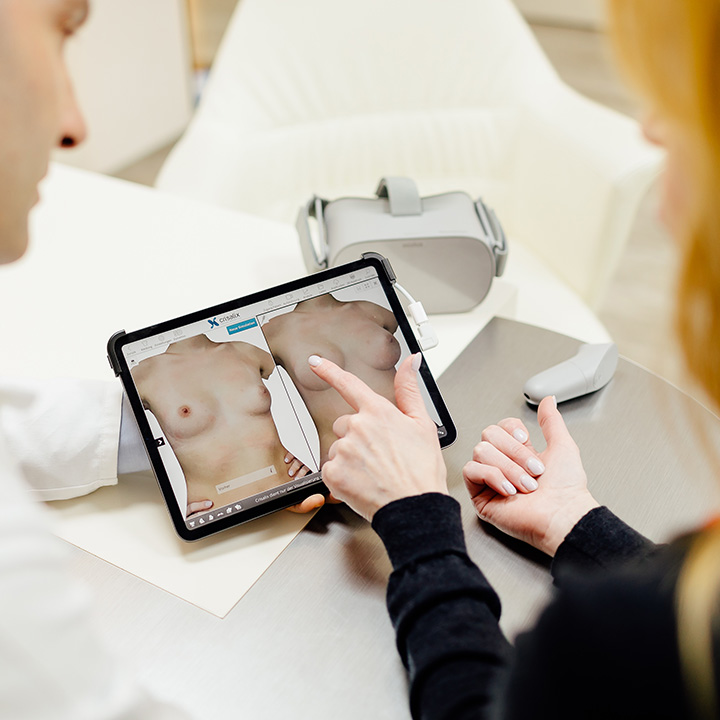
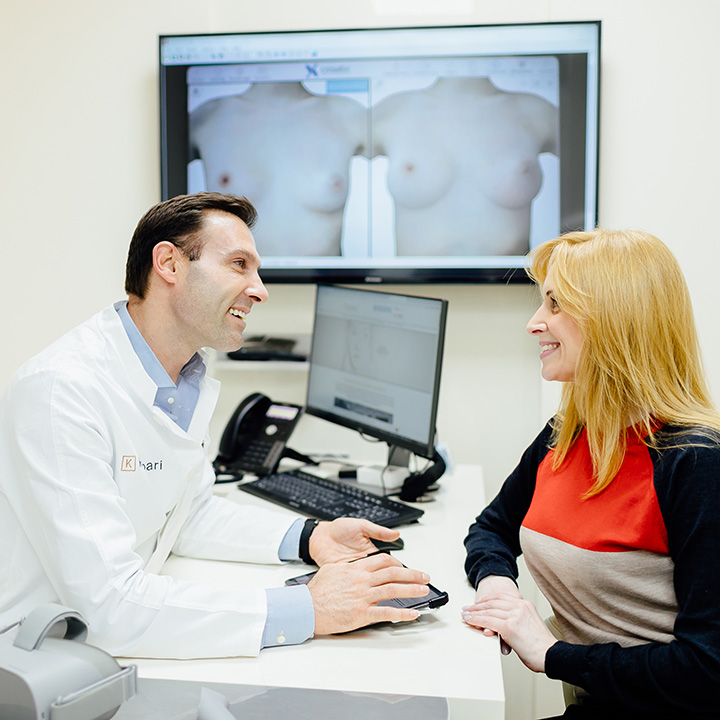
More than an hour of time, an examination from outside and inside, a 3D simulation and an honest assessment of what is possible — without obligation.
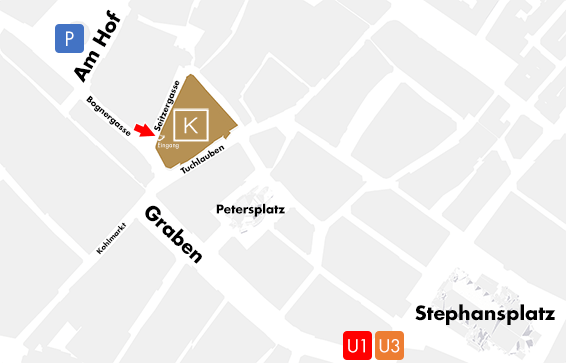
Monday to Friday, 08:00 to 18:00 · Seitzergasse 2-4, 1010 Vienna


 01 358 28 01
 Book now