
















During the operation: your day at the Kuzbari Centre
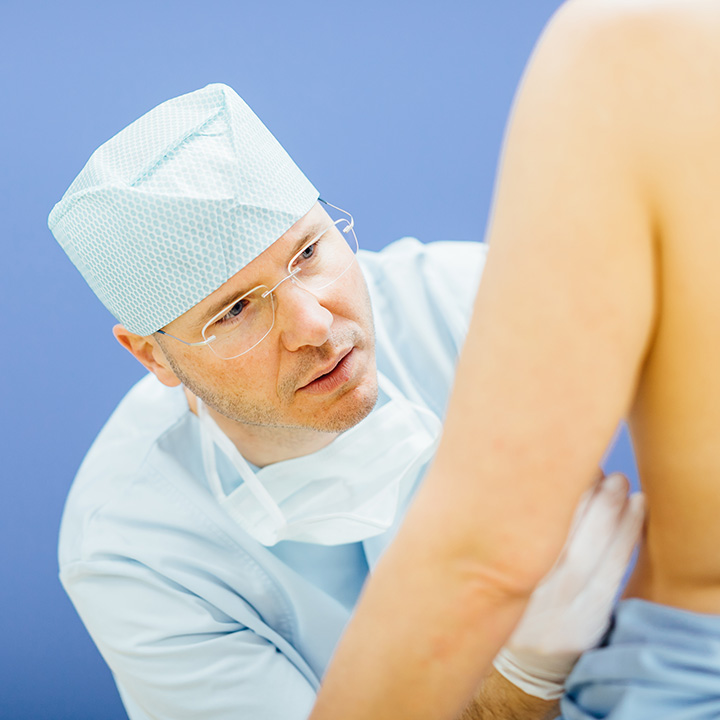
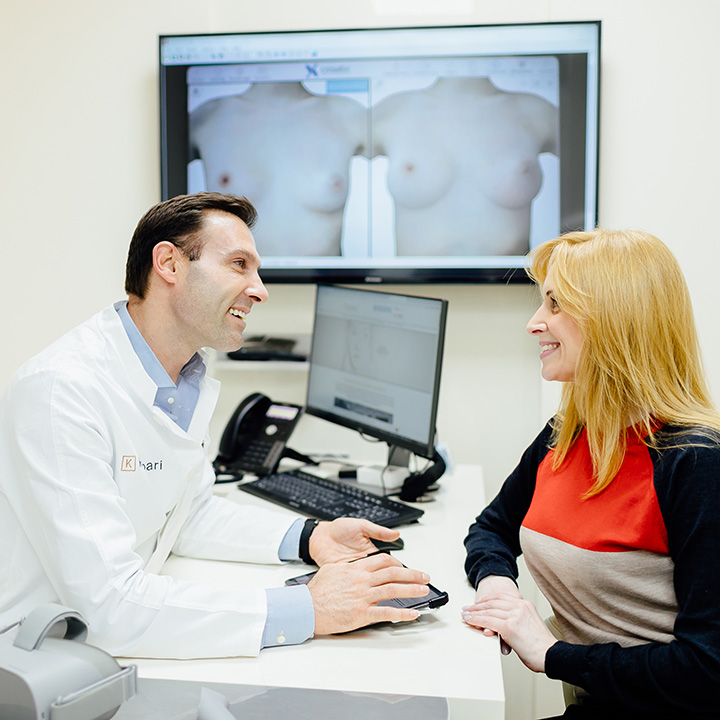
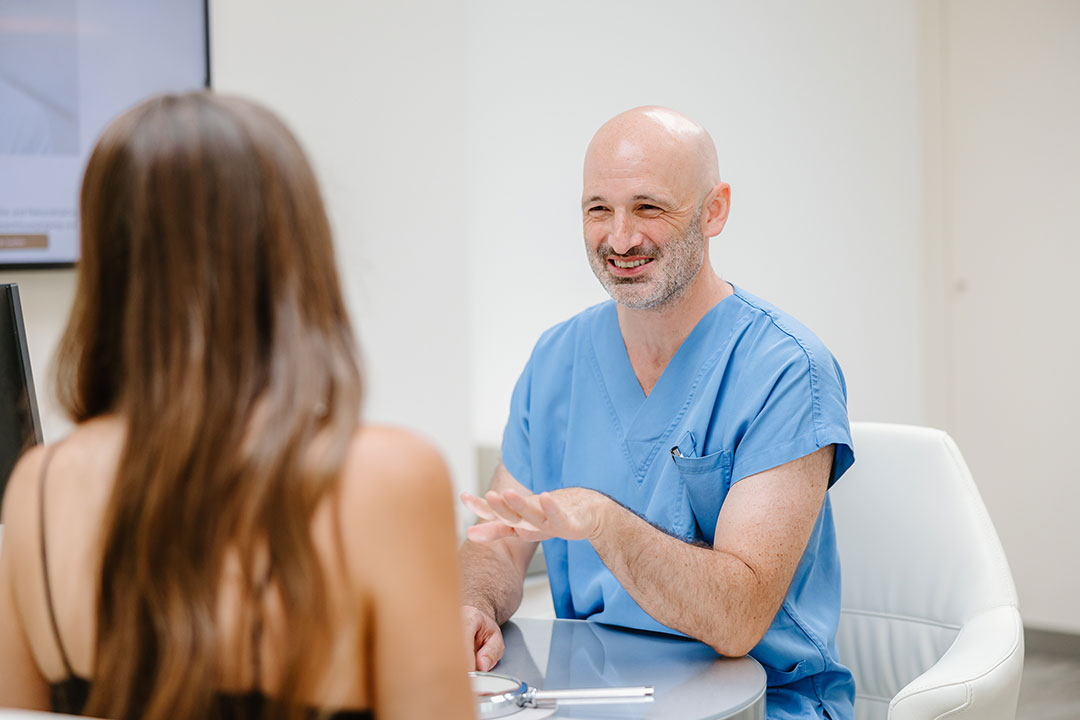
On the day of your operation you come to us at the Kuzbari Centre. Univ. Doz. Dr. Rafic Kuzbari, Dr. Christoph Grill and DDr. Jessica Wittmann visit you before the operation begins and go through the plan with you once more. Most people find that reassuring. Our anaesthetist also drops by briefly to talk through the key points with you.
- 1 to 4 hours
- Our own operating theatres
- General anaesthesia
- One night
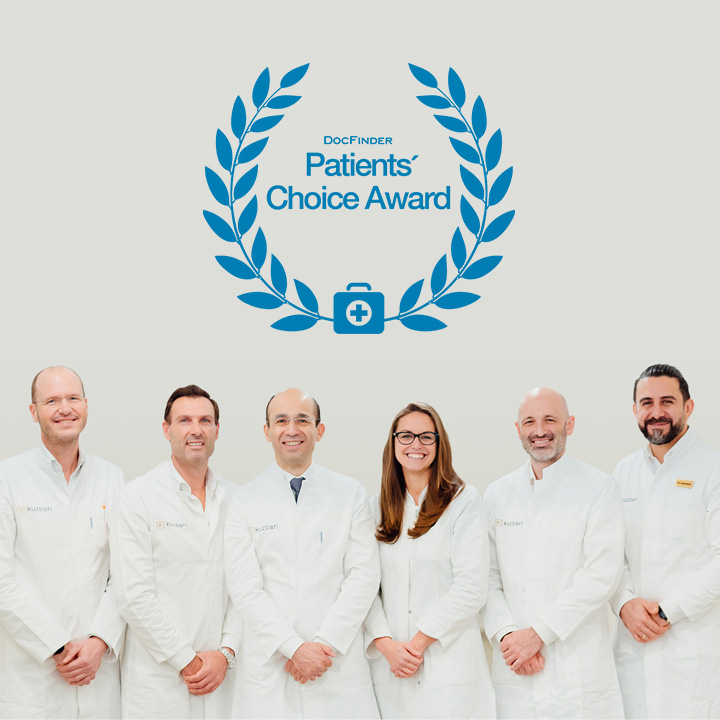
The Kuzbari experts for this service:

The day of surgery
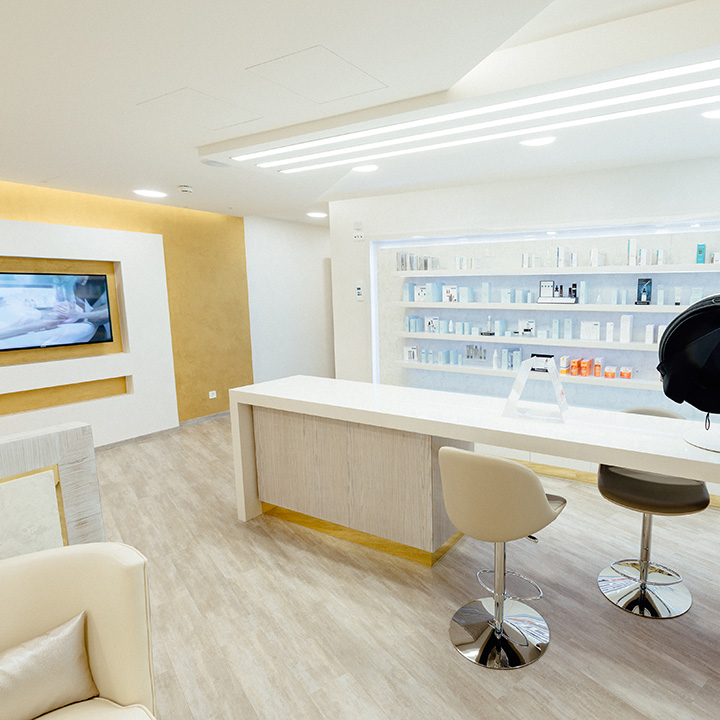
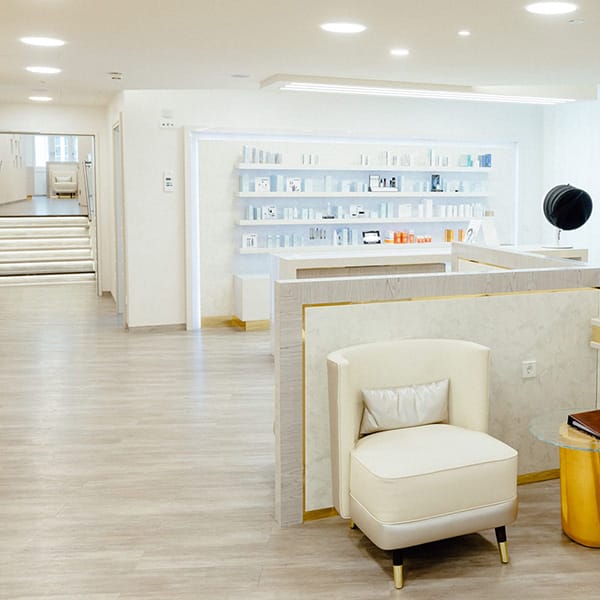
From the initial consultation through the treatment to the aftercare, the Kuzbari Centre in Vienna provides every service under one roof. The operation therefore also takes place in our own theatre. You do not have to change buildings that day, get to know an unfamiliar clinic or explain your situation to anyone a second time.
We are highly selective about our team and, for anaesthesia too, work only with experienced specialists. Whoever looks after you in theatre belongs to the house — not to a rotating pool.
- Arrival and your room
You arrive fasting, without make-up and without jewellery. The last formalities are dealt with at reception, after which you move into your room at the Kuzbari Centre.
- Ward round and marking
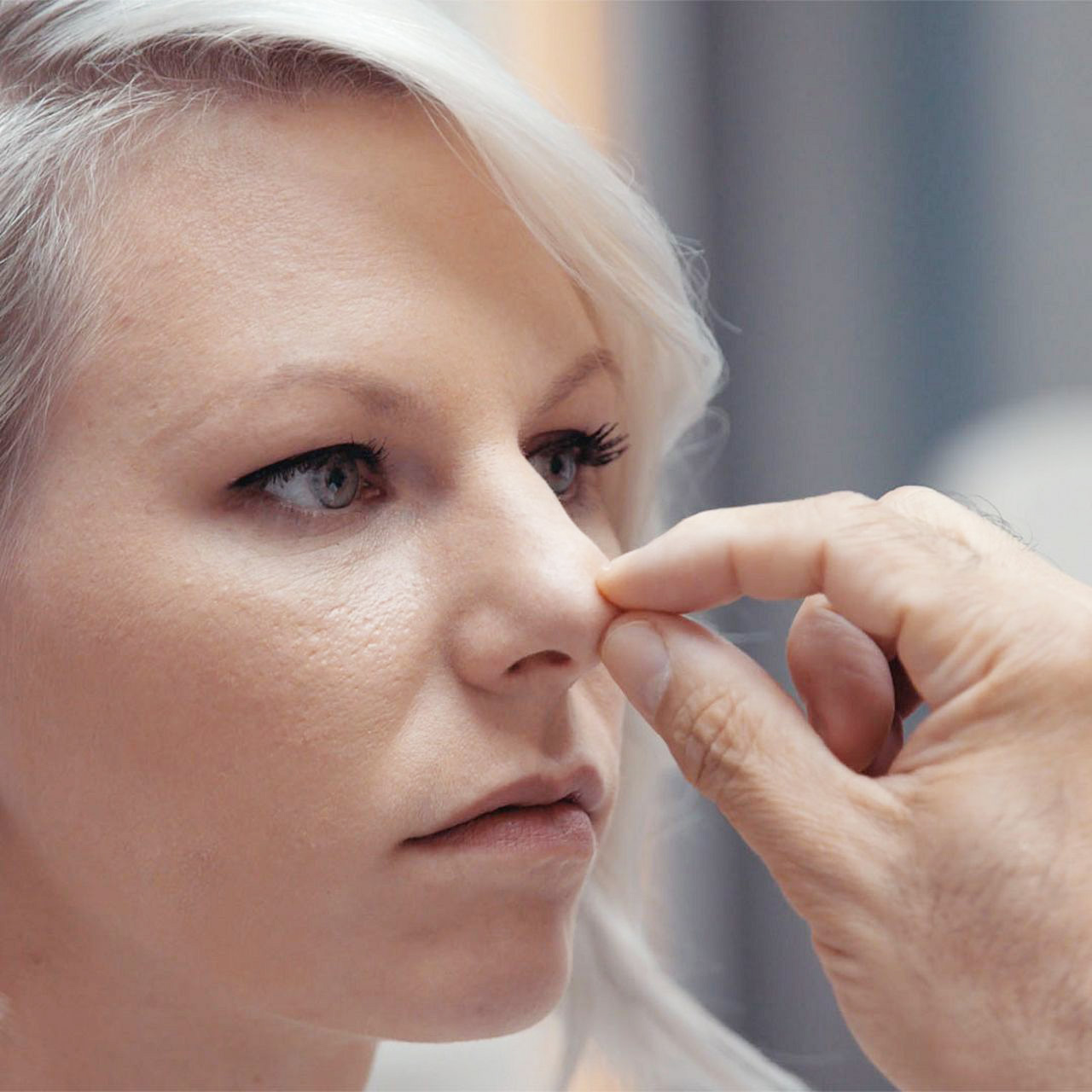
Your surgeon comes to your room, goes through the planned procedure once more and marks the nose. The final questions are answered here, not in theatre.
- The anaesthesia talk
The anaesthetist introduces themselves and discusses the anaesthetic, the medication and your history. Only then do you go to theatre.
- The operation
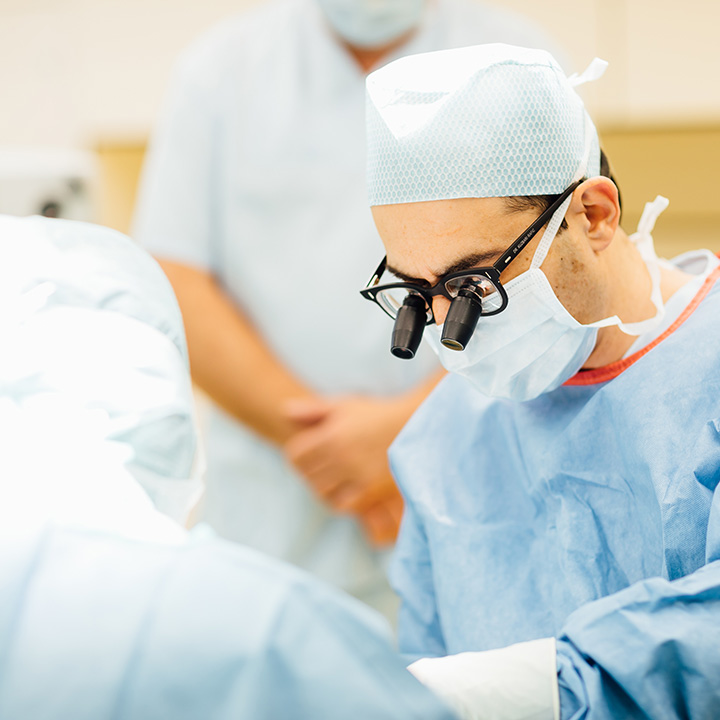
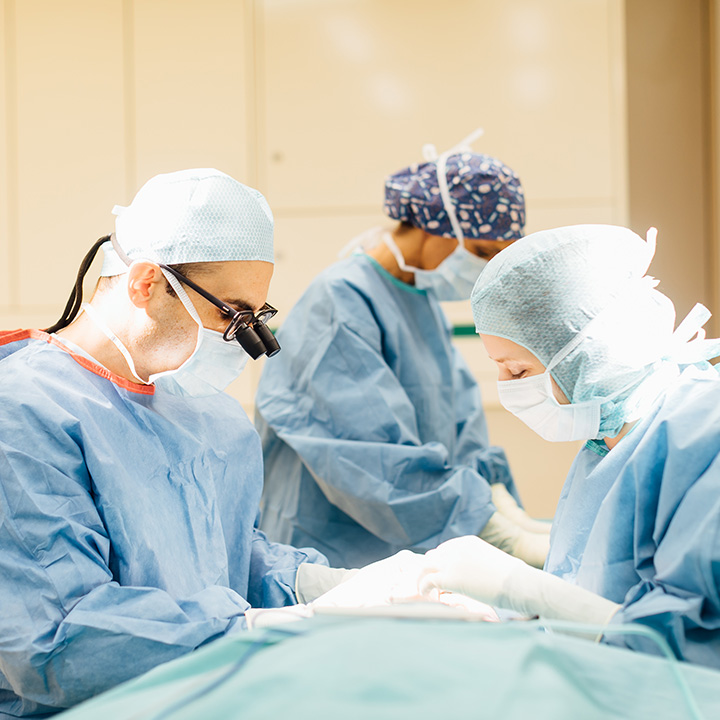
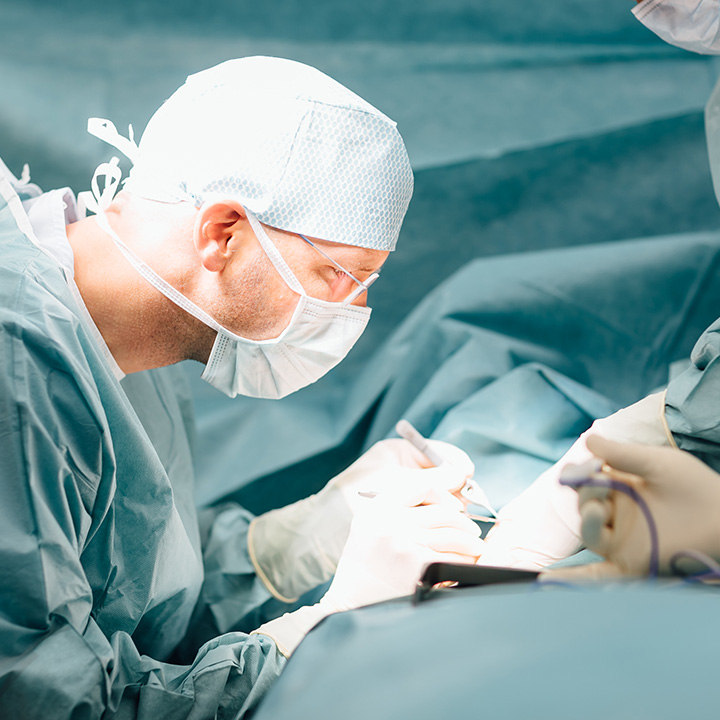
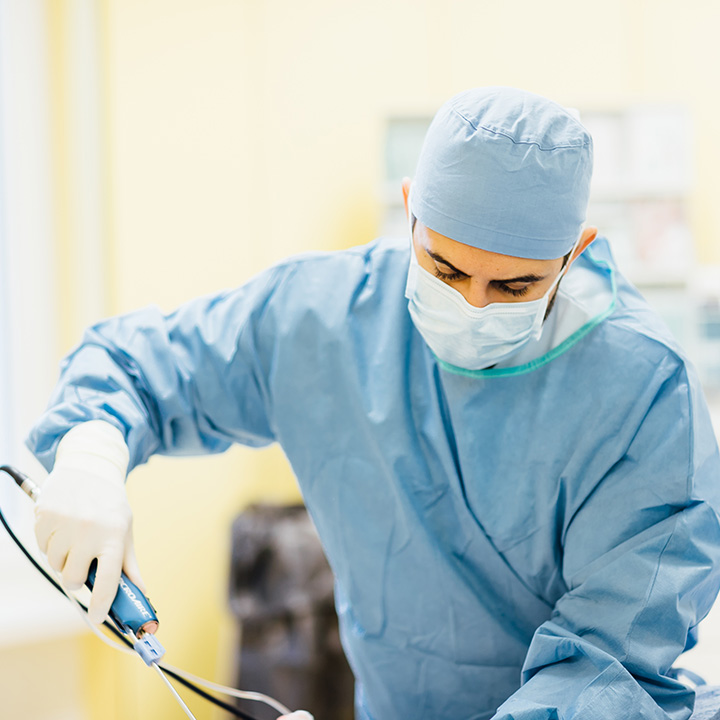
You sleep and feel nothing. How long the procedure takes is decided by the findings: one to four hours.
- Recovery room
We visit you in the recovery room straight after the operation. You wear a nasal splint or a nasal dressing; nasal packing is not necessary here.
- An inpatient in the house
You spend one night in your room. Nursing staff are there around the clock.
- Follow-up talk and discharge
In your room we examine you and go through how the operation went. You can leave the Kuzbari Centre before 10 o’clock.
Why the operation takes one to four hours
A rhinoplasty here takes one to four hours. That range is deliberate: we operate in our own theatres and therefore without time pressure — for as long as it takes until every detail is right. How long a procedure takes is decided by the findings, not by the appointment book.
What determines the length can be named quite precisely. A correction confined to the tip of the nose is finished in less time than an operation in which bridge, septum and tip are altered together. If the breathing has to be addressed as well, time is added. And a nose that has already been operated on demands considerably more: scar tissue has to be released carefully, missing cartilage has to be replaced, often from the ear or a rib.
For you as a patient the length changes little — you are asleep. For the outcome it changes a great deal. The last millimetres of a nasal tip, the symmetry of the nostrils, the clean transition from bone to cartilage: those are steps that cannot be hurried without giving something up.
No procedure ends because time runs out
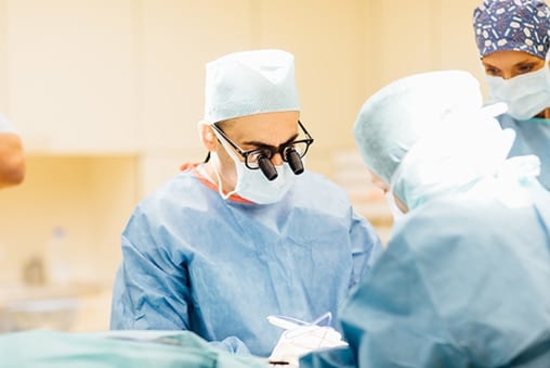
Because the theatres belong to us, there is no reason to bring an operation to a premature close. We work until the result is right — and plan the day’s list from the outset so that this remains possible.
Our own operating theatre
For our surgical procedures we use our own operating rooms. They reach the highest hygiene class and meet every international standard. Thanks to those strict requirements we can offer you a surgical area whose uniquely circular shape forms an exceptional protective zone for you and the entire theatre team.
The practical advantage is unspectacular and still counts: everything needed for nasal surgery is here — instruments, anaesthesia, recovery room, nursing, patient rooms. Nothing has to be requested, coordinated or postponed.
What happens in the operating theatre
During the operation you sleep and feel nothing. Even after nasal surgery our patients rarely report pain. Some feel a mild headache, others report no pain at all. Everyone copes well with the painkillers prescribed by Dr. Christoph Grill and DDr. Jessica Wittmann.
Surgically, the operation follows the plan agreed in the initial consultation with the 3D simulation. We work a great deal with the modern nose-bridge-preserving technique known as dorsal preservation, as well as with hybrid techniques — not exclusively with traditional structural septorhinoplasty. The natural bridge of the nose is preserved rather than taken down and rebuilt. The outcome looks particularly natural, it is stable in the long term, and the risk of later irregularities along the bridge goes down.
We stabilise the tip of the nose using modern cartilage-supported techniques. This considerably reduces the risk of drooping of the nasal tip over the years. Precisely those steps take time — and are the reason an operation here may last longer when the findings call for it.
| Starting point | What has to be done | Time required |
|---|---|---|
| Correction of the nasal tip | Work on the tip cartilages, stabilised with cartilage-supported techniques. | At the lower end of the range. |
| Hump and nasal bridge | The bony and cartilaginous part of the bridge, often preserving it; bone work with the Piezotom. | Mid-range. |
| Shape and breathing together | Additionally septum, turbinates or nasal valves in the same operation. | More time than a pure shape correction. |
| Previously operated nose | Releasing scar tissue, replacing missing cartilage, often a graft from the ear or a rib. | At the upper end of the range. |
The day of surgery at a glance
- Length of surgery1 to 4 hours
- AnaestheticGeneral anaesthesia
- Operating theatreOur own suite in the building
- Nasal packingNot necessary
- After surgerySplint or dressing
- StayOne night
- PainSlight
- ReachabilityYour surgeon’s mobile number
Guide values for a rhinoplasty at the Kuzbari Centre. What applies to you depends on the scope of your procedure and is settled after the examination.
The Piezotom: ultrasound instead of a chisel
Where the bony part of the nose has to be altered in a rhinoplasty, we work with the Piezotom. It is an ultrasound instrument that cuts and smooths bone while leaving soft tissue, mucosa and vessels untouched – classically this step is done with chisel and saw. For patients that means more precise bone work and, as a rule, fewer bruises and less swelling in the days that follow.
We think an honest assessment matters: the Piezotom is not a rhinoplasty method in its own right and does not automatically make nasal surgery better. It is a tool for one step. What remains decisive is the planning and the experience of the surgeon. We use the Piezotom as standard in every nasal operation, Univ. Doz. Dr. Rafic Kuzbari for years now.
The projectometer: measured, not estimated
The projectometer is a fine stainless-steel measuring instrument placed directly on the nose within the sterile field. It carries a millimetre scale, an adjustable arm and a protractor, and with them it records the two values that determine the profile of a nose: how far the tip projects forward, and how high the bridge sits.
DDr. Jessica Wittmann works with it during her nasal operations. Before the first step she takes the baseline measurement. After every further step — after the bridge has been lowered, after a support has been placed at the tip — she measures again and compares the figure with the plan drawn up during the initial consultation on the 3D simulation. Whether the bridge has been reduced by the planned amount and the tip raised accordingly is therefore settled in theatre as a measured value.
The classification matters to us: the projectometer makes no decisions. Planning and experience remain the surgeon’s achievement. The instrument checks them — and makes it possible to follow whether what happens in theatre matches what you saw on screen beforehand.
Recovery room, night and discharge
We visit you in the recovery room straight after the operation. The next morning we hold the follow-up talk with you in your room. Our surgeons examine you and go through how the operation went.
You can leave the Kuzbari Centre before 10 o’clock. You go home with a nasal splint or a nasal dressing, which you wear for around ten days. On discharge you have your surgeon’s mobile number in your pocket, so that you can reach your medical contact outside consulting hours should anything worry you. You are of course also welcome to contact the centre at any time.
The same faces
Whoever advised and operated on you sits at your bedside the next morning and sees you again at the check-ups. All follow-up appointments are included.
After the rhinoplasty: how is Chiara?
In this video our patient Chiara describes how she experienced the time after her rhinoplasty.
I am very grateful to Dr. Grill, he has changed my life. I am very happy and content.
Of interest to you?
What happens after the operation? · See before-and-after photographs · The greatest possible safety
Frequently asked questions about the day of surgery
How long does a rhinoplasty take?
One to four hours, depending on the findings. Because we operate in our own theatres, the work is done without time pressure — for as long as it takes until every detail is right. How long your operation will take we tell you after the examination.
Which anaesthetic will I have?
A general anaesthetic. You sleep and feel nothing. The anaesthetist introduces themselves to you in person before the operation and discusses the anaesthetic, the medication and your history.
Will I be in pain after the operation?
Our patients rarely report pain. Some feel a mild headache, others report no pain at all. Everyone copes well with the painkillers prescribed.
Will I need nasal packing?
No. At the Kuzbari Centre nasal packing is not necessary. After the operation you wear a nasal splint or a nasal dressing, for around ten days.
What is a Piezotom?
An ultrasound instrument with which bone can be cut and smoothed without injuring soft tissue, mucosa and vessels. It is not a rhinoplasty method in its own right but a tool for one step. We use it as standard in every nasal operation.
Do I have to stay overnight?
Yes, one night. You spend it in a patient room at the Kuzbari Centre; nursing staff are there around the clock. You can leave the building before 10 o’clock the following morning.
Do I see my surgeon on the day of surgery?
Yes, twice: before the operation during the ward round in your room, and the next morning at the follow-up talk. Whoever advised you also operates on you.
Whom can I reach after discharge?
On discharge you receive your surgeon’s mobile number, so that you can reach your medical contact outside consulting hours. You are also welcome to contact the Kuzbari Centre at any time.
Is breathing treated in the same operation?
If the examination shows a cause, yes. A deviated septum, enlarged turbinates or collapsing nasal valves can be treated in the same procedure. That takes additional time, which we plan for.
Why does an operation on a previously operated nose take longer?
Because the tissue is scarred and cartilage is sometimes missing. Scar tissue has to be released carefully and missing cartilage replaced, often with a graft from the ear or a rib. Such procedures sit at the upper end of the one-to-four-hour range.
Your consultation
More than an hour of time, an examination from outside and inside, a 3D simulation and an honest assessment of what is possible — without obligation.
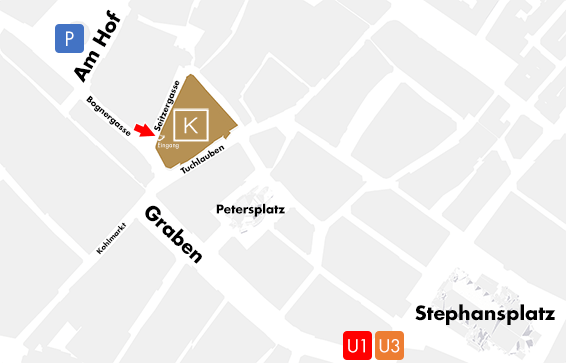
Monday to Friday, 08:00 to 18:00 · Seitzergasse 2-4, 1010 Vienna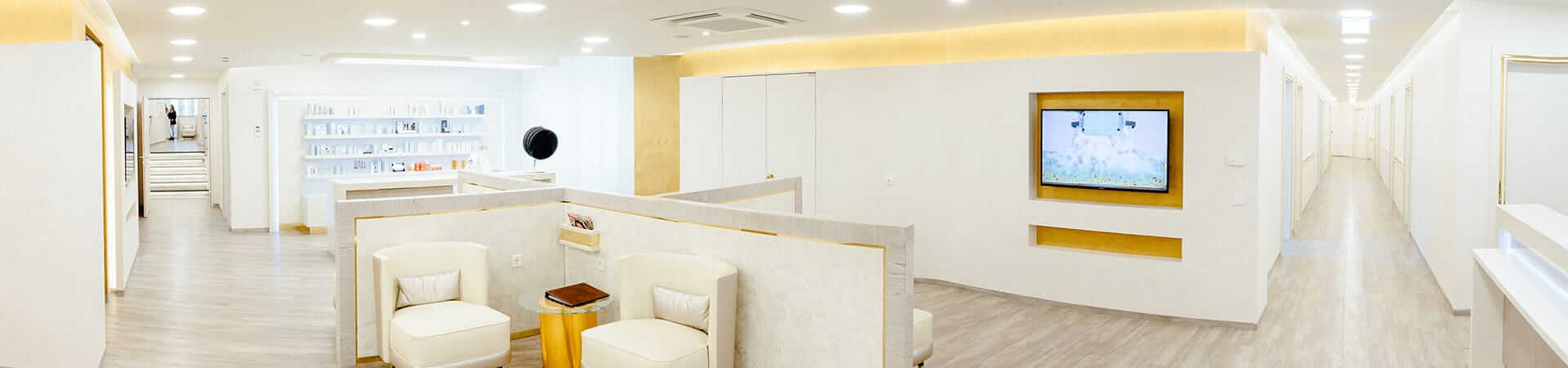


 01 358 28 01
 Book now