


































Why you cannot compare breasts
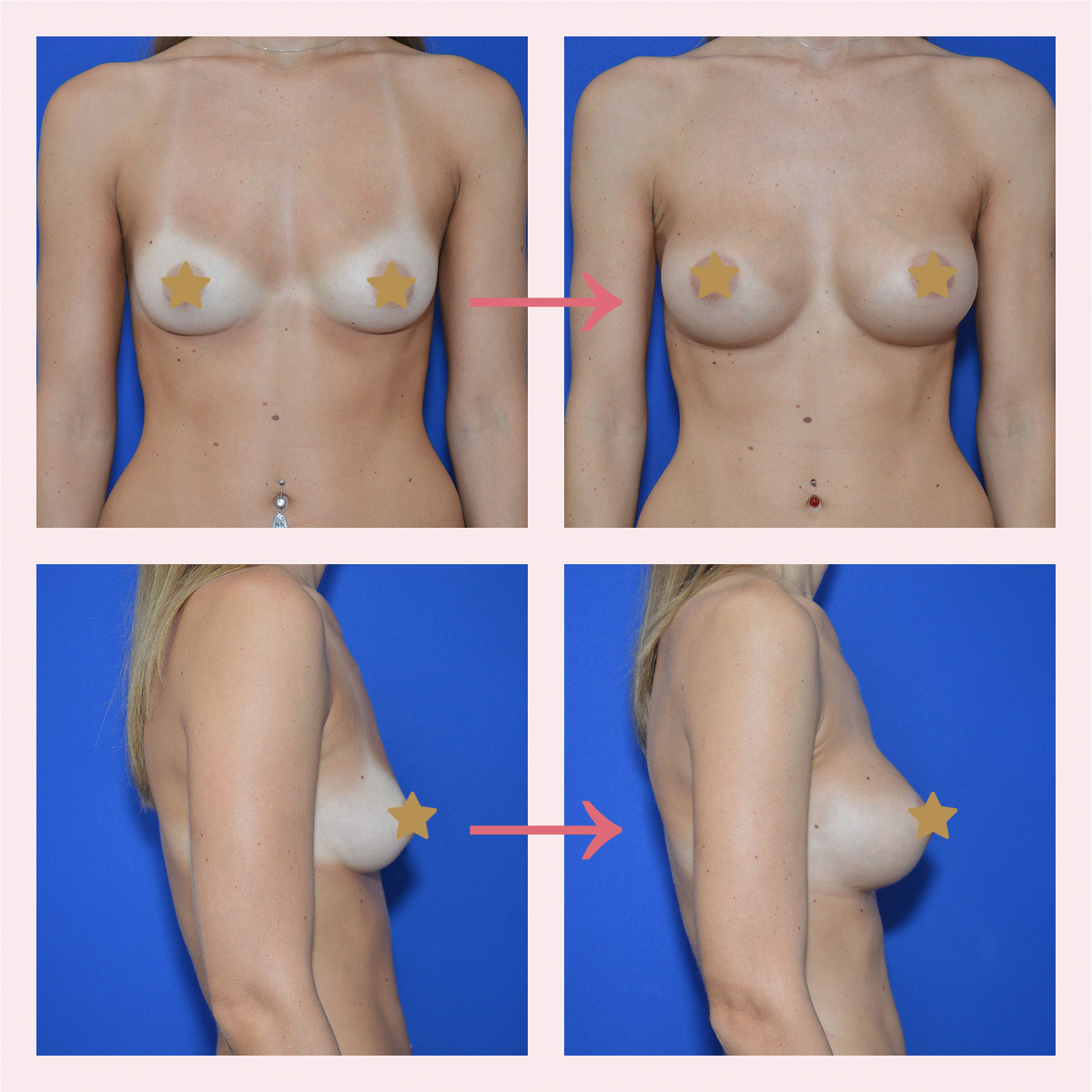
‘My friend has a 300ml implant and that is exactly what I want too’ – our breast surgeons hear sentences like this quite often. Patients frequently have precise ideas of what the result of their breast augmentation should look like, and to that end they compare their body with those of their friends. We explain in this article why that does not make sense.

What matters when choosing the implant
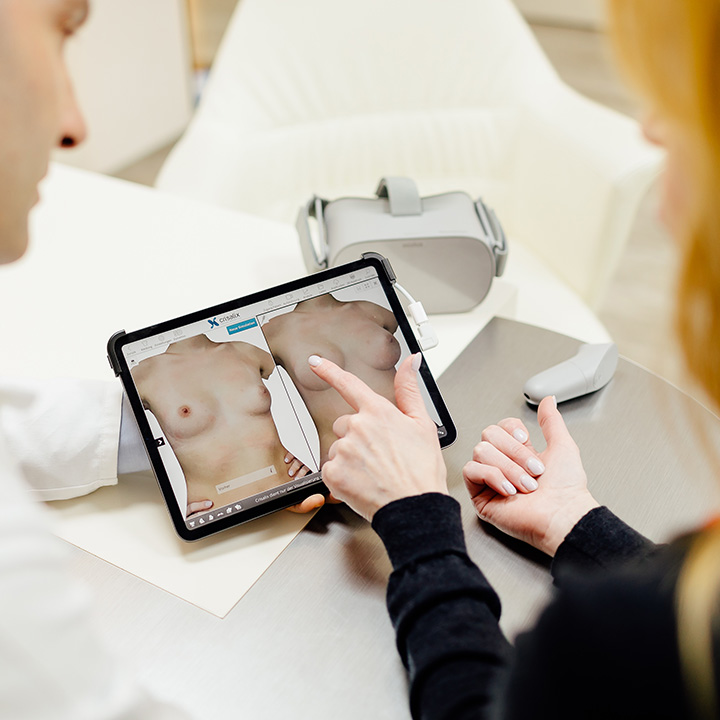
Comparing oneself with friends or other women is difficult, since in all probability the starting situation is not the same. Every body is different – larger, smaller, narrower or broader. All these things have to be discussed individually and differ from patient to patient. It is not only the build of the body that matters, but also the breast before the breast augmentation. This too has to be measured precisely: how high and wide it is and how much space there is in the breast. In general, larger breasts (by nature) tolerate more volume than small ones. All these factors have to be taken into account before the right implant is chosen.
How large implants can be
Not infrequently patients have unrealistic expectations as far as the size of their implants is concerned. How large the chosen implant can be likewise depends on the basic characteristics of the patient's body. Here the treating doctor has to analyse precisely what is possible in order to obtain an aesthetic result. Of course the patient's individual wish is also taken into account in the decision.
It is important to consider not only the shape and size of the implant, but above all what is known as the projection – that is to say how far it stands out from the body. The flatter the implant, the less important the shape; and the higher it is, the more important it becomes.
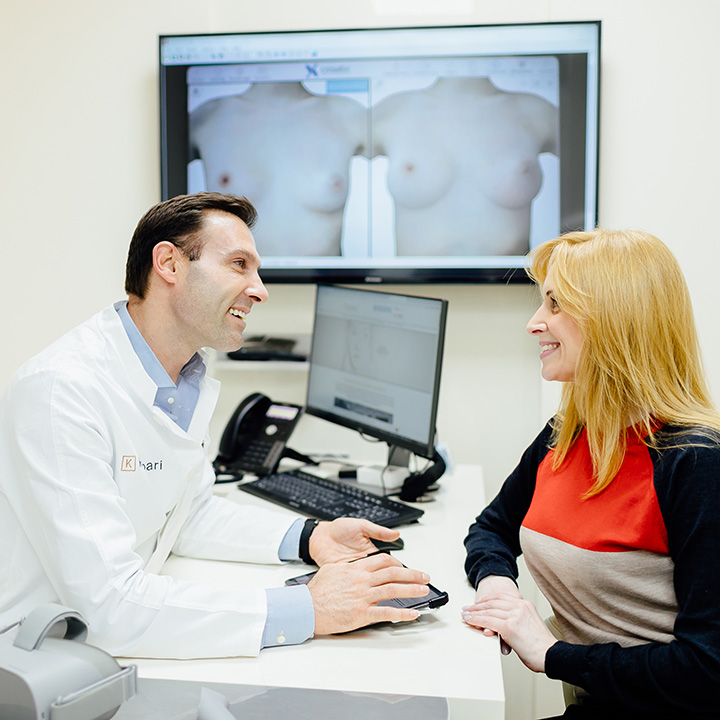
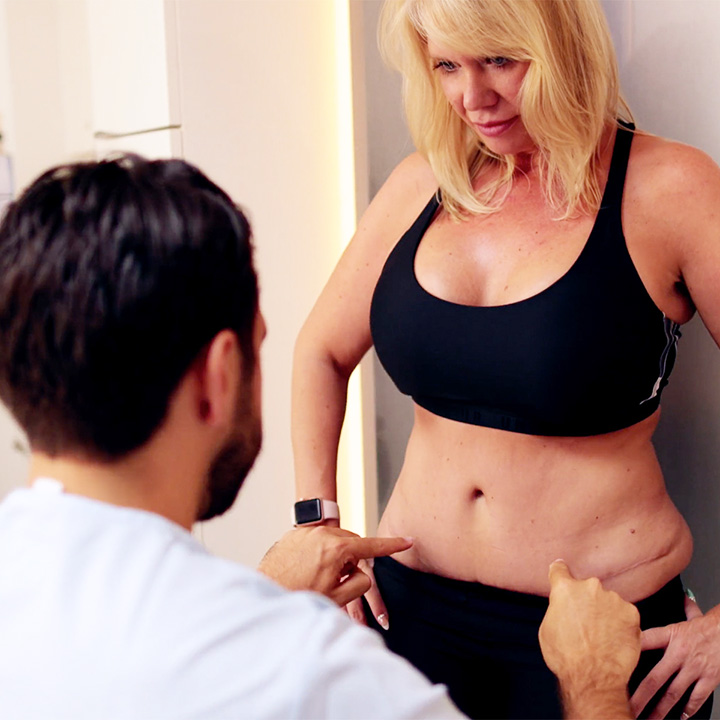
Comparing one's own breasts with those of another woman therefore makes sense at most when the starting situation is comparable to one's own. And even then there will be small differences in build that the treating doctor can analyse at the consultation. A detailed initial consultation is always essential in order to discuss realistic expectations and goals.



 01 358 28 01
 Book now