































Uneven breasts: this is how they are corrected!
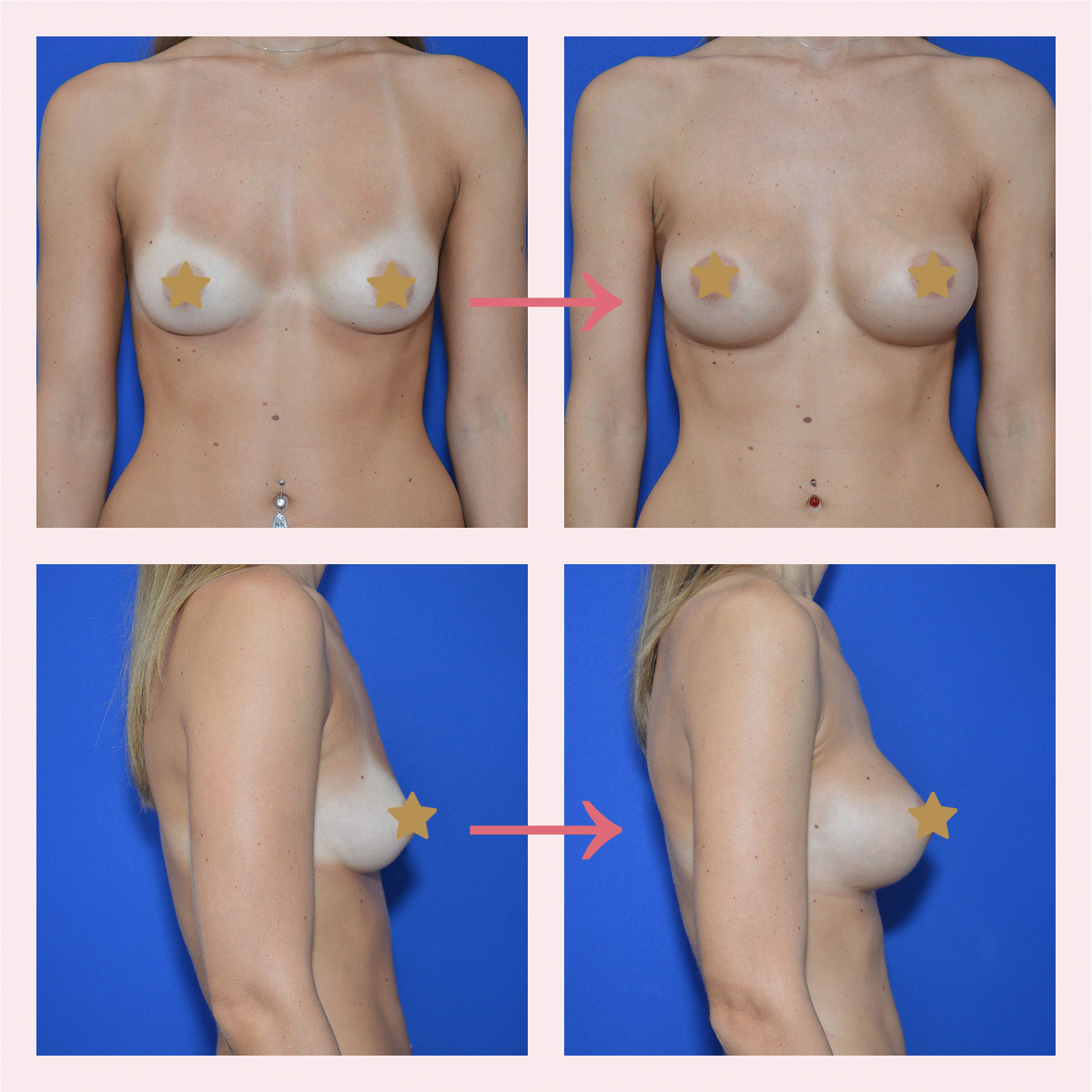
Asymmetrical breasts and areolae affect almost every woman. However, the difference is usually so minimal that it is generally not noticed - often not even by the woman herself. The causes of it can be many and varied, as can the methods of remedying the inequality.

One thing first: more than half of all women have breasts of different sizes. In principle completely equal, symmetrical breasts are even rather the exception. Small differences quite simply always exist; they are just often not noticed. That can concern the size, the shape and the height of the breast, but also the areolae. One speaks of an actual breast asymmetry, however, only when the breasts are unequal beyond the normal degree of natural tolerance. For instance when there is a whole cup size between them.
What are the causes?
The most frequent cause of unequal breasts is genetic predisposition. But hormonal fluctuations during puberty, pregnancies and breastfeeding also play a major role. In the rarest of cases a sudden loss or gain of weight can lead to an asymmetry.
Operations, radiotherapy, scars or large cysts can likewise change the natural size of the breasts.
What forms of unequal breasts are there?
Breasts can differ in size, in shape and in the height of their position on the chest. But the areolae too can be of different sizes or lie at different heights - and the inframammary folds can likewise be positioned differently. There is no limit to the variety of variations here either.
What treatment options are there?
As numerous as the harmless forms and degrees of a breast asymmetry are, the number of treatment options is at least as high.
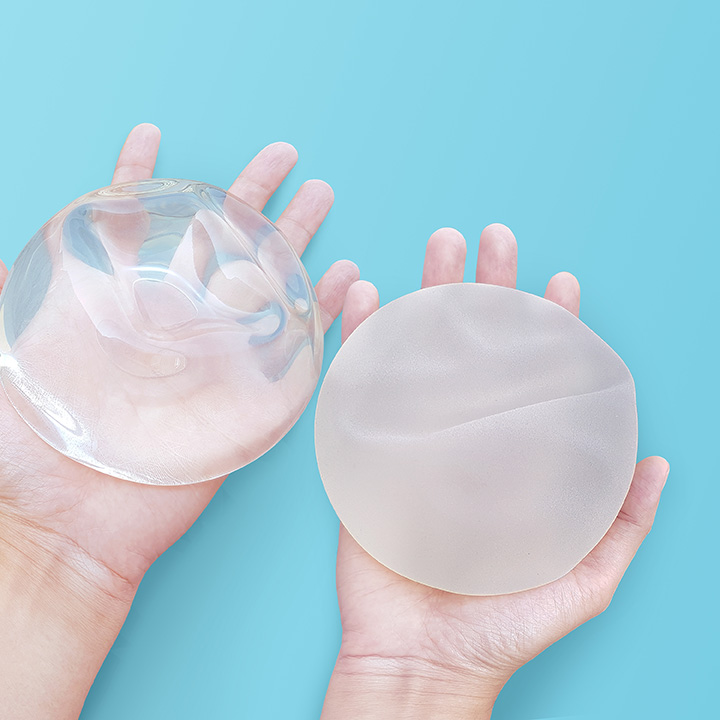
If, for example, the breasts differ in size by a whole cup, asymmetrical implants can be used. Or tissue is removed from the larger breast in order to match the breasts. In order to achieve lasting and permanently beautiful results, different operating techniques are also combined depending on the findings and wishes, such as breast augmentation with a lift.
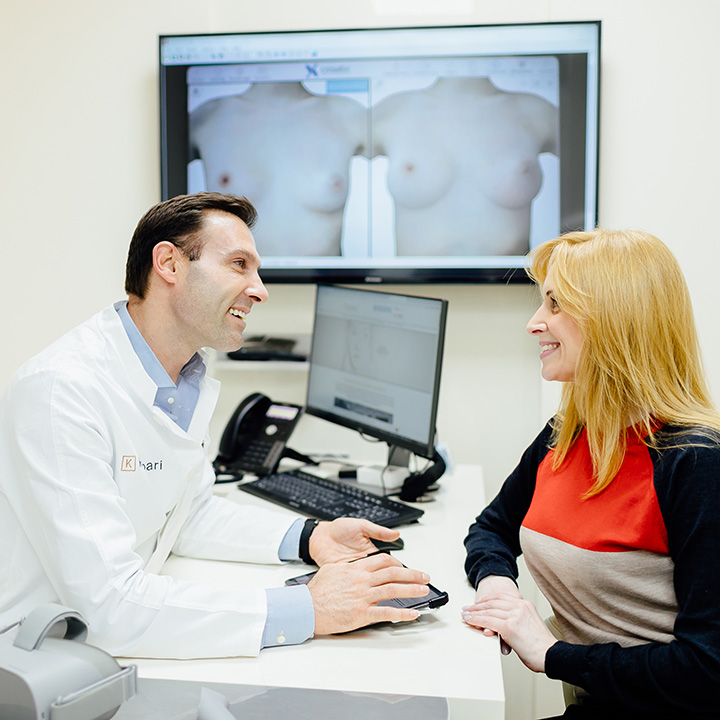
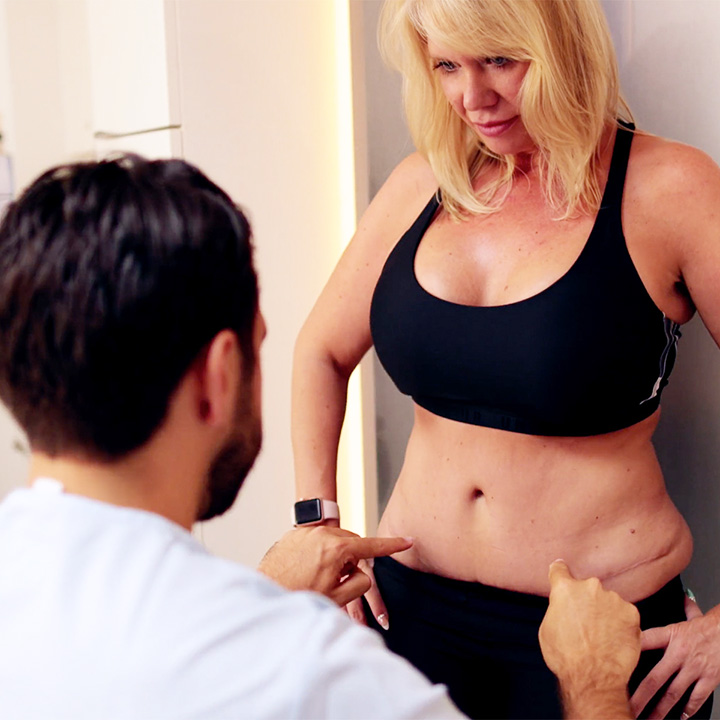
Which method ultimately fulfils the goal is always analysed in a detailed consultation before the procedure.
Figures and facts
- The procedure is carried out under general anaesthesia
- Afterwards the patient as a rule stays in hospital for one night; alternatively, and under certain conditions, the procedure can also be carried out as a day case
- Pain: most patients report pain that lasts 4 to 6 days and is comparable to moderate, medium to severe muscle ache
- Any swelling normalises after 6 to 8 weeks
- Socially presentable on the day after the operation
- Showering is permitted for three to four minutes from the first day after the operation / a full bath is as a rule permitted only after four weeks
- Downtime: 1 to 2 weeks
- A sports bra has to be worn day and night for 3 weeks / with an augmentation with a lift for 6 weeks
- Endurance sport (running, cycling, hiking) is possible again after 4 weeks, weight training (gym, yoga, riding, tennis) after 6 weeks
- The final result is visible after 6 to 8 weeks



 01 358 28 01
 Book now