






















Capsular contracture – how it develops and its symptoms
Capsular contracture is one of the best-known complications after a breast augmentation with an implant. In this foreign-body reaction the body itself reacts excessively to the implant. In the following text we explain how capsular contracture develops and what the symptoms are.

How capsular contracture develops
After a breast augmentation the body always forms a so-called capsule, a thin layer of tissue, around the breast implant. This process is a completely normal immune reaction of the organism. As a rule you do not notice it at all, since the layer of tissue merely serves as a protective function of the body and remains soft and elastic. In some cases, however, an excessive reaction occurs here and capsular contracture develops.
It is a foreign-body reaction of the immune system, which wants to ‘seal off’ the implant from the body, and this reaction is excessive, that is to say the body reacts too strongly. A thick and firm layer of connective tissue forms around the implant. Only when the breast feels hardened do most patients notice the condition. The breast hardens and deformation and pain can occur.
Minimising the risk of capsular contracture
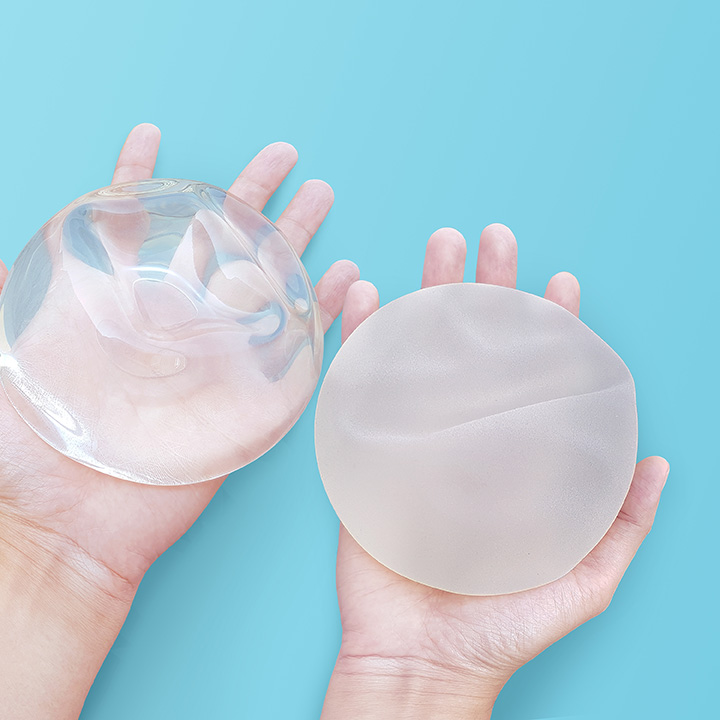
In general any woman with a breast implant in her body can develop capsular contracture. The risk is, however, markedly increased if the implant has a smooth surface and is positioned in front of the chest muscle. But textured silicone gel implants too have a – admittedly lower – yet still not negligible likelihood of causing capsular contracture.
At the Kuzbari Centre we therefore mostly use implants with a polyurethane coating. These are textured silicone gel implants with a 1.5 mm thick polyurethane foam coating. This coating reduces the risk of developing capsular contracture from 15-30 per cent to 1-2 per cent.



 01 358 28 01
 Book now