






























Thin or thick nasal skin: why does it matter so much?
Before deciding on a rhinoplasty, it is important to know the factors that can influence the final result. Anyone who is planning a rhinoplasty, or has already had one, knows that the thickness of the skin is decisive for the final result of the operation.

WHY IS THE THICKNESS OF THE SKIN SO DECISIVE?
To understand that, we have to look at the structure of the nose. The nose is built up of a framework, of bone and cartilage, and of a covering. The covering consists of the skin and the soft tissue beneath it, the fatty tissue and the muscles.
In a rhinoplasty it is the framework, that is, the bone and cartilage, that is operated on. In the next step the skin then has to shrink and take on the shape of the new, altered framework.
TO WHAT EXTENT DOES THE THICKNESS OF THE NASAL SKIN INFLUENCE THE DESIRED RESULT?
This can be illustrated well with the example of an object wrapped in a blanket. If the blanket is thin, it clings to the object well and clearly shows its outline. If the blanket is thick, it clings less well and the outline is less visible. It would therefore be harder to judge which object is hidden under the blanket. It is exactly the same with the nasal skin.
It is therefore essential to obtain a sound and realistic assessment from an experienced surgeon in order to establish whether the result the patient wishes for can in fact be achieved.
IS THE RESULT I WANT REALISTIC?
An inexperienced nasal surgeon who blindly fulfils an unrealistic wish of a patient would reduce the nasal framework very heavily. The excess skin would not shrink sufficiently, however, and as a result the nose looks shapeless and without contour, especially in the front view.
The surgical plan therefore has to be adapted individually to every patient.
HOW CAN I ESTABLISH THE THICKNESS OF MY NASAL SKIN?
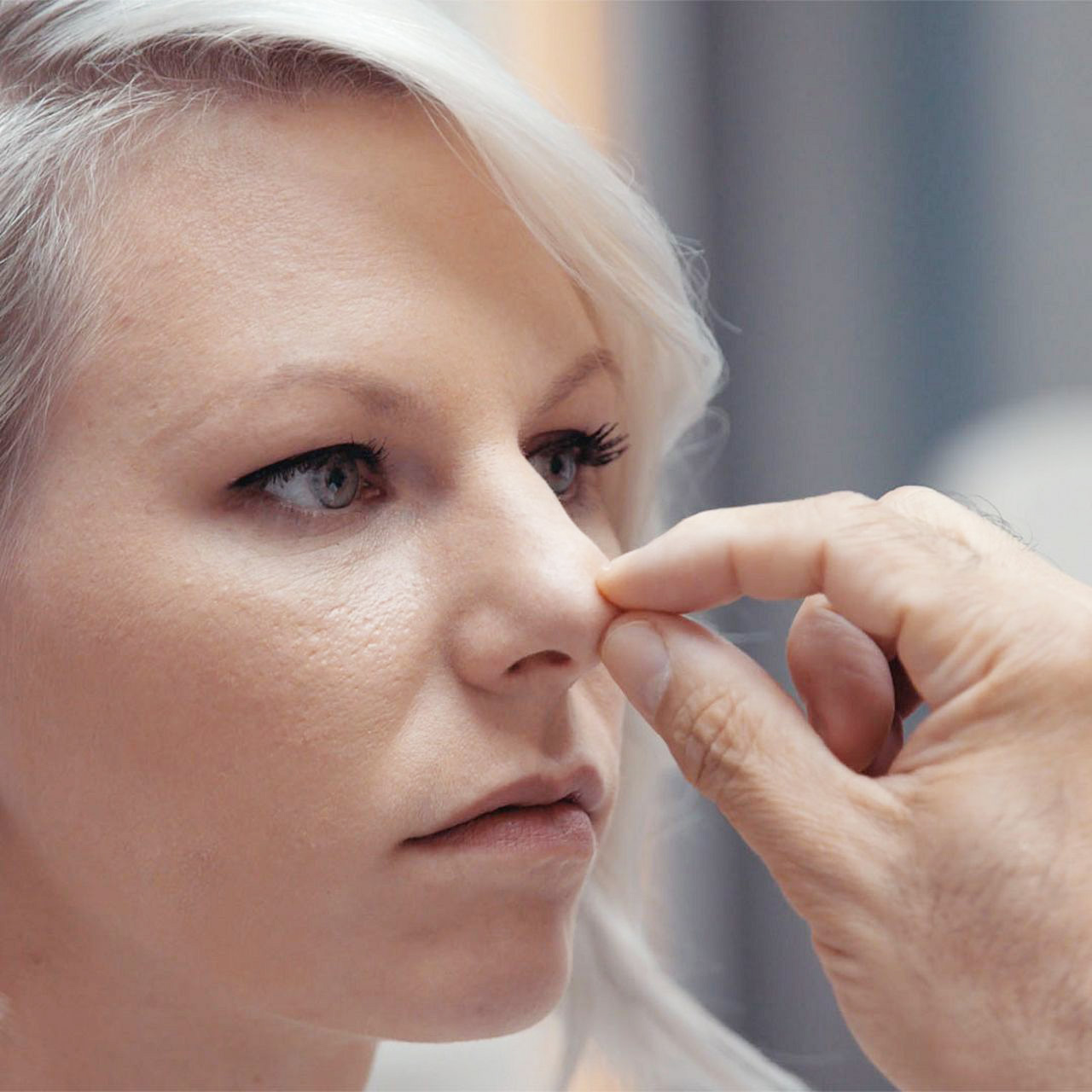
That is quite simple. You take hold of the skin of the nose in the region of the nasal tip and pinch it together. If you can only pinch it a little, the skin is very thin. If you can pinch it a lot, the skin is thick.
When trying this you have to make sure that you take hold of the skin in the region of the nasal tip, or just above it, and not in the region of the nasal dorsum.
MY NASAL SKIN IS TOO THICK – WHAT NOW?
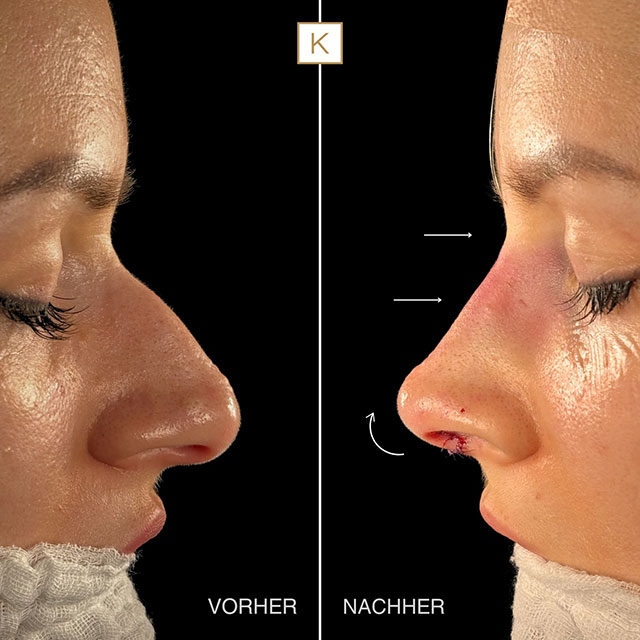
Thick nasal skin is no cause for concern; a significant improvement of the shape of the nose can be achieved with this starting situation too. If necessary a compromise has to be made during the operation and care taken not to make the nose too small.
Thin nasal skin is good, but very thin nasal skin has its disadvantages too, as it shows every smallest irregularity. The ideal nasal skin lies somewhere in between, but you can work with any nasal skin and usually achieve a satisfactory result for the patient.
WHAT WE DO DIFFERENTLY SINCE THE 2026 FELLOWSHIP
In 2026 Dr. Christoph Grill and DDr. Jessica Wittmann spent a fellowship in Brazil working intensively with new and modern techniques of rhinoplasty, with a focus on thick skin and ethnic nasal shapes. For patients with thick nasal skin that means above all one thing: we build up rather than take down. The definition of the tip comes from a stable cartilage framework carrying it against the thick envelope, not from a heavier reduction of the framework. Added to that is careful handling of the soft tissue. The character of the nose is preserved in the process.



 01 358 28 01
 Book now