



















6 sun myths under the microscope
Sun protection is important and by now most people know that. Yet some very outdated myths about the sun are still circulating in the media. Find out more here.
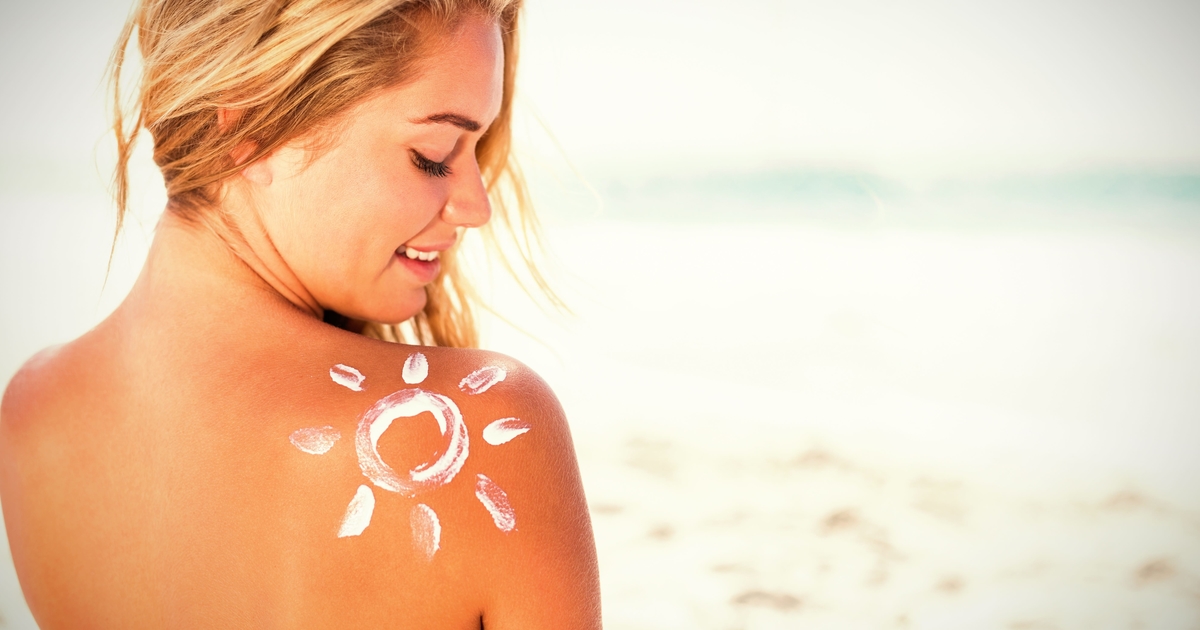
Not infrequently the 30° mark has already been exceeded this summer. Clearly many of us are drawn outdoors into the summer sun. Is sun protection necessary in the shade as well? What is the right SPF? Do the sun's rays come through clothing and parasols? Dr. Elke Janig explains
You cannot get sunburnt in the shade
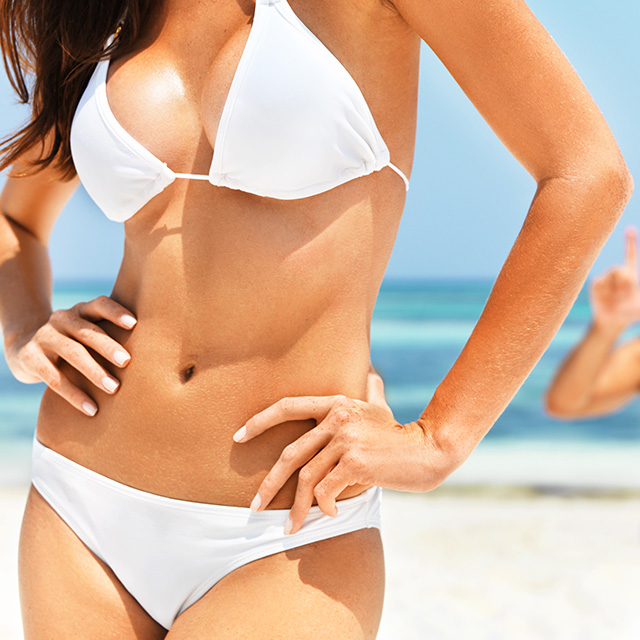
In the shade, above all on the beach or by the pool, the water reflects 80 %
of the solar radiation. So here too there is a risk of sunburn if you have
not applied cream. Take care: the shade of parasols is also
effective to quite different degrees. Depending on the quality of the fabric they even let
up to 80% of the light through!
Waterproof sun cream does not have to be reapplied after bathing
That is only true to a limited extent. 50% of the protection should indeed still be in place after a bathing time of 40
minutes, but it is better to be on the safe side
and to renew the protection.
The higher the sun protection, the longer you can stay in the sun
The sun protection factor is not based on the planned
sun exposure, but on the skin type. The lighter the skin, the
higher the protection has to be. After a certain time more cream should be
applied.
Clothing protects the skin from solar radiation
Clothing protects against UV radiation. That is correct.
Textiles screen the skin effectively from UV radiation - provided
they are thick enough and closely woven. Take care: cotton absorbs the UV-
B rays that cause sunburn very poorly, whereas fabrics made of polyester
afford relatively good protection. Colour and cut also play
a part: loose and dark clothing protects better than tight and light. For
children there is special UV-absorbing clothing in well-stocked
specialist shops. That is absolutely to be recommended.
Pre-tanning on a sunbed protects the skin
Unfortunately that is not only wrong, but even harmful. On a sunbed
UVA light is used, which only chemically alters pigment precursors
so that they look darker, but here one cannot speak of a
real suntan. For what is missing is the production of more
pigment and the important formation of the ‘light callus’, that is, a
microscopic thickening of the skin which protects against the UV rays.
The dangerous UVB rays, which are responsible for sunburn and the
development of skin cancer, are not held back by the false
‘sunbed tan’.
Blondes need more protection than dark-haired people
It is correct that lighter skin types react more sensitively to solar radiation
than dark ones. The self-protection time of the various skin types
differs considerably, however. It is best to have your personal light protection
determined by a dermatologist.


 01 358 28 01
 Book now