














Asked and answered - your questions about liposuction
It is one of the most common aesthetic treatments: liposuction. We have answered your questions about the procedure here.
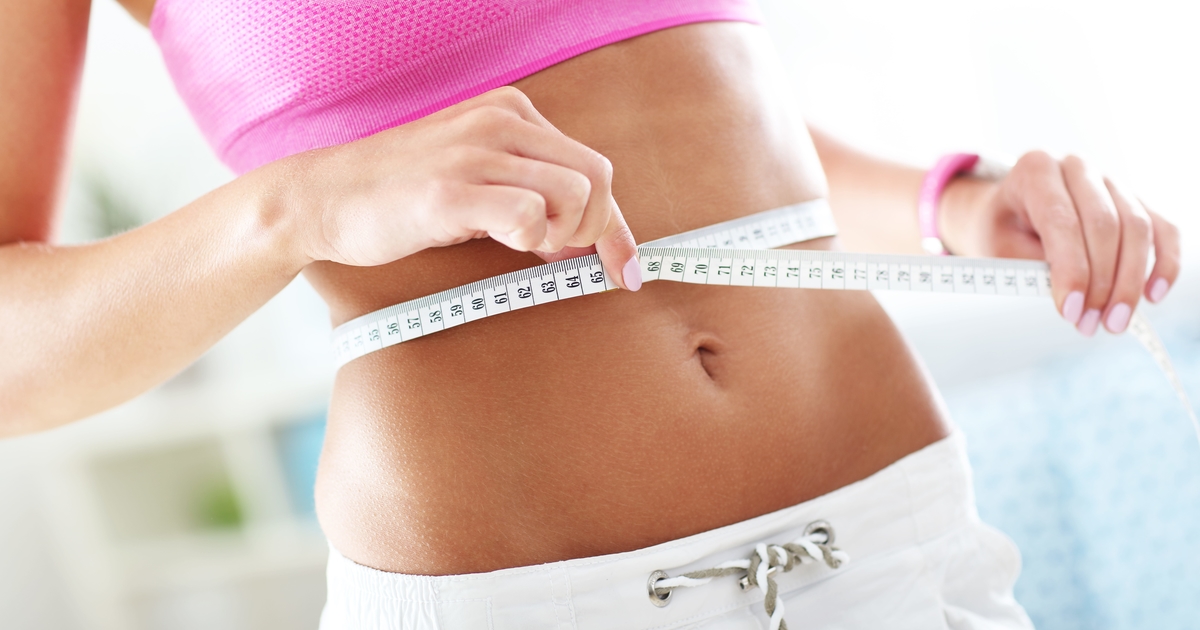
For many, a beautifully shaped, slim body is the ideal of a perfect appearance. There is still a great deal of misinformation and many false ideas about this procedure. We have therefore summarised and answered the most frequent questions for you.
Who is liposuction suitable for?
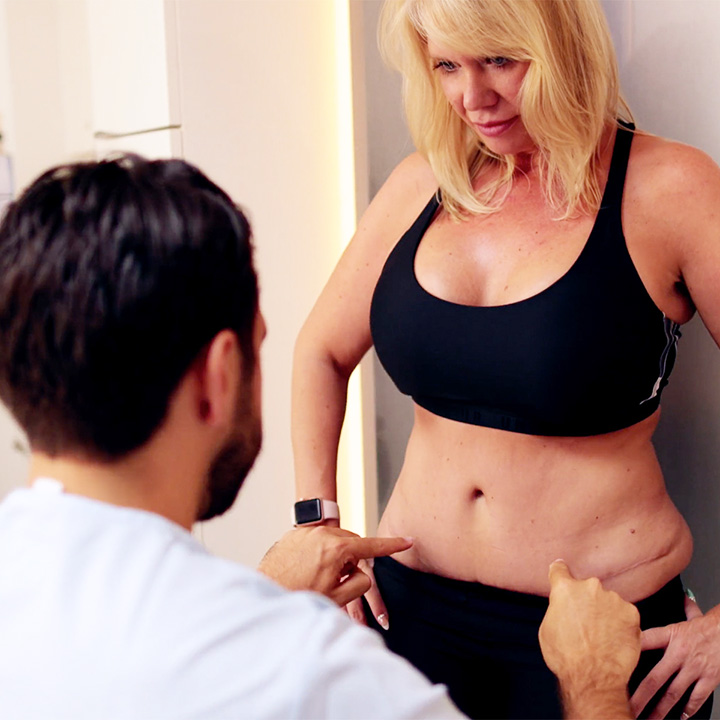
It is best suited to people who have stubborn fat deposits that cannot be brought under control with diet and sport, or only with great difficulty. The distribution of fat is genetically determined, and in many people the overall picture is out of balance despite a healthy weight if it is not distributed in the right proportions. A liposuction evens out these irregularities.
Where can I have fat removed?
The most popular places are the hips, saddlebags, buttocks, inner thighs, abdomen and upper arms. In general, however, a liposuction is possible anywhere there is an accumulation of fat cells.
How long do I have to stay at the clinic?
We carry out the procedure as an outpatient under twilight sedation, which means that the patient may go home on the same day after the procedure.
Do the fat cells come back?
No, fat cells cannot form anew. All the fat cells removed are gone for good and do not come back.
Is the result long-lasting?
Yes, as already described above, no fat cells grow back. If the body is supplied with more energy (through diet) than it uses (through exercise and maintaining bodily functions), fat will nevertheless accumulate again in the remaining fat cells. The distribution can, however, be made more even by the liposuction and problem areas can be balanced out.
Can I lose weight through the treatment?
Yes and no. You do of course lose a little weight, and fat is not put on as quickly as before the treatment. Primarily, however, this is a shaping of the body’s contours and not a drastic loss of mass. That would also be bad for the connective tissue: the skin would stay slack and a lift would therefore have to be carried out as well.
How long is the downtime?
As a rule very short. For the first few days most patients feel something like severe muscle ache; after 1-2 weeks the discomfort has gone. Work is recommended again after about 3 days.
What alternatives are there?
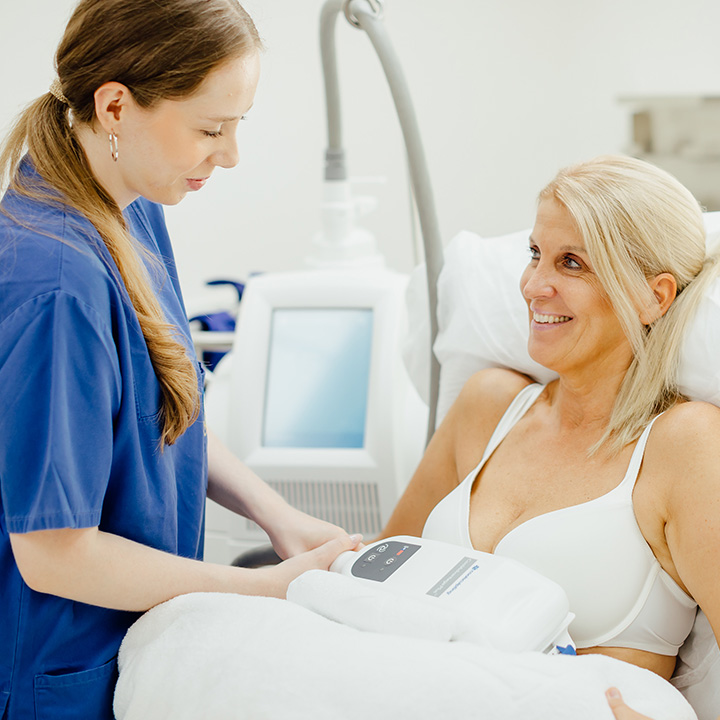
CoolSculpting: no downtime and up to 25% fewer fat cells. CoolSculpting cools the area to be treated down so far that the fat cells are broken down by the cold. Ideal when it is a matter of reducing fat at a particular place.
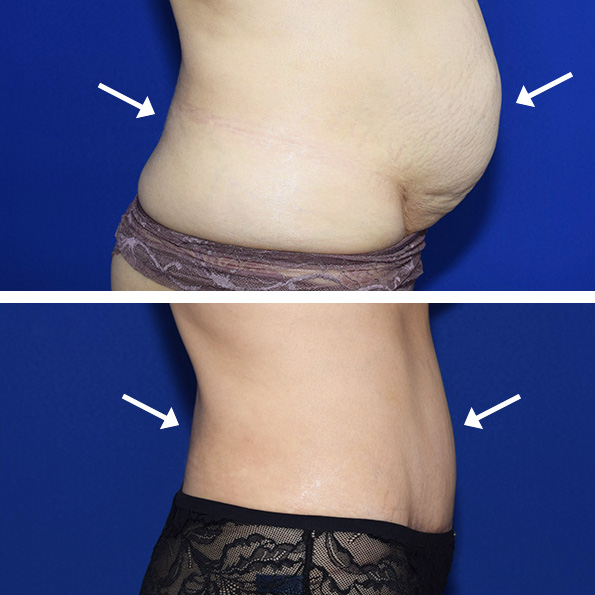
Skin tightening: anyone who has lost a lot of weight can be proud. Here, however, the skin and the connective tissue often do not keep up and hang down slackly and unattractively. This can lead to an unsatisfactory appearance despite reaching the desired weight. Here no more fat should be reduced; instead the skin should be tightened.
HD body contouring: fat is removed at unwanted places and can be placed in other regions of the body. For example, a liposuction is carried out on the thighs and the fat obtained is used to make the buttocks look rounder and fuller. This method offers the advantage of achieving body shaping not only through reduction but also through building up volume. The body’s autologous fat is also particularly well tolerated.

 01 358 28 01
 Book now